The Physics of Survival: Why Your Flue Pipe is the Most Critical Component in Your Home
My old mentor, Smitty, used to scream at me until his face turned the color of a cherry-red heat exchanger: ‘You can’t vent what you can’t push, kid!’ He’d stand in a freezing basement in the middle of a Chicago January, pointing at a sagging B-vent with a cigarette dangling from his lip. Smitty knew something most homeowners don’t—and something ‘Sales Techs’ will never tell you. Your furnace is basically a controlled explosion, and the flue pipe is the only thing standing between your family and a silent, odorless end via carbon monoxide. If the airflow isn’t perfect, the physics of combustion simply fails. We aren’t just moving air; we are managing buoyancy, pressure differentials, and chemistry. When I look at a flue pipe, I’m not looking at metal or PVC; I’m looking at the exit strategy for a lethal byproduct.
“A venting system shall be designed and installed so as to develop a positive flow adequate to remove flue or vent gases to the outdoor atmosphere.” – NFPA 54 (National Fuel Gas Code)
The Forensic Diagnosis: Anatomy of a Code-Compliant Vent
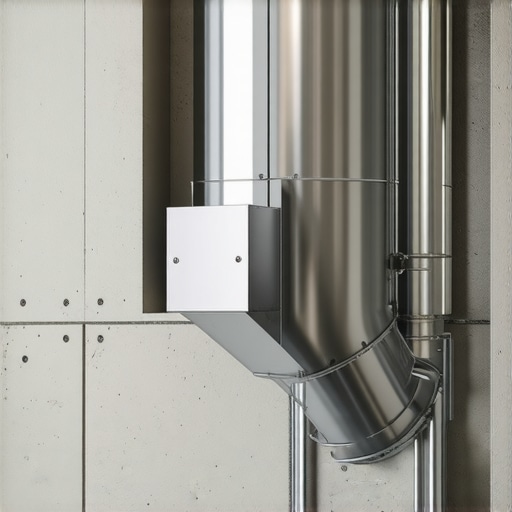
In the North, where the polar vortex turns our lubricants into molasses and our draft inducer motors into screaming banshees, the flue pipe has a hard life. To tell if yours is up to code, we have to look at the mechanical anatomy. For a standard 80% AFUE furnace, you’re looking at Type B-Vent—that double-wall silver pipe. If you see single-wall pipe (looks like a stovepipe) running through a wall or attic, you’re looking at a fire hazard and a code violation. The ‘Tin Knocker’ who installed it was cutting corners. Single-wall pipe requires huge clearances to combustibles, whereas B-vent is designed to stay cool on the outside while the ‘gas’ (combustion exhaust) stays hot enough to rise. If the exhaust cools down too fast inside the pipe, it hits the dew point. That’s when the water vapor turns into acidic condensate that eats your furnace from the inside out. This is why furnace repair myths often ignore the venting, leading homeowners to waste money on new blowers when the real issue is a choked flue.
The Draft Inducer Motor: The Mechanical Heart of Venting
Modern furnaces don’t rely on the ‘hot air rises’ principle alone; they use a draft inducer motor. This is a small blower that clears the heat exchanger of residual gases before the burners ignite. If your inducer motor is vibrating or making a high-pitched screech—like a bearing failing on a rusted freight train—your venting is compromised. Draft inducer motor repair isn’t just about the noise; it’s about safety. If that motor doesn’t hit the specific RPMs required to close the pressure switch, the ‘Sparky’ or the control board will never let the furnace fire. This is a safety lockout, not a nuisance. In cold climates, these motors work double-time, and if they fail, your flue pipe becomes a stagnant tunnel for CO. This is why we perform a combustion analysis on every call. We stick a probe into the flue and measure O2, CO, and stack temperature. If those numbers are off, the ‘Pookie’ (mastic) on your ductwork won’t save you; you have a combustion crisis.
High-Efficiency Venting: The PVC Revolution
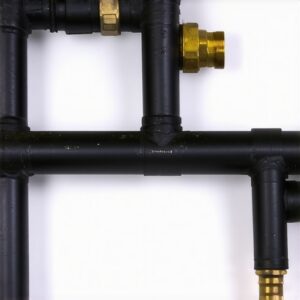
If you have a high-efficiency furnace installation (90% AFUE or higher), you won’t see metal. You’ll see PVC. This is because these units are so efficient they extract almost all the heat from the exhaust, leaving only cool, acidic water and CO. Metal would disintegrate in weeks. But PVC venting has its own set of strict codes. First: The Slope. Every horizontal run of PVC flue must slope back toward the furnace at a minimum of 1/4 inch per foot. If it sags, water pools in the pipe. The inducer motor can’t push air through a ‘P-trap’ of standing water, and the unit shuts down. I’ve seen countless ‘Sales Techs’ quote a $15,000 system replacement because of a ‘bad secondary heat exchanger’ when the real problem was just a $2 plastic hanger that snapped, causing the pipe to sag. If you’re looking for hvac repair secrets, here’s a big one: check your pipe hangers.
“The most expensive equipment in the world cannot overcome a bad duct system or an improperly sized vent.” – Industry Axiom
The Danger Zone: Wall Furnace and Pool Heater Venting
It’s not just the central furnace that kills. Wall furnace installation and pool heater repair often involve venting systems that are neglected for decades. A wall furnace relies on a gravity vent. If you’ve recently added a UV light installation for HVAC to improve air quality but haven’t checked the flue of your old wall furnace, you’re missing the forest for the trees. Similarly, pool heaters in enclosed spaces are notorious for ‘backdrafting.’ If you see soot or ‘ghosting’ (dark stains) around the draft hood of your heater or boiler, stop everything. That’s carbon monoxide entering the building. Our boiler maintenance services always include a draft test. We use a smoke pen to ensure the chimney is actually pulling air. If the smoke blows back in your face, the flue is blocked or undersized, and the home is a tomb.
Thermodynamic Zooming: The Energy Star Factor
When we talk about Energy Star heating certification, we are talking about more than just low gas bills. We are talking about a system where the duct design services, the programmable thermostat programming, and the venting work in a closed loop of efficiency. An Energy Star unit requires precise air-to-fuel ratios. If your flue is restricted, the unit will down-fire or ‘short cycle,’ meaning it turns on and off constantly. This kills the compressor in an AC unit, but in a furnace, it stresses the heat exchanger. The metal expands and contracts too quickly, eventually cracking. Once it cracks, the ‘Juice’ (the air you breathe) mixes with the ‘Gas’ (the exhaust). That is the moment the forensic diagnosis becomes a tragedy. You can’t just slap a new unit on an old flue pipe and call it a day. The physics of the vent must match the output of the machine.
The 2025 Regulatory Cliff and Flue Safety
As we move toward newer refrigerants and even stricter AFUE requirements, the way we vent is changing. We are seeing more ‘concentric vents’—one pipe inside another—that pulls fresh combustion air in while pushing exhaust out. This prevents the furnace from ‘stealing’ the heated air from your home to burn. It’s safer and more efficient. If you’re still using an old masonry chimney with a liner, you’re living in the past. If you need help determining if your current setup is safe, you can contact us for a full safety audit. We don’t just look at the box; we look at the entire thermodynamic circuit. Comfort is physics, not magic. If your flue isn’t up to code, your furnace is just a very expensive, very dangerous space heater.