The Pressure Bully: Why Your Pilot Flame Can’t Stand Up to the Gale
My old mentor, a grizzled tin knocker named ‘Big Sal’ who had spent forty years in the frozen mechanical rooms of Chicago, used to scream at me every time I reached for a screwdriver before I checked the pressure: ‘You can’t fight physics, kid! You can’t heat what you can’t contain!’ He was right. Most techs today walk into a basement, see a pilot light out on a boiler, and immediately start trying to sell the homeowner a $12,000 multi-family heating upgrade. They aren’t looking at the physics; they are looking at their commission. But when that pilot light flickers out every time the wind howls, you aren’t dealing with a ‘broken’ machine. You are dealing with a thermodynamic tug-of-war where the atmosphere is winning and your boiler is the loser.
“The most expensive equipment in the world cannot overcome a bad duct system or improper venting geometry.” – Industry Axiom
In the North, where the polar vortex turns your chimney into a giant straw for freezing air, the pilot light is the canary in the coal mine. It is a tiny, blue flame that relies on a very specific balance of gas pressure and atmospheric draft. When the wind gusts over your roof, it creates a high-pressure zone or a venturi effect that can literally suck the draft right out of your flue or, worse, shove air back down it. This is ‘flame rollout’s’ quieter, more annoying cousin. If you are tired of relighting that flame every time a storm rolls in, you need to understand the mechanical anatomy of your heating system and why the ‘gas’ or juice isn’t the problem—the air is.
The Forensic Diagnosis: Anatomy of a Failing Flame
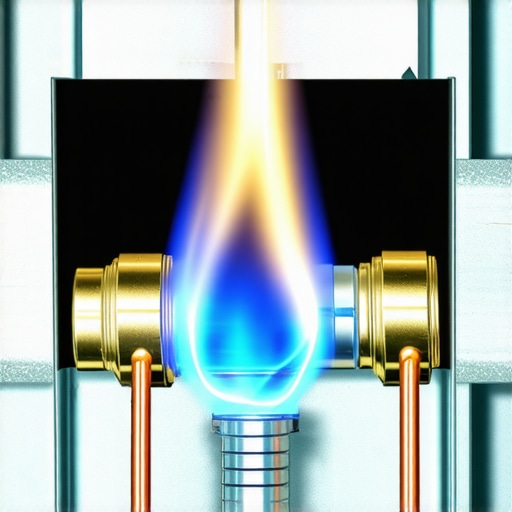
Let’s look at the thermocouple. This is the copper lead that sits in the pilot flame. It operates on a simple principle: heat creates a small millivolt electrical signal that tells the gas valve to stay open. If the wind blows that flame just an inch away from the thermocouple for more than a few seconds, the signal dies, the magnet in the gas valve drops, and ‘click’—your heat is gone. It’s a safety feature, not a bug. But why is the wind getting to it? This is where gas furnace repair myths often lead people astray. People think they need a new valve, but usually, they need a better draft hood or a specialized vent cap.
In a standard atmospheric boiler, the flue depends on the ‘stack effect.’ Hot air rises because it’s less dense than the cold air outside. But when the wind hits a certain velocity, it can create a ‘downdraft.’ If your chimney isn’t tall enough, or if it’s shielded by a nearby tree or a taller building addition, the wind creates a pressure differential that forces air down the pipe. This is why HVAC repair professionals who actually know their salt will look at your roof before they look at your boiler. A ‘High-Wind’ vent cap is often the only thing standing between you and a freezing midnight trip to the basement.
The Bernoulli Effect and Your Flue
According to ASHRAE Standards, ‘A chimney must provide a continuous path for the removal of combustion products to the outdoors.’ When the wind blows across the top of a chimney, it should technically create a vacuum that helps pull air up (the Bernoulli effect). However, if your boiler is located in a tightly sealed mechanical room without enough ‘make-up air,’ the house becomes ‘negative.’ This means the house is literally trying to suck air in from anywhere it can—including down the boiler’s chimney. If you’ve recently added HEPA filter systems or massive MERV filter upgrades to your air handler, you might have inadvertently changed the static pressure of your home. The ‘sparky’ might have wired your high-CFM kitchen hood to a switch that, when turned on, overcomes the boiler’s puny draft and snuffs out the pilot.
“Proper venting is not just about moving smoke; it is about managing the pressure differentials of the entire building envelope.” – ACCA Manual J
Beyond the Pilot: The Total System Impact
If you are struggling with a boiler, you might be looking at other upgrades too. Many of my clients ask about geothermal heat pump systems or infrared heater installation for their garages. These are great, but they don’t solve the fundamental issue of a drafty, poorly pressurized basement. Similarly, if you are doing hot water heater repair and notice the same pilot issues, the problem is systemic. Your venting is likely undersized or improperly terminated. This is especially common in multi-family heating upgrades where multiple units are vented into a single, aging masonry chimney that hasn’t been lined since the Nixon administration.
And don’t get me started on humidity. In the cold North, we fight the dryness. A humidifier installation can make 68 degrees feel like 72, which takes the load off your boiler. But if that boiler is constantly cycling off because the pilot is dead, your humidity levels will plummet, and your ‘Pookie’ (mastic) on the ductwork will start to dry out and crack. It’s all connected. Even your spa heater services rely on these same principles of combustion and draft. If you want to stop the cycle, you need a technician who understands that the boiler is just one organ in the body of the house.
When to Pull the Plug: Repair vs. Replace
Is it worth fixing? If your boiler is a cast-iron beast from the 80s, it’s probably 65% AFUE (Annual Fuel Utilization Efficiency). You are sending 35 cents of every dollar straight up the chimney. A modern, high-efficiency condensing boiler doesn’t even have a standing pilot light—it uses electronic ignition. It also uses PVC venting that is sealed from the wind. If you’re tired of the ‘pilot light dance,’ it might be time to stop throwing $500 at ‘repairs’ and look at a system that won’t be bullied by the wind. For more on this, check out our HVAC repair secrets for boosting efficiency. In the end, remember: comfort is physics, not magic. Don’t let a ‘Sales Tech’ tell you otherwise.