The Sound of a Dying Heat Exchanger: Why Your Furnace is a Ticking Clock
There is a specific sound that keeps me awake at night, and it isn’t the howling wind of a February blizzard. It’s the rhythmic click-click-thud of a furnace attempting to ignite and failing. In thirty years of crawling through spider-infested basements, I have seen the same story play out a thousand times. A homeowner ignores the annual check-up because ‘the air is still warm,’ and then, at 3 AM on the coldest night of the year, the system breathes its last. By the time I arrive, the indoor temp is 45 degrees, the pipes are sweating, and the ‘Sales Techs’ from the big box companies are already licking their chops to sell a $15,000 unit that the homeowner doesn’t actually need.
“The most expensive equipment in the world cannot overcome a bad duct system.” – Industry Axiom
My old mentor, a grizzled veteran who’d lost three fingers to a blower fan in ’84, used to scream at me while we were jammed into a frozen crawl space: ‘You can’t heat what you can’t touch!’ This wasn’t some Zen proverb. He was talking about static pressure and molecular contact. If your airflow is restricted by a clogged MERV filter or a collapsing return, the heat exchanger can’t transfer its energy to the air molecules. The metal gets too hot, it expands, it contracts, and eventually, it cracks. Once that heat exchanger cracks, you aren’t just looking at a repair; you’re looking at a carbon monoxide generator. That’s why hvac repair secrets always start with the basics: airflow and cleanliness.
The Forensic Diagnosis: Anatomy of a Heating Disaster
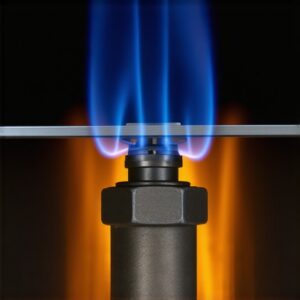
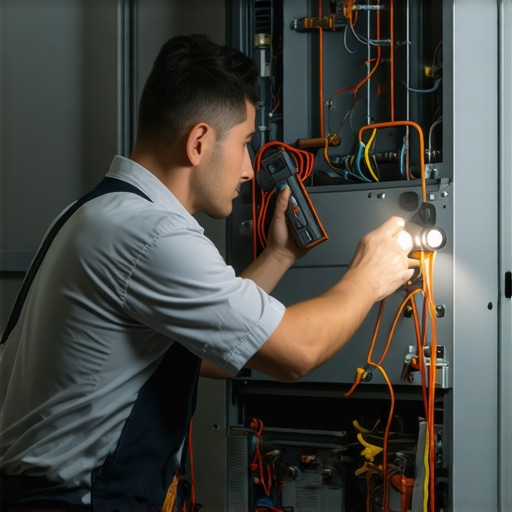
When I perform an inspection, I’m not just looking for dust. I’m looking for the forensic evidence of a system under stress. I start with the flame sensor. This little rod of metal is the most common point of failure. It sits in the flame, and through the magic of flame rectification, it tells the control board that it’s safe to keep the gas valve open. Over time, it gets coated in carbon. The ‘Sales Tech’ will tell you the whole board is fried. I’ll tell you it needs thirty seconds of cleaning with a piece of steel wool. But if you don’t catch it in October, you’re paying emergency labor rates in January.
Next, we look at the variable speed furnace services. Modern variable speed motors (ECM motors) are brilliant pieces of engineering, but they are sensitive. They adjust their RPM to maintain constant CFM (Cubic Feet per Minute) regardless of duct resistance. If your ducts are undersized or your filter is too thick, that motor will ramp up to 100% output just to push air through a straw. It’ll burn itself out, and those motors aren’t cheap. Understanding furnace repair myths can save you from believing you need a new furnace when you really just need a MERV filter upgrade that actually fits your system’s static pressure capabilities.
The North Climate Reality: Combustion and Condensation
In cold climates like Chicago or the Northeast, we deal with the physics of condensing furnaces. An AFUE (Annual Fuel Utilization Efficiency) rating of 95% means we are squeezing so much heat out of the combustion gases that the water vapor actually turns back into liquid. That ‘juice’—the acidic condensate—has to go somewhere. If your secondary heat exchanger is plugged or your condensate pump is dead, that water backs up. In a crawl space heating solution, that water can freeze, crack the drain line, and flood your subfloor before you even know there’s a problem.
“Ventilation systems must be designed to prevent the accumulation of moisture and the resulting growth of mold and structural damage.” – ASHRAE Standard 62.1
We also have to talk about cold climate heat pumps. Ten years ago, I would have laughed at the idea of a heat pump in a sub-zero climate. Today, with vapor injection technology, these machines can pull ‘sensible heat’ out of 5-degree air. But they require surgical precision during installation. If the ‘Sparky’ (electrician) didn’t size the backup heat strips correctly, or if the ‘Tin Knocker’ (duct guy) didn’t insulate the plenums, you’ll be shivering in a ‘cold swamp’ of a house. This is why ultimate guide to heat pump maintenance and repairs is required reading for anyone trying to ditch gas for electric.
The Latent Heat Problem: Steam Humidifiers and Comfort
Dry air is the enemy of efficiency. When the humidity drops below 20%, you feel colder at 72 degrees than you would at 68 degrees with proper moisture levels. Why? Because the moisture on your skin evaporates faster, stealing heat from your body. This is why humidifier installation, specifically steam humidifiers, is a game-changer for North climate homes. A steam humidifier doesn’t rely on the furnace’s heat to evaporate water; it boils its own water and injects it into the stream. It protects your hardwood floors, your fireplace insert services (which can dry out the surrounding masonry), and your respiratory health. If you are struggling with a unit that won’t keep up, check our mini split troubleshooting guide, as these units often struggle with the same humidity-to-temp ratios.
Warehouse Heating and Large-Scale Solutions
It isn’t just residential homes that fail. Warehouse heating solutions often involve massive ‘unit heaters’ or rooftop units (RTUs) that are ignored until they literally stop spinning. In a warehouse, you aren’t just fighting the cold; you’re fighting the ‘stack effect’—where all your expensive heat rises to the 30-foot ceiling while your workers freeze on the floor. Proper annual inspections check the combustion analysis of these big burners. A 1,000,000 BTU burner that is running ‘rich’ is throwing thousands of dollars out the flue pipe every month. Whether it’s electric heater services for a small office or a massive gas-fired warehouse system, the physics of combustion don’t care about your budget.
Final Verdict: The $200 Insurance Policy
Most homeowners view a heating inspection as a ‘look-over.’ I view it as a preventive strike. We check the hot water heater repair needs while we’re there—because the same gas line and venting system often serve both. We look for ‘Pookie’ (mastic) that has dried up and cracked, leaking heated air into your attic. We check the electric heater services to ensure the sequencers aren’t stuck, which could lead to a massive electric bill. If you wait for the system to fail, you lose all your leverage. You are at the mercy of whoever has a truck available. Don’t be that person. Contact us before the first frost, and let’s make sure your system is actually moving the air it’s supposed to. Remember: Heat is just molecular motion. If your tech doesn’t understand the physics of that motion, he’s just a parts changer with a clipboard.