The Sound of the Blue Ghost: Why Accessibility Isn’t Optional
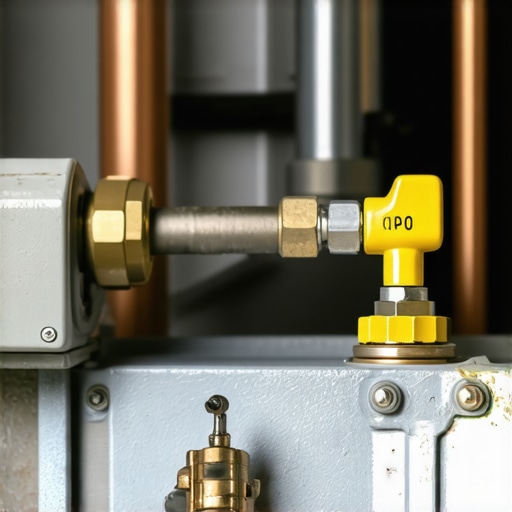
I’ve spent thirty winters crawling through crawlspaces and balancing on joists in the frozen North, and if there’s one thing that’ll make my blood pressure spike faster than a clogged condensate line, it’s a gas valve buried behind a finished wall or stuck three rooms away from the furnace. My old mentor, a guy we called ‘Iron Lung’ Pete because he could sniff out a cracked heat exchanger from the driveway, used to scream at us: ‘You can’t cool what you can’t touch, and you can’t save a house you can’t kill the fuel to!’ This wasn’t just grumpy old-timer talk; it was a physics lesson. In the HVAC world, if you can’t reach the shutoff, you aren’t a technician—you’re a target. We’re talking about a system that mixes air and highly combustible gas to create controlled explosions. When that control fails, you need a physical disconnect within arm’s reach. This isn’t just about convenience for the furnace flame sensor cleaning; it’s about preventing a catastrophic event. [IMAGE_PLACEHOLDER]
The Anatomy of a Gas Train: More Than Just Pipe
When we look at a furnace or a steam boiler repair, we aren’t just looking at a box that blows hot air. We’re looking at a sequence of safety events. The gas enters through the shutoff, passes through a sediment trap (the ‘drip leg’ for you rookies), and hits the gas valve. If that gas valve sticks open—and yes, mechanical parts fail—the only thing standing between your basement and a The Hurt Locker situation is that manual shutoff. In cold climates like Chicago or Boston, where the furnace is running 20 hours a day, the limit switch replacement becomes a common chore. But if you have to hunt for the main gas meter outside in a blizzard just to swap a $40 part, you’ve already lost the battle. This is why NFPA codes are written in blood.
‘The manual gas shutoff valve shall be located in the same room as the appliance, within 6 feet of the appliance, and shall be installed upstream of the union, connector, or quick-disconnect device it serves.’ — NFPA 54: National Fuel Gas Code
Thermodynamic Zooming: The Chemistry of Combustion
Let’s talk about what’s actually happening inside that heat exchanger. To get that Energy Star heating certification, these units have to be tuned to a razor’s edge. We’re looking for a perfect stoichiometric ratio—the right amount of ‘juice’ (gas) and oxygen. When your whole-home humidifiers are pumping moisture into the return air, it changes the air density. If the furnace flame sensor cleaning hasn’t been done, the sensor can’t detect the ‘blue ghost’ (the flame), and the board might keep trying to dump gas into the chamber. If you have a delayed ignition, you get a ‘rollout’—a fireball that licks the outside of the cabinet. If I’m standing there with my face six inches from the burner and it rolls out, I don’t want to be running to the garage to find the shutoff. I want that handle right there, perpendicular to the pipe, killing the flow instantly. This is the difference between a minor repair and a total loss.
The Forensic Diagnosis: Why Your Gas Valve is Your Lifeline
I once walked into a mechanical room for a steam boiler repair where the homeowner had boxed in the unit to build a ‘hobby room.’ The gas shutoff was behind a sheet of drywall. The limit switch replacement had failed, the boiler was dry-firing, and the smell of hot iron was sickening. It’s a sour, metallic scent that tells you the metal is expanding past its breaking point. Because I couldn’t find the valve, I had to cut the main at the meter, but by then, the cast iron sections had cracked. That’s a $12,000 mistake because of a $15 valve being inaccessible. Whether you’re dealing with radiant floor heating installation or a standard forced-air setup, the physics of fuel delivery remains the same: you must have control.
‘A manual shutoff valve shall be provided in the gas piping line at each appliance to allow for independent isolation of the equipment for service or emergency.’ — ASHRAE Standard 15
Upgrading the Modern Mechanical Room
The 2025 standards are getting even stricter. We’re seeing more smart thermostat setup integrations that can detect gas leaks, but a sensor is only as good as the technician’s ability to act on the data. If your app tells you there’s a gas leak while you’re at work, you want the local tin knocker or service pro to be able to walk in and isolate the unit immediately. This is also a great time to look at UV light installation for HVAC to keep the ‘A-coil’ clean or a bypass humidifier repair to ensure your heat exchanger isn’t getting rusted out by standing water. If you’re looking for rebate application assistance for a new high-efficiency unit, remember that most local inspectors won’t even sign off on the permit if that gas valve isn’t up to current code. For more on avoiding common pitfalls, check out these furnace repair myths debunked to see what else might be hiding in your mechanical room.
The Verdict: Don’t Let a $20 Part Total Your House
At the end of the day, HVAC isn’t magic; it’s a balance of pressures and temperatures. When you ignore the basic safety infrastructure—like a reachable gas valve—you’re gambling with the safety of everyone in the building. If your valve is stuck, behind a wall, or non-existent, call a pro. Don’t wait for the smell of mercaptan or a screeching inducer motor to realize you’re in trouble. If you’re trying to optimize your system, sometimes the best hvac repair secrets are the ones that keep you alive. If you’ve got a weird noise or your heat isn’t hitting the setpoint, don’t DIY the gas line. Learn when and how to call a pro. Your furnace is a beast—keep it on a short leash with a proper shutoff valve.