The Phantom Draft and the Ghost of My Mentor
My old mentor, a man who had more soot in his lungs than a Victorian chimney sweep, used to stand in front of a struggling boiler and scream, ‘You can’t cool what you can’t touch, and you can’t burn what you can’t breathe!’ I was a green apprentice back then, thinking I just needed to learn how to swap a thermocouple or wire a WiFi thermostat integration. I didn’t realize he was teaching me the fundamental law of the universe: the pressure differential. When I see a homeowner trying to DIY a wood-burning stove vent, I don’t see a ‘weekend project.’ I see a potential forensic investigation. People treat a flue like a simple exhaust pipe on a car, but in the frozen trenches of a Chicago or Northeast winter, a wood stove is a living, breathing lung. If you don’t understand the physics of the stack effect, you aren’t just wasting fuel; you are inviting carbon monoxide to sleep in your guest room.
“The chimney or vent shall be so designed and constructed as to develop a positive flow adequate to remove all products of combustion to the outside atmosphere.” – NFPA 211: Standard for Chimneys, Fireplaces, Vents, and Solid Fuel-Burning Appliances
The Anatomy of a Failed Draft: Why Physics Doesn’t Care About Your Aesthetic
The biggest mistake I see ‘tin knockers’ and DIYers make is ignoring the house as a pressurized vessel. We are in a cold climate. We install snow melt systems installation and high-efficiency modulating furnace repair because the delta-T between the 70°F living room and the -10°F midnight air is a literal vacuum. When you light that wood stove, you are initiating a thermodynamic race. Hot air is less dense; it wants to rise. But for every cubic foot of air that goes up that flue, a cubic foot has to come from somewhere else. If your house is tight, that air comes back down the water heater vent or the furnace flue. This is called backdrafting, and it is how people end up needing an emergency heating repair at 3 AM because their CO detector is screaming like a banshee. They think they have a ‘bad unit,’ but they really just have a house that’s starving for oxygen.
The ‘B-Vent’ Blunder and the Creosote Catalyst
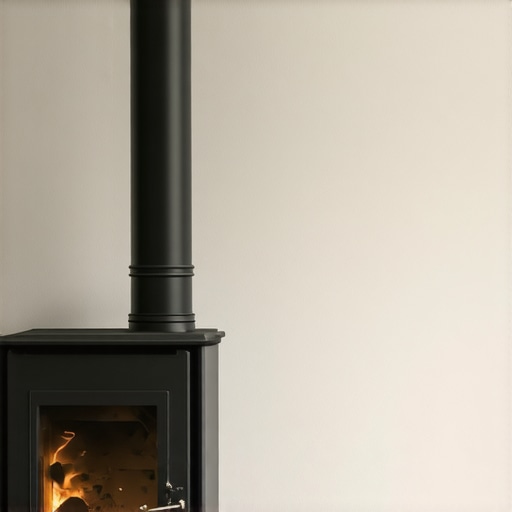
I once walked into a job where a guy had used B-vent—the double-wall stuff meant for gas appliances—for a wood stove. He thought he was being smart because it was cheaper than Class A chimney pipe. That ‘gas’ pipe is rated for 480°F. A chimney fire in a wood stove can hit 2,100°F in seconds. By the time I got there, the inner liner had melted like a cheap candle, and the attic insulation was smoldering. The difference between sensible heat (what you feel) and the latent heat of combustion is where the amateur gets burned. Wood smoke contains unburned gases and tars. If the flue gas cools down too fast because you didn’t use an insulated pipe, those tars condense into creosote. It’s a thick, acidic, sour-smelling sludge that eats through metal and waits for one stray spark to turn your house into a Roman candle. This isn’t like a radiator replacement where a leak just ruins the floor; a venting mistake ruins the whole zip code.
The Physics of Height: The 3-2-10 Rule
Most DIYers stop the pipe the moment it clears the roofline. That is a recipe for a smoke-filled living room. Airflow is like water; it creates eddies and turbulence. If your chimney isn’t at least 3 feet above the highest point where it passes through the roof and 2 feet higher than any part of the building within a 10-foot radius, the wind will literally push the smoke back down the throat of the stove. I’ve seen guys try to fix this with ‘fancy’ caps, but you can’t bypass the laws of physics. It’s the same logic we use when sizing return air drops for a furnace repair. If the static pressure is too high, the system chokes. In a wood stove, that ‘choke’ is a cloud of smoke and a fire that refuses to stay lit.
“Ventilation systems shall be designed to ensure that the minimum outdoor air requirements are met and that the building remains under slight positive pressure.” – ASHRAE Standard 62.1
The Dangerous Allure of Ventless ‘Solutions’
When the wood stove project fails, I often see people pivot to ventless gas heater services. As a vet who has spent 30 years sniffing out heat exchanger cracks, ventless heaters make my skin crawl. They are marketed as 99% efficient because they dump 100% of the combustion products—including water vapor and CO2—right into your breathing air. In a cold climate, that’s a recipe for mold and oxygen depletion. It’s the polar opposite of a proper infrared heater installation or a sealed-combustion furnace. If you are going to burn fuel, you must have a dedicated path for the ‘exhaust’ to leave and the ‘makeup air’ to enter. This is why we push for an annual heating inspection; we aren’t looking for a ‘scam’ upsell, we are looking for the soot patterns that tell us your house is suffocating.
Thermodynamic Zooming: The Cold Hearth Syndrome
Let’s talk about the ‘Cold Hearth’—that moment you open the stove door to start a fire and a gust of freezing air hits you in the face. This happens because the column of air in the exterior chimney is colder and heavier than the air in the house. It’s literally a plug of cold air sitting on your stove. The amateur just keeps throwing matches at it. The pro knows you have to ‘prime’ the flue. You have to heat that air column to break the siphon. It’s the same principle as why we check the head pressure on a pool heater repair or why we insist on specific slopes for flue pipes. You are fighting gravity and density. If you don’t understand that, you’ll never have a clean burn. For more technical insights, you might want to look into hvac repair secrets that most ‘Sales Techs’ won’t tell you because they’re too busy trying to sell you a whole new system you don’t need.
The Multi-System Conflict: When Your HVAC Kills Your Wood Stove
Here is the ‘Forensic Diagnosis’ most people miss: Your wood stove might be failing because of your bathroom fan or your dryer. In modern, weather-stripped homes, a high-CFM range hood can create enough negative pressure to pull smoke right out of a wood stove’s gaskets. I’ve seen people spend thousands on a new stove when all they needed was a 6-inch makeup air duct. It’s all one big interconnected system. Whether you are dealing with a mini-split troubleshooting issue or trying to balance the draft on a wood burner, you have to look at the whole envelope. If you’re in a jam and the house is filling with a hazy, acidic smell, don’t wait for the morning; call a 24/7 heating emergency response team. We have the tools to measure the Pascal pressure in your rooms and tell you exactly why that smoke isn’t going where it’s supposed to. Don’t be the guy who thinks a roll of foil tape—or ‘Pookie’ as we call the mastic stuff—can fix a fundamental violation of thermodynamics. Safety isn’t a DIY project.