
The Sound of a Dying Heat Cycle
Every November, the same thing happens. I get a call from a homeowner who’s wrapped in three blankets, staring at their thermostat like it’s a broken slot machine. They’ve cranked it up to 80 degrees, but the house is still 62. They think the furnace is ‘tired.’ I tell them a furnace doesn’t get tired; it gets strangled. My old mentor, a grizzly veteran who could diagnose a compressor by the smell of the oil, used to scream at me, ‘You can’t heat what you can’t touch!’ He was talking about the boundary layer of air on the heat exchanger. If you don’t have the right CFM (Cubic Feet per Minute) moving across those metal plates, that heat just goes up the flue or trips the high-limit switch. This is why airflow matters more than horsepower. When I walk into a mechanical room, I’m not looking for a brand name; I’m looking for the Static Pressure. Most systems out there are working twice as hard because some ‘Tin Knocker’ thirty years ago decided a 10-inch return was ‘good enough’ for a 3-ton unit. It’s not. If you want to drop your bill without freezing your tail off, you have to stop thinking about the temperature and start thinking about the physics of moving air.
“Standard practice in duct design often ignores the impact of internal lining and restrictive fittings, leading to systems that operate at 50% of their rated efficiency.” – ASHRAE Standard 62.1
1. The Static Pressure Sabotage (Air Handler Repair)
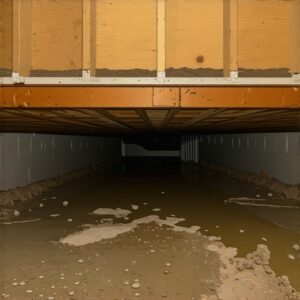
Your air handler is the heart of the system. If it’s struggling against high static pressure, your blower motor is pulling enough ‘juice’ to power a small village. I’ve seen electric heater services where the heating elements were glowing cherry red—not because they were working well, but because the air was moving so slowly it couldn’t strip the heat away. This is where hvac-repair-secrets-boost-efficiency-with-expert-tips come into play. Check your filter. If it looks like a dryer lint trap, you’re killing your blower. But beyond the filter, you need to look at the Pookie (that’s mastic sealant for the uninitiated) on your plenum. Leaking air in an unconditioned crawlspace is like lighting twenty-dollar bills on fire. A proper air handler repair isn’t just swapping a motor; it’s checking the total external static pressure to ensure the ‘Sparky’ didn’t undersize the circuit or the duct guy didn’t choke the return. If your system sounds like a jet engine taking off, your ducts are too small, and your bill is too high.
2. The Ignition Sequence & The Ghost in the Machine
In the North, where the wind-chill makes the metal on my truck feel like dry ice, furnace ignition repair is the bread and butter of emergency calls. Most people think a furnace just ‘turns on.’ It’s actually a choreographed dance: the inducer motor clears the path, the pressure switch proves it, the ignitor glows to 2000 degrees, and the gas valve clicks. If any of those relay services fail, you’re stuck in a lockout. I once spent four hours in a basement because a homeowner tried to ‘clean’ their flame sensor with a greasy rag. Now the sensor was coated in carbon, telling the control board there was no fire even when the burners were roaring. It’s a safety feature, but it’s a bill-killer when the system cycles on and off every three minutes—that’s called short-cycling. You want long, steady run times for efficiency. This is why understanding furnace-repair-myths-debunked-what-homeowners-need-to-know is vital. If your furnace is banging and popping, it’s not ‘ghosts’; it’s delayed ignition, and it’s dangerous.
“The most expensive equipment in the world cannot overcome a bad duct system or an improperly calibrated ignition sequence.” – ACCA Manual J
3. Thermodynamic Recovery & The ERV Advantage
We’ve built houses so tight now that they can’t breathe. This is great for the bill, but terrible for the air quality. This is where energy recovery ventilators (ERV) become the unsung heroes. An ERV takes the heat from the stale air you’re exhausting and transfers it to the fresh, freezing air you’re bringing in. It’s like a heat exchanger for your whole house. If you’re running industrial heater services or even a large residential unit, integrating an ERV can cut the load on your primary heater by 20%. Pair this with demand-controlled ventilation, which uses CO2 sensors to decide when to bring in fresh air, and you’ve moved from ‘dumb’ heating to ‘smart’ thermodynamics. You aren’t just heating the air; you’re managing the molecular energy of the space. For those with specialized setups, including mini-split troubleshooting-when-and-how-to-call-a-pro, ensuring your ventilation isn’t fighting your heating is the key to a lower bill.
4. The Component Health Check: Capacitors and Retrofits
Don’t ignore the small stuff. I’ve seen capacitor replacement services save a motor that was pulling twice its rated amperage. When a capacitor gets weak, the motor runs hot. Heat is wasted energy. If you’re still running an old system with R-22 ‘gas,’ you’re living on borrowed time. We are moving toward low-GWP refrigerant retrofits and 2025 mandates that will change the game. Newer systems require leak detector integration because the new refrigerants (like R-454B) are ‘mildly flammable.’ It sounds scary, but it’s just physics. If you have a slow leak and you’re ‘topping off the Freon,’ you’re participating in a scam. It’s a sealed system. Find the leak, fix it, and ensure your electric heater services or heat pumps are running at the correct pressures. If your suction line isn’t ‘beer can cold’ in the summer or your discharge line isn’t ‘coffee hot’ in the winter, you’re throwing money away. If you need help figuring out why your system is behaving like a spoiled teenager, contact-us for a real diagnostic, not a sales pitch. Maintenance is a capacitor replacement today to avoid a compressor burnout tomorrow. That is how you lower a bill.