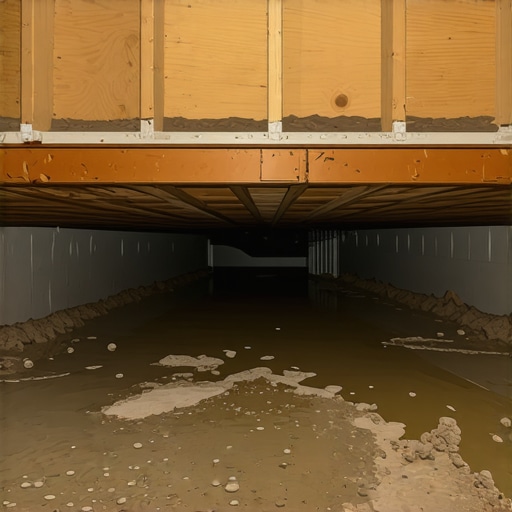
You crawl under a house on a freezing Tuesday morning in the dead of January, expecting a simple fix, and instead you find a swamp. Up north, where the ground freezes solid but the basement or crawl space stays in a perpetual war with the soil, homeowners think stapling fiberglass batts between the floor joists solves everything. It does not. I once followed a commission-hungry sales tech into a crawl space where he quoted a family eight grand for a complete system overhaul because their floors felt like ice sheets. The real culprit? A completely uninsulated, unsealed crawl space that was sucking the heat right out of their ductwork through brute thermodynamic force, coupled with a completely blocked return. All they needed was proper air sealing and a simple tune-up, but that scammer wanted a new truck payment. It made me sick.
You cannot look at a house as a collection of isolated rooms; it is a single, integrated thermal machine. If you insulate your crawl space but ignore the rest of the house’s envelope and its mechanical systems, you are throwing money into a black hole. In cold-climate zones, the stack effect rules supreme. Cold air is sucked into the crawl space, warmed slightly by the earth, then pulled up into your living spaces through floor penetrations, wire runs, and leaky duct joints. If your heating equipment under there is struggling, no amount of pink fiberglass is going to save you from a sky-high utility bill or a cracked heat exchanger.
“The most expensive equipment in the world cannot overcome a bad duct system.” – Industry Axiom
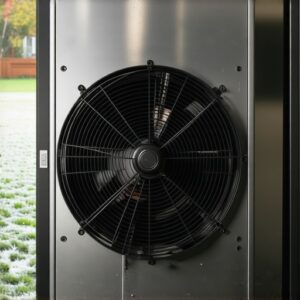
When we talk about cold-climate heating, we are dealing with intense sensible heat loss and the violent physics of combustion. When temperatures plunge below zero, your heating system works overtime, making issues like a worn-out fan motor highly critical. If your system’s fan cannot push enough CFM over that scorching heat exchanger, the safety limits trip, the system short-cycles, and eventual mechanical failure is guaranteed. That is when you need a professional blower motor replacement to restore the airflow your system desperately craves. Without that primary force, your heat just sits in the metal box, threatening to crack your heat exchanger and spill carbon monoxide into your breathing air.
Let’s dive into the core of the problem: Blueprint C – The Airflow Manifesto. Your crawl space insulation is only a shield; your ducts are the transport system. If your supply and return lines are running through an unconditioned, freezing crawl space, they are acting as massive heat radiators, warming up the spiders instead of your living room. Duct tape will not save you here. Real tin knockers use high-velocity mastic—commonly known in the trade as “Pookie”—to seal every single joint. Wrapping ducts in insulation without sealing them first with Pookie is like wearing a thick wool coat wide open in a blizzard. Cold air just blows right through the fibers.
It’s the same story with other combustion and venting systems in your home. Take your dryer, for instance. A clogged dryer duct running through an unconditioned crawl space cools down so fast that wet lint instantly sticks to the cold metal pipe, building up a thick, flammable barrier. This is why routine dryer vent cleaning is non-negotiable for system performance and home safety. If your vents cannot breathe, neither can your home. The same principles apply to commercial spaces, where we design robust warehouse heating solutions to handle massive volumes of air without letting cold spots develop near the slab.
“Design, installation, and equipment sizing must be based on the calculated heat loss of the structure in accordance with ACCA Manual J.” – ACCA Manual J Section 1-3
If you are struggling to keep your home warm despite having an insulated floor, you need to examine the actual heating source. For homes relying on hydronic heat, a failing system often requires specialized steam boiler repair to fix water-level issues, clogged pipes, or failing air vents. For forced-air systems, standard furnace repair services can identify if your system is suffering from low gas pressure or faulty safeties. Many older homes are still running single-stage systems that blast hot air on or off, creating wild temperature swings. Upgrading to modern variable speed furnace services allows the blower to run at a low, continuous whisper, constantly mixing the air in the house to eliminate those cold floors once and for all. If you are still running on old, dangerous propane tanks or outdated electric baseboards, a new gas line installation for furnaces can open up high-efficiency heating options that slash your fuel costs by half.
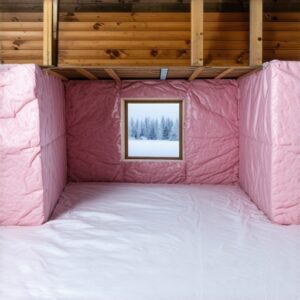
To truly conquer the thermal challenges of your home, you must combine crawl space sealing with proper attic insulation for heating. Heat rises, pulling cold air up through your floorboards like a giant chimney. By air-sealing and heavily insulating the attic, you put a lid on the chimney, slowing down the stack effect and keeping the warmth down where you actually live. Once the home’s envelope is secured, we bring in the brains: WiFi thermostat integration. This allows your system to monitor and adjust temperatures based on real-world patterns, while an occupancy sensor installation ensures you aren’t wasting expensive energy heating rooms that are empty. Comfort is not a mystery or a matter of luck; it is pure, unadulterated physics.