The Icy Feet Syndrome: Why Your Crawl Space is a Thermodynamic Black Hole
Every winter, the phone calls start the same way. A homeowner is sitting on their couch, the thermostat says 72 degrees, but their feet are freezing and they can hear the furnace screaming like a banshee in the basement. They think they need a bigger heater. They’re wrong. Most of the time, they’re losing the war against the Stack Effect. My old mentor, a guy who had been a tin knocker since the Eisenhower administration, used to grab me by the collar and scream, ‘You can’t heat what you can’t touch!’ He was talking about the boundary layer of air in your home. If your crawl space is a drafty, uninsulated mess, it’s not just a storage area for spiders; it’s an atmospheric vacuum pulling the life out of your heating system.
In the trade, we see it constantly: a high-efficiency two-stage furnace installation sitting on top of a crawl space that’s essentially a wind tunnel. You can have the most expensive burner in the county, but if the static pressure is off because your duct design is a nightmare, you’re just burning money. We’re talking about sensible heat versus latent heat, and in the frozen North, the enemy is the thermal bridge. When that subfloor drops to 40 degrees, it doesn’t matter if your air is warm; your body radiates its heat toward the cold floor. This is why radiant floor heating installation is the gold standard for crawl space retrofits. It turns the floor into the radiator, stopping the convection currents that make your ankles feel like they’re in a walk-in freezer.
“The most expensive equipment in the world cannot overcome a bad duct system.” – Industry Axiom
The Anatomy of a Winter Crawl Space Failure
When I crawl under a house in January, I’m looking for more than just missing fiberglass batts. I’m looking for ‘Pookie’—that’s the gray mastic we use to seal duct joints. If I see silver duct tape, I know I’m following a ‘Sales Tech’ who didn’t care about longevity. Tape dries out and fails; Pookie is forever. If your ducts are leaking in the crawl space, you’re heating the dirt while your wall furnace installation upstairs struggles to keep up. I’ve seen furnace ignition repair calls that were actually just a result of extreme drafts in the crawl space blowing out the flame before the sensor could even register it. It’s a cascading failure of physics.
Speaking of ignition, let’s talk about the pilot light relighting cycle of doom. In older homes with floor furnaces or vented wall units, a drafty crawl space creates a pressure imbalance. When the wind howls, it creates a venturi effect that can literally suck the flame right off the pilot assembly. If you find yourself kneeling on the floor every three days with a long lighter, you don’t just have a ‘finicky’ heater; you have a pressure problem. This is where furnace repair myths debunked come into play—most people think it’s a bad thermocouple, but often it’s just the house breathing incorrectly. You can read more about these common misconceptions at chillyprohvac.com/furnace-repair-myths-debunked-what-homeowners-need-to-know.
Thermodynamic Zooming: The Role of Inverter-Driven Compressors
People ask me, ‘Why should I care about inverter-driven compressors in the winter?’ If you’re running a dual-fuel system or a heat pump in a cold climate, the inverter is your best friend. Traditional compressors are like a light switch—they’re either 100% on or 100% off. When they’re off, the crawl space cools down instantly. When they blast on, they overshoot the set point. An inverter-driven system is like a dimmer switch; it ramps up to exactly the speed needed to maintain equilibrium. This constant, low-velocity airflow keeps the crawl space from becoming a reservoir of stagnant, icy air. However, even the smartest compressor can’t fix 1970s-era duct design services. If your return air drop is undersized, that inverter is going to ‘hunt’ for a load it can’t find, leading to premature board failure.
And don’t even get me started on humidity. In the winter, the air is bone dry. This is why bypass humidifier repair is the most underrated service in the HVAC world. Dry air feels colder because it accelerates evaporation from your skin. By maintaining 35-45% relative humidity, 70 degrees feels like 73. If your humidifier’s solenoid is clicking but no water is flowing, you’re likely looking at a scaled-up orifice or a dead transformer. Fixing that is cheaper than cranking the thermostat three degrees higher all winter long.
The Mechanical Pathology of a Cold Crawl Space
When the crawl space is neglected, the modulating furnace repair bills start piling up. Modulating gas valves are precise instruments, but they hate the ‘short cycling’ caused by poor thermal envelopes. If your furnace is turning on and off twenty times an hour because the crawl space is sucking the heat out of the floorboards, you’re wearing out the igniter and the inducer motor. I can smell a stressed inducer from the driveway—that acrid, ozone-heavy scent of a motor that’s running way past its duty cycle. This is why we push for infrared heater installation in specific zones or shops; it heats objects, not air, which is the only way to win in a space that refuses to stay sealed.
“Standard 62.2-2016 mandates specific ventilation rates to ensure indoor air quality, yet we must balance this against the thermal penalty of unconditioned crawl spaces.” – ASHRAE Standards
If you’re wondering if your system is actually failing or if it’s just fighting your house, you need to look at the ‘juice’ (refrigerant) or the gas pressure. But before you call a pro to ‘top it off’ (which is a scam—it’s a sealed system), check your static pressure. You can find some hvac repair secrets on how to boost efficiency yourself at chillyprohvac.com/hvac-repair-secrets-boost-efficiency-with-expert-tips. A simple filter change or unblocking a return vent in the crawl-space-adjacent room can do more for your two-stage furnace installation than any ‘magic’ chemical a sales tech tries to sell you.
The Solution: Encapsulation and Airflow Engineering
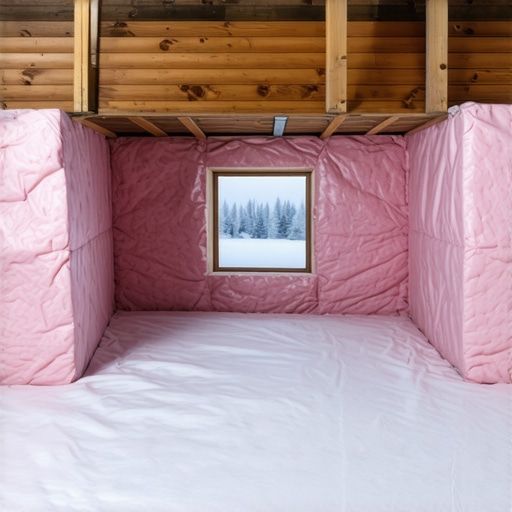
Transforming your crawl space into a barrier means more than just throwing some plastic on the ground. It requires a holistic approach to duct design services. We often install a ‘supply’ vent into the crawl space once it’s encapsulated to keep it within 10 degrees of the living space. This prevents the ‘beer can cold’ suction lines from sweating and keeps your plumbing from freezing during a polar vortex. If you have a mini-split system acting as a booster, make sure you understand the mini-split troubleshooting steps for cold-weather operation, which you can find at chillyprohvac.com/mini-split-troubleshooting-when-and-how-to-call-a-pro.
In the end, comfort is physics. It’s about BTU management and airflow velocity. If you stop the crawl space from acting as a giant heat sink, your furnace can finally do its job without breaking a sweat. Don’t let a ‘Sales Tech’ convince you that a 98% AFUE furnace is a silver bullet if your crawl space is still a 0% AFUE disaster. Seal the gaps, fix the furnace ignition, and for the love of all that is holy, use Pookie on your joints. Your feet—and your wallet—will thank you.