Why You Should Never Skip Your Swamp Cooler Shutdown This Fall
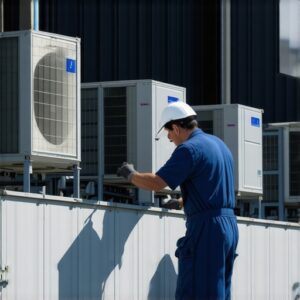
You can smell autumn coming from a mile away in the high desert. The air sharpens, the aspens turn, and that swamp cooler sitting on your roof—the one that got you through three months of ninety-degree dry heat—suddenly goes quiet. For a lot of homeowners, that silence means “out of sight, out of mind.” They leave the unit sitting there, raw and exposed, until the first freeze hits. That is a massive mistake. As an old-school technician who has spent thirty years dragging heavy tool bags up extension ladders, I can tell you that skipping your evaporative cooler shutdown is a direct ticket to a flooded ceiling, a rusted blower wheel, and a furnace that works twice as hard for half the results.
My Mentor’s Golden Rule of Airflow
My old mentor used to scream, “You can’t cool what you can’t touch!” This is why airflow matters more than horsepower. He’d stand next to a rattling unit in a dusty equipment room, waving a hand toward the ductwork, reminding us that air is a physical liquid in motion. If you leave a swamp cooler open to the elements during the winter, you are violating the first law of air movement. Cold, dense winter air will find its way down through your cooler’s throat, pouring straight into your living space like an open window you can’t shut. You might think your furnace is failing when, in reality, your home is losing all its warmth through an unsealed metal box on your roof.
“The most expensive equipment in the world cannot overcome a bad duct system.” – Industry Axiom
The Physics of Southwest Winters: Sensible Heat vs. The Freeze
Let’s look at the psychrometrics of the Southwest desert transition. During the summer, we rely on sensible heat reduction through evaporation. Water absorbs heat as it changes state from a liquid to a gas, dropping the dry-bulb temperature of the air entering your home. But come October, the dry air turns freezing. If you leave water standing in your cooler’s pan, that liquid expands by nine percent as it turns to solid ice. It doesn’t care about your heavy steel pan or your brass float valve; it will crack them wide open. When spring arrives and you turn the water line back on, you’ll have a waterfall running through your ceiling before you even realize the line has split. This isn’t just about saving your equipment; it’s about preventing catastrophic water damage.
The Blueprint: The Forensic Diagnosis of a Swamp Cooler Shutdown
If you want to keep your system alive for fifteen years instead of five, you have to treat the shutdown as a physical, step-by-step mechanical preservation. Here is the exact process I use when I do a premium winterization:
1. Isolate the Water Line (The Golden Rule)
You don’t just turn off the valve at the cooler. You have to locate the main shutoff valve inside your crawlspace, basement, or utility closet. Shut that valve tight, then disconnect the copper or poly water line at both ends. Blow the residual water out of that line. If you leave gas or water trapped in that small-diameter pipe, it will freeze and burst, requiring professional HVAC repair services before you can use it next year.
2. Drain and Scrape the Pan
Remove the overflow pipe and let the mineral-heavy water drain completely. Take a wire brush and scrape away the white scale buildup on the bottom and sides. That scale is composed of concentrated calcium and magnesium. If left over winter, it hardens into a concrete-like shell that eats through the galvanized coating of your metal pan, leading to rust-through holes. You don’t need fancy chemicals; just elbow grease and a good scraper.
3. Swap or Store the Pads
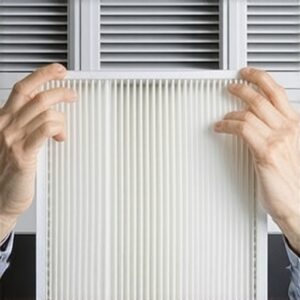
If you are using aspen wood pads, throw them away. They are breeding grounds for mold spores during the damp spring transition. If you have rigid media pads, wash them down thoroughly with a hose to clear out the salt buildup, let them dry completely, and store them. Leaving wet pads in a closed unit invites rot and a sour, swampy smell that will blast into your house next spring.
4. Install the Damper and the Winter Cover
Slip the sheet metal damper (often called the “cookie”) into the throat of the cooler. This is your physical barrier preventing warm house air from escaping up the ductwork. Once that is locked in, wrap the exterior of the unit with a heavy-duty, canvas winter cover. Tighten the straps like you mean it. A loose cover will act like a sail in spring windstorms, ripping itself to shreds and exposing your unit to freezing rain.
“Uncontrolled infiltration through unused ventilation pathways can account for up to 15% of winter heating load penalties in residential structures.” – ASHRAE Fundamentals Handbook
The High-Tech Future: Transitioning to Smarter Comfort
The industry is moving quickly. While we still service traditional evaporative coolers, modern homes are shifting toward heat pump maintenance and repairs and advanced integrations. In larger residential and commercial properties, we are seeing massive upgrades like occupancy sensor installation, smart building management systems, and AI-driven HVAC optimization to balance heating loads. Many property owners are also looking into low-GWP refrigerant retrofits to stay compliant with changing environmental regulations. Even if you run a simple system with a swamp cooler and a boiler, keeping your combustion analysis up to date on your heating equipment is vital to ensure your heat source is operating safely. For those with complex setups, integrating a specialized leak detector can save thousands in refrigerant loss and emergency repairs. If you want to learn more about keeping your system running smoothly, check out these HVAC repair secrets for boosting overall efficiency.
Why You Can’t Trust the “Five-Minute” Tune-Up
Every autumn, some “sales tech” will offer a quick fifty-dollar winterization. They climb up, turn off the water valve on the roof, throw a cheap plastic cover over the top, and call it a day. They don’t drain the water line, they don’t clean the pan, and they don’t install the metal damper. When the first hard freeze hits in December, that cheap plastic cover tears, the undrained copper line bursts, and your furnace runs constantly because warm air is escaping through the open damper. Don’t fall for it. Take the time to do it right, or hire an experienced technician who understands the physical laws of airflow and thermal dynamics.