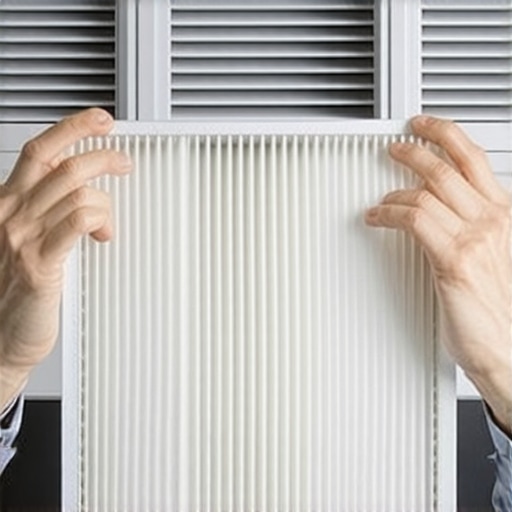
The Physics of Airflow: A Lesson from the Attic Trenches
My old mentor used to scream, ‘You can’t cool what you can’t touch!’ This wasn’t just a cranky old man shouting into the return air plenum; it was a fundamental law of thermodynamics that most business owners ignore until they are staring at an $8,000 repair bill. He would stand over a frozen evaporator coil, pointing his flashlight at the layers of gray filth, and remind me that if the air can’t pass through the fins, the refrigerant inside the ‘suction line’ stays too cold, the compressor slugs liquid, and you’re suddenly in the market for a new unit. This is why a quarterly filter replacement schedule isn’t just about ‘clean air’—it’s about preserving the life of your mechanical infrastructure.
“The most expensive equipment in the world cannot overcome a bad duct system.” – Industry Axiom
When we talk about commercial HVAC maintenance, we aren’t just swapping out 20x25x1 pleated squares. We are managing Total External Static Pressure (TESP). Think of your HVAC system like a set of lungs. If you try to run a marathon while breathing through a cocktail straw, your heart is going to fail. In your furnace or air handler, that ‘heart’ is the blower motor. A dirty filter increases the resistance the motor must overcome. As the resistance rises, the motor pulls more amps, generates more internal heat, and eventually, the windings fry. In a school setting, neglecting school boiler maintenance or failing to perform regular furnace tune-up services leads to catastrophic failure exactly when the outdoor ambient temp hits zero. You don’t want to be the facility manager explaining to a board of directors why the pipes froze because a $10 filter wasn’t changed.
The Thermodynamic Zoom: Heat Exchange and MERV Filter Upgrades
Let’s get technical. In a heating cycle, your furnace burns ‘gas’ (refrigerant is for cooling, fuel is for the fire) to heat a metal box called the heat exchanger. The blower motor pushes cold return air over this metal. If that air is restricted by a clogged filter, the heat exchanger can’t shed its thermal load. The metal expands and contracts violently, eventually leading to a cracked heat exchanger—a death sentence for the unit and a major carbon monoxide risk. This is often when you’ll see a limit switch replacement become necessary, as the safety sensors trip to prevent the unit from melting itself down. Proper system performance testing during a quarterly checkup measures the temperature rise across the heat exchanger to ensure you aren’t cooking the guts of your furnace.
Many businesses are now pushing for air purification integration and MERV filter upgrades to improve indoor air quality. While moving from a MERV 8 to a MERV 13 is great for catching viruses and allergens, it’s a ‘tin knocker’s’ nightmare if the ductwork wasn’t designed for it. High-efficiency filters are denser. If you don’t have the surface area, you’re essentially putting a piece of plywood in your return. This is where ductless mini-split installation becomes a viable alternative for problem areas, as these systems don’t rely on massive central duct runs and can be managed independently. If you’re struggling with a unit that won’t behave, check out these mini-split troubleshooting tips.
The Cold Reality: Flame Sensors and Pilot Lights
In Northern climates, the ‘Monsoon Effect’ of humidity isn’t our enemy—it’s the dry, biting cold that wreaks havoc on combustion components. During a quarterly service, a real tech isn’t just looking at the filter. We’re performing furnace flame sensor cleaning. The flame sensor is a rod that uses the flame to conduct a tiny microamp signal to the control board. If it’s covered in carbon or oxidation, the board thinks the burner didn’t light and shuts the whole thing down. It’s a common ‘no heat’ call that costs a fortune on a Sunday but takes five minutes during a scheduled visit. The same goes for pilot light relighting on older commercial boilers; if the thermocouple is shot, the ‘gas’ won’t flow.
“Standard 62.1-2022: Ventilation for Acceptable Indoor Air Quality requires that filters be maintained to ensure design airflow is achieved.” – ASHRAE Standards
Don’t be fooled by ‘Sales Techs’ who try to sell you a whole new system because your unit is ‘short cycling.’ Often, the unit is just hitting its high-limit because of restricted airflow or a faulty sensor. By implementing occupancy sensor installation and linking it to your HVAC, you can reduce the run-time of your equipment, but only if the core system is breathing correctly. If you’re tired of being told you need a $15,000 replacement, read up on these furnace repair myths to see if you’re being taken for a ride. Every business owner should have their system’s ‘heartbeat’ checked regularly. You can find more efficiency secrets online, or if you’re ready to set up a real schedule, contact us today to talk to someone who knows the difference between a capacitor and a contactor. Comfort is physics, not magic. Stop guessing and start measuring.