The Sound of a Dying District: Why Your School’s Boiler is a Ticking Clock
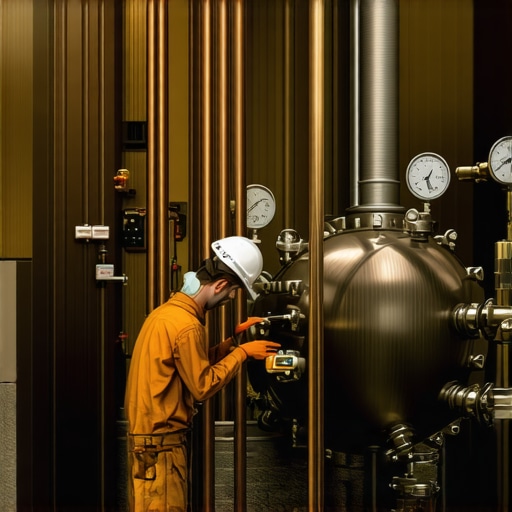
There is a specific silence that hits a school building in the dead of January when the plant fails. It is not the peaceful silence of a snow day; it is the heavy, expensive silence of 2,000 students about to be sent home because the mechanical room has become a tomb. I have spent three decades hauling pipe wrenches through crawlspaces and listening to the rhythmic chugging of steam systems that were installed before the moon landing. Most people think a boiler is just a big kettle. They are wrong. It is a pressurized beast that requires respect, physics, and a technician who knows that airflow is the absolute law of the land.
My old mentor, a man who could smell a gas leak from the parking lot, used to scream at me, ‘You can’t heat what you can’t touch!’ He was talking about the boundary layer of air on a heat exchanger, but he was also talking about the fundamental reality of thermodynamics. If your airflow is restricted, or your combustion is sloppy, your efficiency is dead in the water. This brings us to the looming shadow of 2026. With tightening emissions standards and the push for decarbonization, schools that haven’t mastered their maintenance plans are looking at forced closures or astronomical emergency replacement costs. We are moving toward a world of biomass boiler services and high-efficiency hydronics, but you cannot get to the future if your current equipment is choking on its own soot.
“The most expensive equipment in the world cannot overcome a bad duct system.” – Industry Axiom
1. The Ignition Sequence: Furnace Ignition Repair and Flame Verification
In the North, where the polar vortex turns pipes into popsicles, the ignition system is the most common point of failure. Whether you are running natural gas or a biomass setup, the moment that spark fails, the clock starts ticking toward a frozen building. I’ve seen ‘Sales Techs’ try to replace entire burner assemblies when the only issue was a fouled flame sensor or a cracked ceramic insulator. A proper furnace ignition repair isn’t just swapping parts; it’s analyzing the microamp signal to ensure the control board knows the fire is actually lit. We look for flame rollout—a sign that your heat exchanger is likely cracked and venting carbon monoxide into the hallways. If you haven’t checked your ignition timing by the 2025-2026 season, you’re gambling with a building closure. This is where furnace repair myths often lead facility managers astray, thinking a simple reset button press solves the underlying combustion imbalance.
2. The Respiratory System: Chimney Liner Installation and Venting Physics
You can’t have fire without breath. In these old brick school buildings, the original chimneys were often oversized for modern high-efficiency burners. When you vent a high-efficiency boiler into a massive, cold masonry chimney, the flue gases cool down too fast. They reach the dew point, and suddenly you have acidic condensation eating the mortar from the inside out. This is why chimney liner installation is non-negotiable for 2026 readiness. We use stainless steel liners to keep the ‘gas’ (the combustion products) moving fast and hot until they exit the building. Without a properly sized liner, you’re looking at structural failure and potentially back-drafting toxins into the classrooms. It’s not just about the boiler; it’s about the integrity of the exhaust path.
3. The Atmospheric Balance: Steam Humidifiers and Latent Heat
In the North/Cold climate zone, the air in a school gets so dry it starts pulling moisture out of the students’ skin and the teachers’ vocal cords. This is where steam humidifiers come in. But here is the catch: steam is aggressive. If your water treatment is off, those humidifiers will scale up and burn out their elements in a single season. I’ve walked into mechanical rooms that smelled like a sour locker room because the humidifier tanks hadn’t been flushed in years. Maintaining these systems is a core part of HVAC maintenance plans. We zoom in on the latent heat—the energy required to turn water into vapor—and ensure that the distribution manifolds aren’t spitting liquid water into the ducts, which leads to mold. Proper humidity control actually makes the building feel warmer at lower temperatures, saving the district a fortune in fuel costs.
“Air conditioning and heating systems shall be maintained to provide the required outdoor air quantities and indoor environments.” – ASHRAE Standard 62.1
4. The Fresh Air Mandate: Energy Recovery Ventilators (ERV)
Post-2020, every school board is obsessed with fresh air, and rightly so. But you can’t just open a window when it’s -10°F in Chicago. That’s how you burst a coil. Energy recovery ventilators (ERVs) are the workhorses here. They take the warm, stale air leaving the building and use it to pre-heat the freezing fresh air coming in. It’s a heat exchange dance that happens inside a honeycomb-like wheel. If that wheel is clogged with dust or the belts are slipping, you’re just blowing money out the exhaust vent. We perform airflow measurement services to prove that the CFMs (cubic feet per minute) entering the classrooms meet the legal requirements. If your ERV isn’t part of your 2026 check-list, you’re going to fail your indoor air quality audits. For those looking to optimize, understanding hvac repair secrets regarding static pressure is vital to keeping these ventilators running without burning out the motors.
5. The Digital Nervous System: App-Controlled Heating Systems
The days of the ‘Sparky’ (electrician) just wiring a simple thermostat are over. Modern school boilers are now part of the Internet of Things. App-controlled heating systems allow a single facility manager to monitor forty buildings from a smartphone. But here’s the reality: if the sensors are calibrated wrong, the software is useless. I’ve seen systems where the ‘brain’ thought the outdoor air temp was 70°F when it was actually 20°F because the sensor was mounted right next to an exhaust vent. We calibrate the thermistors and check the communication protocols to ensure the boiler isn’t ‘short cycling.’ Short cycling is the silent killer—it’s like a car in stop-and-go traffic; it wears out the contactors and the compressor (or burner) far before its time. If you’re considering an upgrade, financing for heat pump installs is becoming more accessible for schools, often integrating with these smart controls to provide a hybrid heating solution that’s ready for the 2026 regulations.
Beyond the Boiler: The Maintenance Manifesto
Don’t let a ‘Sales Tech’ tell you that you need a total system replacement because of a bad control board. But also, don’t ignore the signs of a dying plant. If your ‘Tin Knockers’ are telling you the ductwork is undersized for a new high-efficiency blower, listen to them. If you’re in an area where swamp cooler maintenance is still a factor for the shoulder seasons, don’t neglect the transition between heating and cooling. Every component, from the biomass boiler services to the smallest steam trap, plays a role in the building’s survival. Your goal is to reach 2026 with a system that is efficient, compliant, and most importantly, operational. For more complex setups, like those involving residential or light commercial zones within the district, check out our guide to heat pump maintenance to ensure your auxiliary systems are as robust as your main boiler plant. Comfort isn’t magic; it’s the result of strict adherence to the laws of physics and the refusal to cut corners in the mechanical room. If you have questions about your specific setup, don’t hesitate to contact us before the frost hits. For those worried about troubleshooting smaller zones, we have a resource on mini-split troubleshooting to keep every corner of the school conditioned properly. Please review our privacy policy for more information on how we handle your facility data and service requests.