The Sound of a Silent House: Why Your Heat Just Quit
It’s 3 AM in the middle of a January cold snap, the kind where the frost is thick enough on the windows to look like topographical maps. You’re deep in a dream when it happens—the thunk. It’s a heavy, mechanical sound, the sound of a 50-amp breaker giving up the ghost. Suddenly, the white noise of the blower motor dies, and the silence is heavier than the cold. You go to the panel, flip the plastic switch back to ‘on,’ and ten minutes later? Thunk. Again.
Listen, I’ve spent thirty years crawling through crawl space heating solutions and balancing church heating systems with 40-foot ceilings. I’ve seen homeowners try to duct-tape their way out of a tripped breaker, and I’ve seen ‘Sales Techs’ try to sell them a $15,000 AI-driven HVAC optimization package when the real problem was a $2 filter. Your breaker isn’t tripping because it’s ‘sensitive.’ It’s tripping because it’s doing its job—preventing your house from becoming a giant toaster oven that eventually catches fire. Here is the forensic breakdown of why your electric furnace is fighting your electrical panel.
The Physics Lesson: Why Airflow is King
My old mentor, a man who could smell a refrigerant leak from the curb, used to scream at me, ‘You can’t heat what you can’t touch!’ It sounded like Zen nonsense back then, but he was right. In an electric furnace, we’re dealing with the Joule Effect. We run high-voltage electricity through resistive coils—think of them as giant hair dryer elements—and they get glowing red hot. If you don’t move enough air across those coils to whisk that heat away, the temperature inside the cabinet skyrockets.
“The most expensive equipment in the world cannot overcome a bad duct system.” – Industry Axiom
When the heat can’t escape, the internal limit switches (the safety ‘brains’ of the unit) eventually fail, or the amperage draw of the blower motor spikes as it fights against the static pressure of a clogged system. This is where hvac repair secrets come into play: most ‘electrical’ problems are actually airflow problems in disguise. If the air can’t move, the heat stacks up, the resistance in the wires changes, and the breaker trips to save the compressor or the elements from melting.
Reason 1: The ‘Tin Knocker’ Nightmare (Restricted Airflow)
The number one reason for a tripped breaker is restricted airflow. This isn’t just about a dirty filter, although that’s the primary suspect. It could be a collapsed flex duct in your crawl space or a ‘Sparky’ (electrician) who accidentally ran a wire across a damper. When the blower motor—the heart of your system—encounters resistance, it has to work harder. This is called ‘high static pressure.’ As the motor struggles, its amperage draw climbs. If your motor is rated for 8 amps but is pulling 12 because your ducts are choked, that heat builds up in the circuit until the breaker pops.
I’ve walked into church heating systems where they closed off the vents in the basement to ‘save money.’ All they did was kill the airflow, causing the heat exchanger to overheat and the electric strips to cycle on their high-limits until the breaker finally fried. Don’t close your vents. Your system was designed for a specific volume of air. Mess with that, and you’re asking for a service call.
Reason 2: Shorted Heating Elements or Sequencers
Electric heaters use sequencers to turn on the heating elements in stages. You don’t want 20kW of heat hitting your electrical grid all at once; it would dim the lights for the whole block. If a sequencer ‘welds’ shut—a common failure where the internal contacts literally fuse together—the elements might stay on even when the fan isn’t running. This leads to a massive heat spike. Alternatively, an element can break and touch the metal casing of the furnace. This is a direct short-to-ground. The moment that ‘gas’ (refrigerant) isn’t the primary concern and we’re talking raw voltage, a short-to-ground will trip a breaker faster than you can blink.
In older units, these elements can sag over time. If they touch the frame, you get a bright flash and a dead system. This is why furnace repair myths debunked often focus on the idea that ‘it just needs a reset.’ No. If it trips once, it’s a warning. If it trips twice, it’s a hazard.
Reason 3: The ‘Sparky’ Special (Loose Electrical Connections)
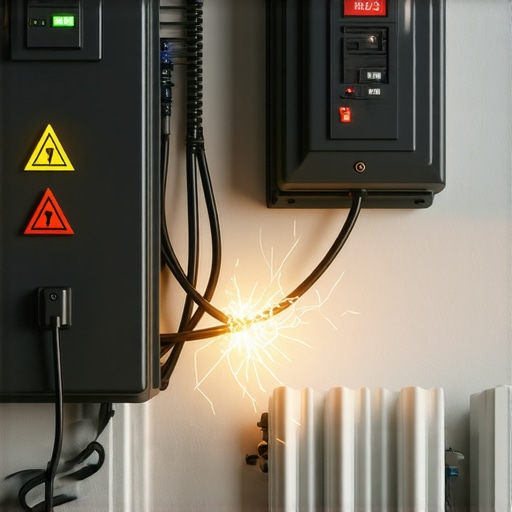
Electricity creates heat. Heat causes metal to expand. When the metal cools down, it contracts. Over five or ten years of winters, the lugs holding your heavy-gauge wires into the breaker or the furnace terminal block can vibrate loose. A loose connection creates resistance. Resistance creates—you guessed it—more heat. I have seen terminal blocks melted into a puddle of black goo because a ‘Tin Knocker’ didn’t torque the lugs down during the original install. This isn’t a job for ‘Pookie’ (mastic); this requires a professional check of your electrical integrity.
“All electrical connections shall be tightened to the manufacturer’s torque specifications to prevent terminal overheating and potential fire hazards.” – ASHRAE Standards
If you smell something sour or acidic, like burning plastic, that’s your insulation melting. That’s the smell of a looming house fire. If you’re integrating solar thermal heating integration, this becomes even more critical as you’re often dealing with complex hybrid controllers that are sensitive to voltage drops.
Reason 4: Failing Blower Motor or Bearings
In the North, where we deal with cracked heat exchangers and brutal cold, the blower motor is the unsung hero. But motors have bearings, and bearings have grease. Over time, that grease dries out or gets gummed up with dust. When the motor bearings start to seize, the motor requires more ‘torque’ to spin. To get that torque, it pulls more ‘juice’ (amperage). If the motor is dragging, it will eventually exceed the breaker’s limit. This is often accompanied by a screeching or grinding sound—the death rattle of a motor.
I once followed a Sales Tech who told a customer they needed a whole new system because of this screech. I cleaned the furnace flame sensor (unrelated but needed) and replaced the capacitor and the motor for a fraction of the cost. Always check the motor’s ‘run capacitor’ first. A weak capacitor makes the motor run ‘hot,’ which can also trip your breaker.
When to Call the Pros
If your breaker trips, you can reset it once. If it happens again, stop. You are no longer in the realm of DIY. You need professional furnace repair services. Continuing to flip that switch can damage the compressor (if you have a heat pump) or lead to a catastrophic failure of the control board. Whether you’re dealing with a complex church system or a simple residential unit, the physics are the same: volts, amps, and airflow. Don’t let a ‘Sales Tech’ scare you into a new unit without checking the basics first. Sometimes, it’s just a matter of heat exchanger cleaning or a simple propane conversion service adjustment. For those with specialized setups, like mini split troubleshooting or pool heater repair, the logic remains: check the draw, check the airflow, and never ignore the thunk in the night. For long-term reliability, ensure you follow the ultimate guide to heat pump maintenance to keep those amps low and your house warm.