The Ghost in the Machine: Why Your Smart Thermostat is Ghosting You
It’s 3 AM in the middle of a February cold snap. You wake up because the house feels like an icebox. You walk to the hallway, and instead of that reassuring glow from your high-tech smart thermostat, you see a blank, black screen. Or worse, it’s flickering like a cheap neon sign at a dive bar. You pull the faceplate off, and there it is—the culprit. You’ve got a four-wire bundle trying to do a five-wire job. This isn’t just a minor glitch; it’s a fundamental failure in electrical circuit design that puts your entire system at risk, from your crawl space heating solutions to your expensive church heating systems.
I’ve spent three decades in the dirt, crawling under modular homes and over industrial boilers, and if there’s one thing that gets my blood boiling, it’s the way these ‘smart’ gadgets are marketed. They tell you it’s ‘plug and play.’ They say you don’t need a pro. But physics doesn’t care about marketing. When that Wi-Fi chip starts hunting for a signal, it draws more current than your old mercury bulb thermostat ever dreamed of. If you haven’t accounted for the ‘Common’ wire—the C-wire—you’re basically asking your HVAC control board to play a dangerous game of ‘power stealing’ that usually ends with a fried transformer or a 24/7 heating emergency response call that could have been avoided.
The Narrative Matrix: The $40,000 Lie and the $20 Fix
I remember following a ‘Sales Tech’—one of those guys who carries a tablet instead of a multimeter—into a local historic chapel last winter. The board of directors was panicked because their church heating systems were failing intermittently. This Sales Tech had already written up a quote for $15,000 for a total control board overhaul and another $25,000 for ‘upgraded distribution.’ He told the pastor the old system couldn’t handle the ‘modern digital load’ of their new remote thermostat access system. I walked in, pulled the stat off the wall, and saw they were trying to run a Nest on a ‘power-stealing’ loop through a 40-year-old gas valve circuit. The valve wasn’t getting enough ‘juice’ to stay open, so it was chattering and eventually locking out. I spent twenty minutes pulling a fresh 18/5 thermostat wire from the basement to the sanctuary. Total cost for the part? About $20. Total labor? One hour. I caught the Sales Tech in the parking lot and told him to go back to selling used cars. This industry isn’t about commissions; it’s about making sure the heat stays on when the mercury drops below zero.
“The most expensive equipment in the world cannot overcome a bad duct system or an improperly wired control circuit.” – Industry Axiom
The Physics of Power Stealing (Why ‘Batteries Included’ is a Trap)
When you install a smart thermostat without a C-wire, the device tries to ‘steal’ power from the heating or cooling circuit. It basically siphons off a tiny bit of electricity when the system is off to charge its internal battery. The problem? Some modern control boards and industrial heater services equipment have sensitive logic gates. When that thermostat ‘steals’ power, it looks like a call for heat to the board. The system tries to start, then realizes it’s a false alarm and shuts down. This ‘short cycling’ is a silent killer. It wears out your contactors and puts unnecessary stress on the compressor. If you’re dealing with predictive maintenance alerts, half the time they are just reacting to the electrical noise created by a poorly powered thermostat.
In a Northern climate, this is even more dangerous. If your thermostat loses power during a polar vortex, your pipes freeze. I’ve seen shop heater services fail in warehouses where a portable heater safety checks routine was the only thing that kept the inventory from being destroyed after a smart thermostat died. You need a dedicated return path for the 24VAC current. That is what the C-wire is: the return path that completes the circuit without messing with the ‘R’ (Power) or ‘W’ (Heat) signals.
Thermodynamic Zooming: IAQ and the C-Wire Connection
We often talk about IAQ improvement services (Indoor Air Quality), but we rarely talk about how the thermostat controls it. If your thermostat is struggling for power, it’s not going to accurately manage your humidifier installation. A humidifier requires precise timing to ensure that moisture is only added when the air is moving at a specific velocity and temperature. If the thermostat is ‘pulsing’ due to low power, your humidifier might stay on too long, leading to ‘sweat’ inside your ducts. Once that ‘Pookie’ (mastic) or insulation gets wet, you’ve got a breeding ground for things you don’t want to breathe. Proper remote thermostat access requires a stable, 24V constant feed so the Wi-Fi radio doesn’t drop out just when you need to check if the pipes are freezing while you’re on vacation.
“Control circuits shall be designed such that the failure of any single component will not result in an unsafe condition.” – ASHRAE Standard 15 (Modified for Logic)
The Forensic Diagnosis: Blueprint for a Permanent Fix
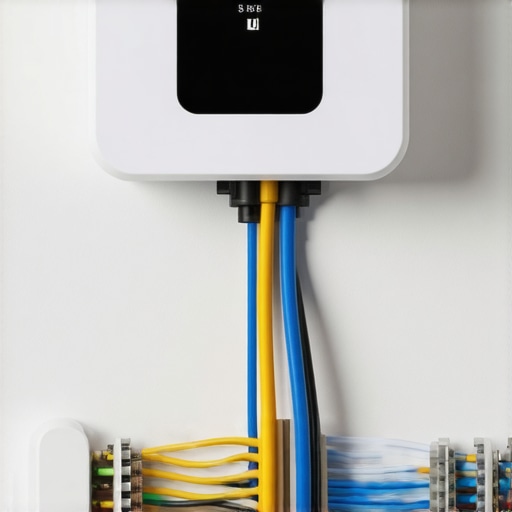
If your screen is blank, don’t call a ‘Sparky’ (electrician) first. HVAC low voltage is our realm. Start at the furnace or air handler. Look for the terminal strip where the thermostat wires land. If you see a ‘C’ terminal with no wire attached, but you have an extra blue or brown wire tucked back in the wall behind your thermostat, you’re in luck. Land that wire on ‘C’ at both ends. If you don’t have an extra wire, you have three choices: pull a new 18/5 wire (the right way), install a C-wire adapter (the ‘okay’ way), or use a ‘G-to-C’ jumper (the ‘I’m in a hurry’ way). Note that the G-to-C trick means you lose independent control of your fan, which can mess with your IAQ improvement services because you can’t run the fan for filtration without the heat or AC being on.
For those managing industrial heater services or church heating systems, I always recommend a hard-wired 24V transformer dedicated solely to the controls if the main board is older. This isolates the ‘brain’ from the ‘brawn’ of the system. For more on keeping things running, check out these hvac repair secrets. If you’re still using a heat pump and wondering why the backup heat won’t kick in during a blizzard, it might be a wiring issue; see our heat pump maintenance guide for a deeper dive.
The Cold Reality of Winter Maintenance
In the North, we deal with cracked heat exchangers and flame rollout. A malfunctioning thermostat that cycles the furnace too frequently can actually cause the heat exchanger to fatigue faster due to constant expansion and contraction. This is why predictive maintenance alerts are so vital. If your thermostat is properly powered, it can tell you when the run times are getting too long, indicating a filter clog or a failing blower motor. Don’t fall for furnace repair myths that suggest you can just bypass safety limits or ignore a blank thermostat screen. If you’re stuck, you can always contact us for a real diagnosis from someone who knows the difference between a real repair and a sales pitch.