The Airflow Manifesto: Why Your Thermostat is Lying to You
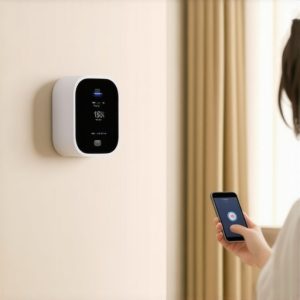
One room feels like a Finnish sauna while the other is a meat locker. You’re constantly fiddling with the dial, chasing a comfort level that doesn’t exist. My old mentor used to scream, ‘You can’t cool what you can’t touch!’ This was back when we were still charging systems with R-22 by ‘feel’ and thinking 10 SEER was the pinnacle of engineering. He’d grab me by the collar after I’d spent three hours chasing a phantom high-limit trip and point at the return air duct. If the air doesn’t hit the sensor, the sensor doesn’t know the air exists. It sounds simple, but 90% of the homeowners I visit are still fighting their thermostats because some tin knocker or sparky put the brain of the house in the dumbest spot possible. In 2026, with the mandatory shift toward A2L refrigerants and high-efficiency cold climate heat pumps, placement isn’t just about comfort—it’s about preventing your high-tech equipment from eating itself alive.
“The most expensive equipment in the world cannot overcome a bad duct system.” – Industry Axiom
1. Avoid the ‘Thermal Ghost’ Zones (Internal Heat Gain)
The biggest mistake I see is ‘ghost loading.’ This happens when your thermostat is placed near a kitchen, a lamp, or even a TV. In the HVAC world, we call this sensible heat gain. The sensor ‘sees’ the heat from your toaster and tells the compressor to kick on, even though the rest of the house is freezing. If you have a south-facing wall, that’s another no-go. The sun hits that drywall, the temp spikes, and suddenly your system is short-cycling. This is why hvac repair secrets often start with moving the thermostat five feet to the left. If you’re dealing with radiator replacement in older Chicago-style homes, the convective loops from those units can create localized ‘hot spots’ that make a thermostat think the room is 80 degrees when the floor is 60. You need that sensor in a neutral, central location, away from any direct infrared heat source. Speaking of infrared, if you’ve recently had infrared heater installation in a garage or workshop, ensure your indoor sensors aren’t sharing a wall with that unit, or you’ll be fighting the thermostat until the cows come home.
2. The Stratification Trap: The 5-Foot Rule
Physics doesn’t care about your floor plan. Hot air is less dense; it rises. Cold air is a heavy blanket; it sinks. If your thermostat is mounted too high, it stays in the heat pocket. If it’s too low, it’s swimming in the cold stuff. In the North, where cold climate heat pumps are the new standard, we aim for five feet off the finished floor. This represents the ‘breathing zone.’ We see this issue frequently in hotel boiler services, where massive thermal mass and high ceilings cause air to stratify in layers. If you don’t have proper attic insulation for heating, the ‘stack effect’ will pull cold air from your crawlspace and push hot air out through your light fixtures. This creates a draft right behind the thermostat mounting plate. Pro tip: Pull the thermostat off the wall and look at the hole where the wires come through. If it’s not sealed with a bit of pookie (mastic) or even some insulation, that ‘wall-cavity air’ is what your thermostat is actually measuring, not the room air. This leads to constant manual tweaks and high bills.
3. Dead Air and Static Pressure Nightmares
A thermostat needs a representative sample of the house’s air. If you tuck it behind a door or in a hallway with zero airflow, you’ve created a ‘dead zone.’ This is where dehumidification services become critical. In a humid climate, stagnant air traps moisture (latent heat). If the air isn’t moving across the sensor, the unit won’t run long enough to drop the evaporator coil below the dew point, leaving your house feeling like a cold swamp. We often see this when a bypass humidifier repair was done poorly; the sensor doesn’t catch the humidity spike, and you end up with condensation on your windows. Airflow is king. If your tin knocker didn’t size the return air drops correctly, the static pressure in the house will be off, and your thermostat will be effectively blindfolded. You might think you need a thermocouple replacement because the heat won’t stay on, but often, it’s just the thermostat sitting in a pocket of air that never moves. If you’re struggling with a system that just won’t behave, check our ultimate guide to heat pump maintenance and repairs for deeper troubleshooting steps.
“Standard 62.1 requires proper air distribution to maintain indoor air quality and thermal equilibrium.” – ASHRAE Standards
4. The 2026 R-454B Factor: Safety and Logic
We are currently in the middle of the R-454B refrigerant transition services era. R-454B is the new ‘juice’ replacing R-410A. It’s an A2L, meaning it’s mildly flammable. New systems are coming equipped with leak detection sensors that interface directly with your thermostat logic. This means placement is no longer just about comfort—it’s about safety. If your thermostat is the ‘brain’ that monitors these sensors, it needs to be located in a place where the communication wires won’t be subject to interference from ‘Sparky’s’ high-voltage lines. When we do financing for heat pump installs, we emphasize that 2026-spec installs require precision. A misplaced thermostat in a modern A2L system could lead to nuisance tripping of the leak alarm. For those using older tech, even a simple furnace repair myth suggests that thermostats don’t matter much—but with modern sensors, they are the most critical component. If you’re seeing weird error codes on your mini-split display, don’t just guess; look at mini-split troubleshooting to see if your sensor placement is the culprit. If all else fails, contact us for a real diagnostic, not a sales pitch.
The Verdict: Thermodynamics Always Wins
You can buy the most expensive variable-speed inverter on the market, but if you put the thermostat in a drafty hallway or next to a bathroom with high humidity, you’re just burning money. HVAC isn’t magic; it’s a math problem involving BTUs, enthalpy, and air velocity. Stop the manual tweaks by putting the sensor where the people are, sealing the wire hole with pookie, and keeping it away from the ‘thermal ghosts’ of kitchens and lamps. If you want a system that actually hits its setpoint and stays there, you have to respect the physics of the space. Check our privacy policy for how we handle your data when you book a service. Remember: if the suction line isn’t ‘beer can cold’ and the airflow isn’t balanced, no amount of thermostat fiddling will save you from a bad install.