
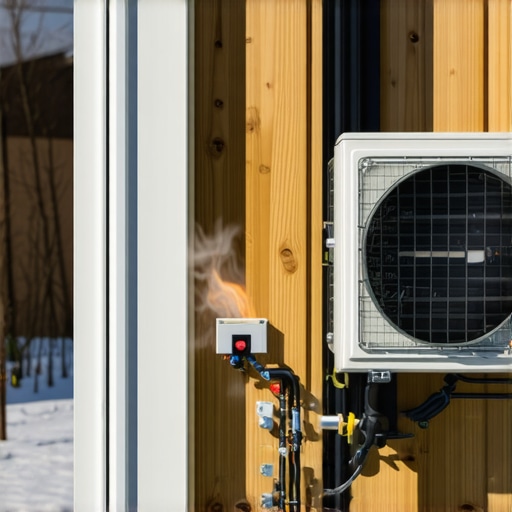
The Thermodynamics of Survival: When Electricity Meets Gas
My old mentor used to scream, ‘You can’t cool what you can’t touch!’ and while he was usually yelling it at me while I was waist-deep in a dusty crawlspace, the same physics apply to heating. In the HVAC world, we aren’t creating cold; we are moving heat. But when the mercury drops below 20°F, a standard air-source heat pump starts to look like a man trying to empty a swimming pool with a teaspoon. There just isn’t enough sensible heat left in the outdoor air to move inside efficiently. This is where the Dual Fuel system—the hybrid of the HVAC world—steps in to save your wallet and your comfort.
“The most expensive equipment in the world cannot overcome a bad duct system.” – Industry Axiom
In the North, where the polar vortex is a recurring nightmare, we deal with the ‘Balance Point.’ This is the exact outdoor temperature where the heat pump’s capacity matches the building’s heat loss. Below that point, the electric ‘juice’ alone won’t cut it. Most systems resort to ’emergency heat’ or electric resistance strips. If you’ve ever watched your electric meter spin like a ceiling fan, that’s why. Dual fuel systems replace those expensive heat strips with a high-efficiency gas or propane furnace. It’s like having a backup generator that’s also a high-performance athlete.
The Mechanical Anatomy of a Hybrid System
A dual fuel setup is a marriage between an electric heat pump and a variable speed furnace services unit. During the shoulder seasons—those crisp autumn days or late spring mornings—the heat pump is the king. It sips electricity and pulls heat from the ambient air with an efficiency that would make a tin knocker weep with joy. But once we hit that thermal cliff, the programmable thermostat programming triggers the furnace to take over. This isn’t just about heat; it’s about the quality of the air. A gas furnace provides ‘hot’ heat (around 120-140°F at the register), whereas a heat pump provides ‘warm’ heat (around 95-105°F). In a drafty house, that 95°F air can feel like a draft, even if it’s technically heating the room.
When we talk about airflow, we have to talk about blower motor replacement and static pressure. If your ductwork was sized by a guy who thinks ‘Pookie’ is just a nickname for his cat, your hybrid system will struggle. Proper duct sealing with mastic (the real ‘Pookie’) is essential. We see this often in church heating systems, where the massive cubic footage requires surgical precision in airflow to avoid hot and cold spots in the pews. If the static pressure is too high, you’ll burn out that expensive ECM blower motor faster than you can say ‘transformer replacement.’ Speaking of which, if your sparky didn’t check the low-voltage wiring, a simple transformer replacement could be in your future after the first cold snap stresses the system.
Zoning, Humidity, and the Hospital Standard
If you’ve ever spent time in a modern medical facility, you’ve experienced hospital HVAC zoning. They don’t just blast air everywhere; they use VAV (Variable Air Volume) boxes and dampers to put the BTUs exactly where they are needed. We can do the same in residential dual fuel systems. By using zoning, we can keep the bedrooms cool for sleeping while the living areas stay toasty. However, the more complex the zoning, the more critical the variable speed furnace services become. You need a blower that can ramp down to a whisper without freezing up the indoor coil when the heat pump is in cooling mode.
Winter air is notoriously dry. As we heat air, its relative humidity drops, leading to static shocks and bloody noses. This is why I always recommend whole-home humidifiers integrated directly into the supply plenum. Unlike those little plastic units you buy at the big-box store, a whole-home system treats every cubic inch of air. For those worried about indoor air quality, a UV light installation for HVAC can be mounted near the evaporator coil to keep the ‘slime’ at bay, ensuring that the air passing through your ductless mini-split installation or central system is clean. If you are struggling with a system that won’t stay running, you might find answers in our ultimate guide to heat pump maintenance and repairs.
The Regulatory Cliff: Why 2025 Changes Everything
We are currently facing the biggest shift in the industry since the phase-out of R-22. The transition from R-410A to A2L refrigerants like R-454B is here. These are ‘mildly flammable’ gases, and they require completely different sensors and safety protocols. If a ‘Sales Tech’ tries to sell you a bargain-basement R-410A system right now without explaining the long-term cost of ‘gas’ (refrigerant) for future repairs, walk away. They are trying to clear their inventory at your expense. For more on how to spot these issues, check out hvac repair secrets.
“Ventilation systems shall be designed to provide outdoor air at the rates specified… to maintain acceptable indoor air quality.” – ASHRAE Standard 62.1
I’ve seen folks try to bypass the dual fuel complexity by using a pellet stove repair as their secondary source. While pellet stoves are great for supplemental heat, they don’t integrate with your programmable thermostat programming. You end up with a house that’s 80 degrees in the kitchen and 60 in the back bedroom. A true hybrid system manages the transition automatically. If you’re wondering if your current furnace is lying to you, read up on furnace repair myths. And remember, if the suction line isn’t ‘beer can cold’ in the summer or the discharge air isn’t scorching in the winter, something in the refrigeration cycle is wrong. Don’t let a technician just ‘top off the Freon.’ It’s a sealed system; if it’s low, there’s a leak.
Maintenance: The Difference Between 10 and 20 Years
The lifespan of a dual fuel system depends entirely on the ‘suction line’ and the condenser coil. If the outdoor unit is choked with cottonwood or dryer lint, the head pressure skyrockets, and you’ll be looking at a compressor burnout. That smell—acidic and sour—is the smell of a $4,000 mistake. Regular maintenance isn’t just a ‘clean and check.’ It’s a forensic audit of the system’s vitals. If you’re experiencing issues with a specific zone or a secondary unit, our mini-split troubleshooting guide might help. For any major concerns, it’s best to contact us directly. Proper HVAC isn’t magic; it’s physics. And physics doesn’t care about your feelings, it only cares about the Delta-T.


![Read more about the article Is Geothermal Heating Worth It? 4 Hidden 2026 Perks [Updated]](https://chillyprohvac.com/wp-content/uploads/2026/04/Is-Geothermal-Heating-Worth-It-4-Hidden-2026-Perks-Updated-300x300.jpeg)