The Sound of a Dying Tank: A Forensic Diagnosis
You’re standing in the hallway at 2 AM, and you hear it. Tink. Tink. Thud. It sounds like a ghost is trapped in your basement, knocking on the pipes to get out. Most homeowners ignore it, thinking it’s just the house ‘settling.’ It’s not. As an HVAC veteran who has spent three decades diagnosing everything from residential basements to complex school boiler maintenance projects, I can tell you that sound is the death rattle of your water heater. It’s the sound of physics being ignored. My old mentor used to scream at me on the job site, ‘You can’t cool what you can’t touch, and you can’t heat what’s buried in rock!’ This was his way of explaining why airflow and heat transfer are the only things that matter. In the context of your water heater, that ‘rock’ is calcium carbonate, and it’s slowly killing your efficiency.
“The accumulation of mineral deposits on heating surfaces reduces the rate of heat transfer and can lead to localized overheating and premature failure of the pressure vessel.” – ASHRAE Technical Committee 6.6
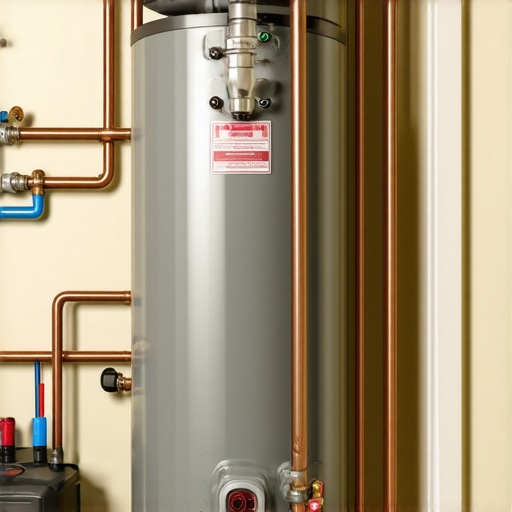
When you hear that tapping, it’s usually ‘popcorning.’ Sediment from hard water settles at the bottom of the tank, right on top of the burner or the lower electric element. As the burner fires up to maintain your set point, water gets trapped underneath that layer of scale. That water reaches its boiling point, flashes into steam, and ‘pops’ through the sediment layer. It’s a literal miniature explosion inside your tank. If you’re in a northern climate where we deal with heavy mineral content and freezing winters, this isn’t just an annoyance—it’s an efficiency killer. You’re paying to heat a layer of limestone before you even start heating the water. This is why we preach priority service memberships; catching this early with a proper flush is the difference between a $150 maintenance call and an emergency $3,000 replacement on a Sunday morning.
The Mechanical Anatomy: Why the Tapping Leads to a Blowout
Think of your water heater like a heart. If the valves are clogged, the whole system works harder. In a cold climate, your heater is already fighting a war against the incoming ‘juice’ (refrigerant guys call it that, but we use it for electricity too) or gas supply that’s chilled by the frozen ground. If you have a gas unit, that tapping sound often coincides with a failing draft inducer motor repair or a blocked vent. If the heat can’t escape the combustion chamber efficiently because of sediment insulation, the tank metal undergoes ‘thermal fatigue.’ The metal expands and contracts violently until it cracks. This is why carbon monoxide detector installation is non-negotiable. A cracked tank or a back-drafting heater isn’t just a plumbing problem; it’s a life-safety issue. I’ve seen ‘Sales Techs’ try to sell a whole new furnace when a simple contactor repair or a tank flush would have solved the homeowner’s comfort issues. Don’t fall for it. You need to understand the furnace repair myths debunked to know when you’re being played.
For those of you with high-efficiency systems, you might have variable speed furnace services integrated with your water heating via a transition or a side-arm heater. In these cases, static pressure testing is vital. If your venting is restricted, your high-efficiency heater will ‘hunt’ for air, causing vibrations that mimic tapping. If you’re managing a larger facility, industrial heater services are even more sensitive to this. One inch of scale can increase fuel consumption by 15%. That’s a massive hit to the bottom line. When we do school boiler maintenance, the first thing we check is the scale buildup because ‘Tin Knockers’ (duct guys) and plumbers alike know that heat transfer is king. We also look for rebate application assistance opportunities, as modern units with better sediment management often qualify for energy credits.
“Carbon monoxide alarms shall be installed in a centrally located area outside of each separate sleeping area in the immediate vicinity of the bedrooms.” – NFPA 720
The Forensic Fix: Beyond the Surface
To fix the tap, you have to kill the sediment. This involves a ‘full-port’ flush, not just the weak drizzle you get from those cheap plastic drain valves. You need to hook up a hose, kill the power or gas, and let the pressure push the ‘muck’ out. If you have an electric unit and the tapping persists, you might have a ‘dry fired’ element that’s vibrating. This is where a contactor repair or element replacement is necessary. While you’re at it, check your steam humidifiers if you have them integrated into your HVAC. Dry air in the winter makes your skin feel colder, forcing you to crank the heat and the water temperature, which only accelerates the scaling process. It’s a vicious cycle of thermodynamic waste. If you’re unsure about the state of your system, checking out hvac repair secrets can give you the upper hand when talking to a tech. And if the sound is coming from a heat pump water heater, the diagnostic path changes entirely, requiring a look at the evaporator coil and the ‘suction line’ temps. For those systems, see our ultimate guide to heat pump maintenance. If you can’t stop the noise, or if you smell that ‘sour’ acidic scent of a burning motor, it’s time to contact us before your basement becomes a swimming pool. Comfort isn’t magic; it’s just physics, and I’ve got the scars from enough ‘Sparky’ (electrician) mishaps and attic ‘Pookie’ (mastic) applications to prove it. Don’t wait for the hot water to run out; listen to what the pipes are telling you.