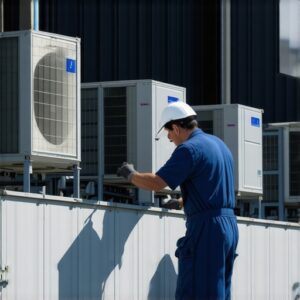
That dry, high-desert wind is a beautiful thing in July when your evaporative cooler is running wide open, dropping the sensible heat of your home by 20 degrees. But when November rolls in across the high plains and the temperature plummets toward zero, that same swamp cooler becomes a massive, metallic shortcut for freezing air to invade your house and shatter your plumbing. I’ve spent thirty years climbing shaky extension ladders in freezing gales because someone forgot to winterize their swampy, leading to a flooded ceiling and thousands of dollars in water damage.
The Physics Lesson: My Mentor’s Golden Rule
My old mentor, a grizzled tin knocker who could bend ductwork with his bare hands, used to scream at me on windy rooftops: “You can’t cool what you can’t touch, and you can’t protect what you don’t drain!” He was talking about the absolute physical reality of heat transfer. Water has a massive specific heat capacity, meaning it holds onto energy incredibly well—until it loses it. When the ambient temperature drops below 32°F, that standing water in your cooler’s pan and supply line doesn’t just sit there; it expands with immense force. If you haven’t purged that line, that expansion will split copper tubing like a cheap soda straw. Let me tell you, there is nothing quite like the sound of water spraying inside a frozen attic at 3 AM to make you appreciate the laws of thermodynamics.
“Water-cooled equipment exposed to freezing temperatures must be physically drained of all liquid to prevent catastrophic structural failure of the pressure vessels and supply lines.” – ASHRAE Fundamentals Handbook
The Anatomy of a Frozen Swamp Cooler
An evaporative cooler is a simple beast, but its simplicity is its downfall in the winter. You have a water pan, a float valve, a small water pump, distribution tubes (spider lines), and thick aspen or synthetic pads. The entire system relies on a continuous supply of fresh water delivered via a small copper or plastic line connected to your home’s main plumbing.
When you leave that water line pressurized during a hard freeze, the cold air rushing through the exterior cabinet cools the copper line far below the freezing point. Because water expands as it crystallizes into ice, the pressure inside that tiny line skyrockets. It doesn’t break at the freeze point; it breaks further down where the pressure has nowhere to go. This often blows out the shut-off valve inside your crawlspace or wall, leading to an absolute disaster. If you’ve ever had to handle hvac repair secrets, you know that preventative maintenance is always cheaper than a midnight emergency call.
The Step-by-Step Winterization Protocol
To keep your home safe from frozen lines, you must follow a strict mechanical shutdown process. Do not trust a simple shut-off valve to do all the work; valves can weep, and a slow drip into a freezing line is just as dangerous as leaving it fully open.
Step 1: Shut Off and Disconnect the Water Supply
Locate the saddle valve or dedicated shut-off valve inside your home or crawlspace that supplies the cooler. Close it completely. Once closed, go back up to the roof, disconnect the water line from the float valve inside the cooler cabinet, and let the remaining water drain out. This is where you want to blow out the line to ensure no pockets of water remain trapped in low spots.
Step 2: Drain the Pan and Pump
Pull the overflow drain pipe from the bottom of the cooler pan. Let those gallons of dirty, mineral-heavy water spill out onto your roof (or direct it down a drain). Use a wet-dry vacuum to suck out the remaining sludge from the bottom of the pan. This prevents the acidic rust from eating through the bottom of your galvanized steel cabinet over the winter months.
Step 3: Remove and Store the Pads
Leaving wet, mineral-crusted pads in the cooler over the winter creates a perfect breeding ground for mold and mildew. Throw away old pads and clean the metal grates. If you use high-efficiency rigid media, store them in a dry location where rodents won’t turn them into a winter nest.
Step 4: Install the Winter Damper (The Cookie Sheet)
This is where most homeowners fail. Every evaporative cooler has a metal slide-in damper plate, often called the “cookie sheet.” Slide this damper into the throat of the cooler where it connects to your ductwork. Without this barrier, warm air from your home will escape up through the registers, and freezing air will draft right down into your living room, putting your interior piping at risk. If you are also dealing with poor airflow in other seasons, proper mini split troubleshooting or general duct analysis can help resolve those drafty zones.
Step 5: Cover the Unit
Wrap the exterior cabinet with a heavy-duty, weather-resistant canvas cover. Secure it tightly with straps. This prevents freezing winter winds from whistling through the side panels and dropping the temperature of your ceiling joists and nearby attic water lines.
Integrating Modern Comfort Systems
Many homeowners in transitional climates are moving away from evaporative coolers altogether and upgrading to modern heat pumps or radiant floor heating installations. High-efficiency systems like hyper-heat heat pumps provide incredible zone control without the need to run water lines to your roof every spring. Additionally, installing a heat recovery ventilator ensures you still get that fresh air sensation without dumping your expensive indoor heat directly out of the building. If you are upgrading your home’s heating layout, proper duct design services are vital to ensure your new system doesn’t suffocate from poor static pressure.
“Duct systems shall be sized and designed in accordance with ACCA Manual D to ensure proper velocity and pressure distribution across all heating and cooling cycles.” – ACCA Manual J & D Standards
Whether you choose to stick with your classic swamp cooler or transition to a modern hybrid system with voice control setup Alexa Google or advanced thermostat wiring upgrades, treating your home’s thermal boundaries with respect is the only way to avoid the costly disasters of winter. If you need help with a more complex system, like propane conversion services, garage heater installation, or industrial heater services, never hesitate to reach out via our contact us page to speak with a technician who actually knows the difference between a real repair and a sales pitch.