The Simple Move That Gets More Google Maps Leads for Emergency Repairs
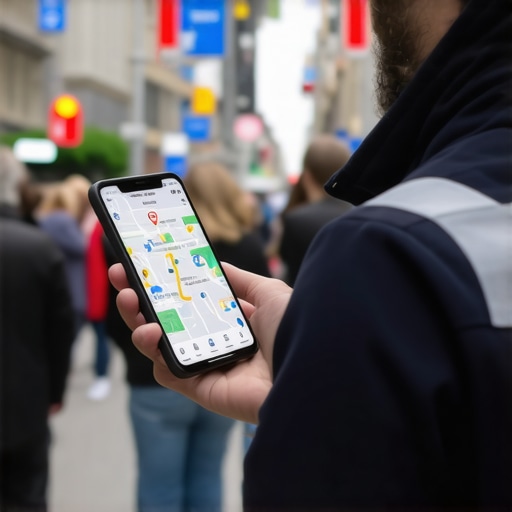
When a pipe bursts at 3:00 AM or a furnace cuts out in the middle of a sub-zero January night, the homeowner isn’t sitting down at a desktop computer to conduct a deep research project. They are in a state of high-stress urgency. They reach for their smartphone, type “emergency furnace repair” or “plumber near me,” and they look at the first three results that appear in the Google Map Pack. They don’t scroll. They don’t look at page two. They click the call button on the business that looks the most prepared to solve their crisis immediately.
As a Local SEO Consultant and Google Business Profile Product Expert, I’ve spent years analyzing the mechanics of these “emergency” searches. Most business owners believe that ranking in these moments is purely a matter of proximity – that Google simply shows the closest truck. While proximity is a massive factor, it is far from the only one. In fact, many businesses lose out on thousands of dollars in high-ticket emergency leads because they haven’t made one simple move to signal their relevance to Google’s algorithm. Visibility in the Map Pack is a game of signals, and if your profile doesn’t explicitly state you handle 24/7 emergencies, Google won’t risk showing you to a desperate searcher.
The Psychology of the “Emergency” Searcher
Understanding the emergency searcher is critical for effective google business profile seo. Unlike a standard search for “HVAC installation quotes,” which is a top-of-funnel research intent, an emergency search is a bottom-of-funnel “I need help now” intent. These users exhibit specific behaviors: they look for the “Open Now” green badge, they prioritize businesses with “24/7” in their description or attributes, and they heavily weight recent reviews that mention speed.
Google’s ranking algorithm for local search is built on three pillars: Relevance, Distance, and Prominence. In an emergency context, “Relevance” takes on a new dimension. Google wants to ensure that the business they recommend can actually fulfill the immediate need. If your profile is generic, Google may pass you over for a competitor who is slightly further away but has optimized their profile specifically for emergency keywords. To stay ahead, you need to understand how to rank higher on Google Maps for emergency furnace repairs without paying for ads, focusing on the organic signals that build trust with both the user and the search engine.
The “Simple Move” Revealed: Optimizing Service Categories for Urgency
The “simple move” that most contractors miss is the strategic optimization of **Secondary Categories** and the **Service Menu**. Most HVAC or plumbing companies set their primary category to “HVAC Contractor” or “Plumber” and stop there. They assume that because they offer emergency services, Google just “knows.”
Google does not assume. You must be explicit. The move is to add specific, high-intent emergency services to your Service Menu. Instead of just “Heating Repair,” you should have a dedicated service item for “Emergency Furnace Repair,” “24-Hour Emergency Plumbing,” or “Emergency AC Leak Repair.” Each of these service items allows for a 300-character description. Use this space to mention your response time, your 24/7 availability, and the specific types of emergencies you handle.
Furthermore, you should audit your secondary categories. If you are an HVAC company, ensure you have “Repair Service” and “Air Conditioning Repair Service” selected. Using a google business profile audit tool can help you identify which categories your top-ranking competitors are using that you might be missing. By aligning your categories and services with “emergency” keywords, you drastically increase your relevance score for those high-value panic searches.
Proximity vs. Relevance: How the 2026 Algorithm Decides
As we move through 2026, the local algorithm has become increasingly sophisticated. While proximity remains a “Very High” weight factor, the “Vicinity” updates have balanced the scales by giving more power to “Relevance” and “Prominence.” This means a business three miles away can outrank a business one mile away if the three-mile-away business has a profile that is more “complete” and “relevant” to the specific search query.
I often tell my clients: “Visibility in the Map Pack is a game of signals. If your profile doesn’t explicitly state you handle 24/7 emergencies, Google won’t risk showing you to a desperate searcher.” Google’s primary goal is user satisfaction. If they show a business that is “Closed” or doesn’t mention emergency services to someone whose basement is flooding, that’s a poor user experience. Therefore, the algorithm favors profiles that provide the most certainty. This is why google business profile optimization is no longer optional; it is the foundation of lead generation.
Managing 24/7 Availability Without Getting Burned
One of the most common questions I get is: “Should I set my hours to 24/7?” For emergency repair businesses, the temptation is to say yes to capture every lead. However, this is a double-edged sword. If your Google Business Profile says you are open 24/7, but no one answers the phone at 2:00 AM, you are going to get hit with one-star reviews. In the eyes of the algorithm, a sudden influx of negative reviews regarding “no answer” or “false hours” is a major red flag.
Inconsistent information is a ranking killer. If your GBP says 24/7 but your website lists your hours as 8:00 AM to 5:00 PM, you may find why your local HVAC search rankings are suddenly dropping. Google cross-references data from across the web. To manage this properly, use the “Special Hours” feature for holidays and ensure your “Emergency Service” attribute is checked in the “More” section of your profile settings. This signals to Google that you are available for crises without necessarily claiming your physical showroom is open all night.
Review Velocity: The Fuel for Emergency Rankings
For emergency services, the *total* number of reviews is often less important than **Review Velocity** and **Recency**. If a homeowner sees a business with 500 reviews, but the last one was from six months ago, they might wonder if the business is still active. Conversely, a business with 50 reviews – three of which were posted in the last week and specifically mention “fast emergency response” – will win the click every time.
Google’s AI-driven search can now parse the text within reviews to determine relevance. When a customer leaves a review saying, “They arrived within 30 minutes for my emergency furnace fix,” that keyword “emergency furnace fix” becomes a powerful ranking signal for your profile. You should actively encourage customers to mention the speed and the “emergency” nature of the work in their feedback. Tracking these trends is vital; I recommend using local seo software to monitor how your review velocity correlates with your ranking fluctuations in the Map Pack.
Technical GBP Optimization Checklist for 2026
To truly dominate the google maps ranking service landscape, you must ensure the technical foundation of your profile is flawless. Here is a checklist to follow:
- NAP Consistency: Ensure your Name, Address, and Phone number are identical across your GBP, website, and all local citations.
- High-Resolution Photos: Upload photos of your emergency vehicles, your team in uniform, and “before and after” shots of emergency repairs. This builds immediate visual trust.
- GBP Posts: Post at least once a week. Use these posts to highlight your emergency availability. Use headlines like “Locked Out? We’re Open 24/7” or “Furnace Failure in the Cold? Call Our Emergency Line.”
- Local Schema Markup: Your website needs to talk to Google in its own language. This is why local schema markup is the secret to winning local HVAC search. It confirms your service area and emergency hours to the crawler.
- Service Depth: Don’t just list the service; explain the quality. Reference internal standards for excellence, such as these HVAC repair secrets to show you are an authority in the field.
- Topical Authority: Link your GBP to deep-dive content on your site, like an ultimate guide to heat pump maintenance and repairs, to prove to Google that you aren’t just a “lead gen” site, but a legitimate subject matter expert.
By implementing these technical steps, you improve your google business profile seo and create a “moat” around your local rankings that competitors will find difficult to cross.
Using Tools to Dominate the Map Pack
You cannot manage what you do not measure. In the world of local SEO, rankings are not static; they are a “heat map.” You might rank #1 when someone searches from the street corner outside your office, but rank #10 when they search from three miles away. To get a true picture of your visibility, you need professional-grade tools.
I recommend utilizing a google maps rank tracker to visualize your “geogrid” rankings. This allows you to see exactly where your “emergency” signals are strong and where they are weak. If you notice your rankings drop off sharply in a high-value neighborhood, that is your cue to run a targeted GBP post or local ad campaign for that specific area. Using dedicated local seo tools ensures that you are making data-driven decisions rather than just guessing why the phone isn’t ringing.
Conclusion: Your 24-Hour Roadmap to More Leads
Ranking for emergency repairs isn’t about luck; it’s about signaling. The “simple move” of optimizing your service menu for emergency-specific keywords, combined with maintaining high review velocity and technical consistency, will put you miles ahead of the competition. Remember, the goal of google business profile seo is to provide the search engine with the maximum amount of certainty that your business is the best, fastest, and most reliable solution for the user’s crisis.
If you haven’t audited your profile in the last 90 days, you are likely leaving money on the table. Start by updating your services today, and use local seo tools to track your progress. If you want to take your local visibility to the next level, focus on the details that your competitors are too lazy to address. The emergency leads are there – you just have to make sure Google knows you’re ready to answer the call.