The Symphony of the Sequence: Why Your Furnace is Talking to You
Old man Miller, my mentor for the first decade of my career, used to throw his 12-inch adjustable wrench at the side of a furnace cabinet just to see if the vibration would wake up a sticky relay. He’d scream, ‘You can’t fix what you don’t hear, and you can’t cool what you can’t touch!’ Back then, I thought he was just a cranky old tin knocker who’d spent too many summers in 140-degree attics. Thirty years later, I realize he was teaching me the most important lesson in HVAC: the sequence of operations is a symphony, not a suggestion. When that symphony goes off-key—specifically when you hear that rhythmic, metallic clicking coming from the belly of the beast—it’s not just a noise. It’s a forensic roadmap to a failing furnace igniter, a stuck gas valve, or a limit switch replacement that’s long overdue.
If you’re sitting in a house in the North where the frost is thick on the windows and your furnace is clicking like a telegraph operator in a panic, you’re dealing with a failure in the ‘Ignition Phase.’ This isn’t some minor inconvenience; it’s a breakdown in the thermodynamic chain. Whether you have a standard forced-air system, dual fuel heat pump systems, or even hydronic heating systems using a boiler for the heavy lifting, that sound is a cry for help. Understanding the anatomy of that click is the difference between a $200 service call and a $15,000 system replacement pushed by some ‘Sales Tech’ who wouldn’t know a manometer from a meat thermometer.
“Proper furnace sizing and installation are critical to ensure energy efficiency and occupant comfort, but the reliability of the ignition sequence is the primary factor in system longevity.” – ASHRAE Standards Handbook
The Forensic Anatomy of the ‘Click’
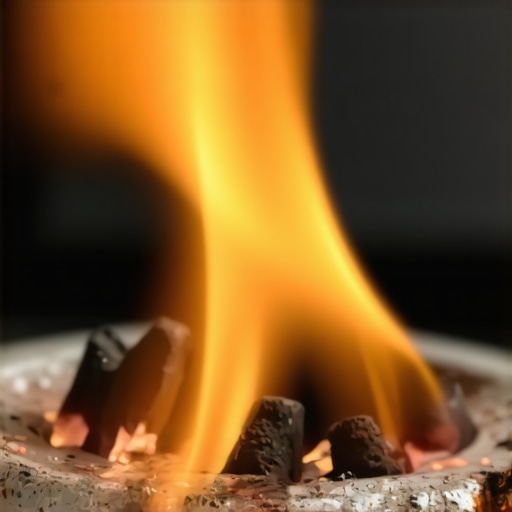
To understand the click, you have to understand the ‘Sequence of Operations.’ When the thermostat calls for heat, the control board doesn’t just dump gas and hope for the best. First, the inducer draft motor (the lungs) clears the heat exchanger of any residual gases. Then, the pressure switch proves that the ‘lungs’ are working. Only then does the board send ‘juice’ to the igniter. In modern units, this is usually a Hot Surface Igniter (HSI) or a Direct Spark Ignitor (DSI). If you hear a rapid snap-snap-snap, that’s usually a spark igniter trying to bridge the gap. If you hear a single, heavy thunk-click followed by silence, your gas valve is likely trying to open but the igniter hasn’t reached the necessary temperature to prove it can light the fuel. This is where most people get scammed. A ‘Sales Tech’ will tell you the whole board is fried. In reality, it’s often just a dirty flame sensor or a cracked silicon carbide igniter that’s lost its resistance.
Why Airflow Rules the Ignition Kingdom
I’ve said it a thousand times: Airflow is king. You can have the most expensive burner in the world, but if your static pressure is through the roof because some tin knocker undersized your return air drop, the system will overheat. This triggers the limit switch. When that switch trips, it kills the power to the gas valve, often resulting in—you guessed it—a clicking sound as the system tries to reset itself. If you’re constantly needing a limit switch replacement, you don’t have a switch problem; you have an airflow problem. Maybe your filter is packed with pet dander, or maybe the previous installer didn’t use enough pookie (mastic) on the plenum, causing the air to bypass the heat exchanger entirely. This is why hvac repair secrets always start with the ductwork, not the components.
“The most expensive equipment in the world cannot overcome a bad duct system or a failure to adhere to the manufacturer’s ignition sequence.” – Industry Axiom
Hydronic Systems and Boilers: A Different Kind of Click
If you’re running hydronic heating systems, that clicking sound often points to a different culprit. In a boiler, the ‘click’ is frequently the sound of a zone valve motor failing to engage or a circulator pump relay that’s arcing. While boiler maintenance services are a bit different than furnace repair, the physics of safety remains the same. You have to prove the flow of water before you can fire the burners. If you hear clicking followed by a sour, acidic smell, that’s ozone from an electrical arc. That’s an immediate 24/7 heating emergency response situation. Don’t wait for the ‘boom.’ Get someone out there who knows how to use a multimeter, not just a sales brochure.
The 2025 Transition and Your Wallet
We are currently facing a massive shift in the industry with the move toward A2L refrigerants and higher AFUE (Annual Fuel Utilization Efficiency) standards. This makes furnace repair more complex than it was in the days of Miller’s 80% AFUE ‘indestructible’ furnaces. Modern high-efficiency units use demand-controlled ventilation and variable speed blowers that are sensitive to the slightest change in voltage. If your igniter is failing, it might be because the system is ‘short cycling’ due to being oversized—a common mistake made by techs who don’t perform a proper Manual J load calculation. Before you believe you need a whole new unit, check the basics. Are your vents open? Is your zoning system installation actually balanced, or is it choking the furnace to death? If you’re unsure, furnace repair myths often lead homeowners to spend money on things they don’t need while ignoring the 5-cent solution.
When to Call for Professional Backup
I get it. You want to be the hero and fix it yourself. But when you’re dealing with ventless gas heater services or internal gas manifolds, you’re playing with fire—literally. If you’ve checked your filter and your thermostat batteries, and that clicking persists, it’s time for an emergency heating repair. A cracked heat exchanger can leak carbon monoxide into your home, and no amount of ‘DIY’ advice can fix a structural failure in the metal. If your system is old and you’re considering a change, dual fuel heat pump systems are the gold standard for Northern climates, combining the efficiency of a heat pump with the raw BTU power of a gas furnace for those sub-zero nights. Whatever you do, don’t let a tech talk you into a ‘dry charge’ unit or some other loophole. Invest in quality, ensure the pookie is applied thick to the seams, and listen to the symphony of your system. If it starts clicking, it’s telling you its story. You just need to be smart enough to listen. For expert help, you can always contact us before the cold truly sets in.