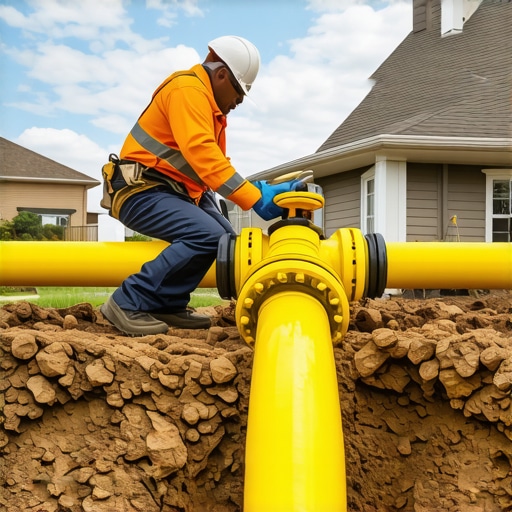
The Era of the ‘Sales Tech’ and Why Your Gas Line Contract is a Minefield
I followed a ‘Sales Tech’ into a multi-unit brownstone last February. The guy had quoted a property manager $18,000 for a total boiler replacement and a brand-new gas service line because he claimed the current one was ‘leaking through the pipe walls.’ That is a lie. Steel pipe does not just sweat gas. I walked in, found a loose union at the regulator, tightened it with a pipe wrench, and sprayed some soap bubbles. Total cost of the fix? Five minutes of my time. But that experience highlights the danger homeowners face today. When you are looking at a contract for a new gas line installation, you aren’t just buying pipe; you are buying the safety of your family against the risk of combustion and carbon monoxide. In this industry, we see ‘Tin Knockers’ trying to run gas lines and ‘Sparkies’ trying to wire boilers, but if the HVAC load calculation services aren’t done first, your new gas line is either a bottleneck or a ticking bomb.
“The most expensive equipment in the world cannot overcome a bad duct system, and the most efficient furnace cannot fire without precise manifold pressure.” – Industry Axiom
The Thermodynamic Reality of Oil to Gas Conversion
If you are looking at an oil to gas conversion, you are making a massive shift in how your home handles heat. Fuel oil is energy-dense, but gas is cleaner and requires a different set of lungs for the house. When we pull out an old oil tank and run a new gas line, we aren’t just swapping ‘Juice’ for ‘Gas.’ We have to look at the chimney liner installation. Old oil furnaces vented hot and dirty. New high-efficiency gas units vent cool and acidic. If your contractor doesn’t include a new UL-listed chimney liner in the contract, that acidic condensate will eat the mortar out of your chimney within three winters, and your water heater will start back-drafting CO into your basement. This isn’t a suggestion; it is physics. Before signing, ensure the contract specifies the flue pipe installation material. We use Schedule 40 PVC for condensing units, but the termination point matters. If they vent it under a deck or near a window, they are violating code and endangering your life.
Why Load Calculations Dictate Pipe Diameter
Most contractors use a ‘rule of thumb’ for gas lines. They see a 3/4-inch line and assume it’s fine for everything. That is how you end up with a furnace that ‘huffs’ when it starts. When that gas valve opens, the pressure drop can be so severe that the pilot light on your water heater goes out. A real pro performs HVAC load calculation services based on the total BTU demand of every appliance in the house. This includes your stove, your water heater, and even that infrared heater installation you have planned for the garage. If the contract doesn’t mention ‘Total Connected Load’ or ‘Pressure Drop,’ you are dealing with a Sales Tech, not a technician. You can read more about avoiding these pitfalls in our furnace repair myths guide.
The Hidden Costs: Dehumidification and Ventilation
In the North, where the air gets bone-dry in the winter, a new gas furnace can actually make your home feel colder than it is. This is why dehumidification services and bypass humidifier repair are often overlooked in gas line contracts. Gas heat is ‘dry’ heat in a metaphorical sense because of the way it moves air. If your contractor isn’t talking to you about energy recovery ventilators or demand-controlled ventilation, they are ignoring the ‘Airflow Architect’ side of the job. A tight house with a new gas furnace needs to breathe. Without an ERV, you are just recirculating stale air and VOCs. If you’re managing a larger property, hotel boiler services often require even more stringent demand-controlled ventilation to meet ASHRAE 62.1 standards.
“Gas piping systems shall be designed to provide a supply of gas sufficient to meet the maximum demand of all appliances.” – NFPA 54: National Fuel Gas Code
The Mechanical Anatomy: What to Check in the Fine Print
Don’t let them use ‘Pookie’ (mastic) to hide bad joints. A gas line should be hard-piped with black iron until the final connection. Look for the mention of a ‘Drip Leg’ or ‘Sediment Trap’ at every appliance. This is a small vertical pipe that catches moisture and debris before it hits your gas valve. If it’s missing, your $500 gas valve will fail in two years, and you’ll be calling us for emergency support. Also, check for ‘Hard Start Kits’ on your AC if they are doing a full system swap, and ensure the gas line is bonded to the electrical ground. If a ‘Sparky’ doesn’t ground that gas line, a lightning strike nearby could blow a hole right through your corrugated stainless steel tubing (CSST). Always ask for a pressure test that lasts at least 24 hours at 15 PSI; if they just do a ‘bubble test’ and leave, they aren’t professionals. For more technical insights on keeping your system running at peak performance, check out our HVAC repair secrets. Comfort is a matter of physics and flow, not luck. If you are ready to do it right, ensure your contract reflects the technical reality of your home’s thermodynamics.”, “image”: {“imagePrompt”: “A high-quality, close-up photograph of a professional HVAC technician installing a black iron gas line with a sediment trap and a pressure gauge attached, in a clean residential basement setting.”, “imageTitle”: “Professional Gas Line Installation Detail”, “imageAlt”: “Close-up of black iron gas pipe installation with sediment trap for a high-efficiency furnace.”}, “categoryId”: 0, “postTime”: “”}