
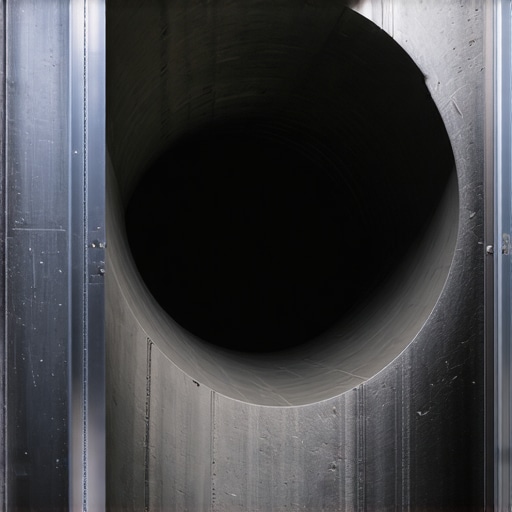
The Silence of the Tin: What Neglect Sounds Like
In thirty years of crawling through commercial plenums and balancing RTUs (Roof Top Units) in the blistering 115°F Nevada heat, I have learned one immutable truth: air is a stubborn tenant. It doesn’t want to go where you tell it to unless the physics are perfect. My old mentor used to scream at me until his face was the color of a cherry-red heat exchanger, ‘You can’t cool what you can’t touch!’ He was right. You can have the most expensive compressor in the county, but if your airflow is choked, you’re just burning juice to make noise. Last week, we opened up a 10-year-old duct system in a 50,000-square-foot warehouse, and what we found was a masterclass in mechanical entropy. It wasn’t just ‘dust.’ We found a biological graveyard, shredded insulation that looked like gray cotton candy, and a blower motor replacement waiting to happen because the poor thing had been fighting a losing battle against five inches of water column pressure.
The Forensic Diagnosis: Why Your Commercial Ductwork is Killing Your Bottom Line
Most facility managers treat HVAC like a light switch—it’s either on or off. But when we perform static pressure testing, we aren’t just looking at numbers; we are checking the blood pressure of the building. In this particular warehouse heating solution, the static pressure was off the charts. Why? Because the original tin knockers hadn’t used enough pookie (mastic) on the joints, and the return air was sucking in bypass air from the dirty mezzanine instead of the conditioned space. Over a decade, this ‘bypass air’ carried enough particulates to coat the evaporator coils in a thick, wooly felt. This is where thermodynamic zooming matters: when that coil gets matted, the refrigerant inside doesn’t boil off properly. It stays liquid, slugs back to the compressor, and kills the heart of the system. That is why hvac repair secrets always start with the filter and the duct, not the ‘gas.’
“The most expensive equipment in the world cannot overcome a bad duct system.” – Industry Axiom
The Physics of the Southwest: Sensible Heat vs. The Monsoon Effect
In dry climates like ours, swamp cooler maintenance is a seasonal ritual, but many commercial entities are moving toward high-efficiency DX (Direct Expansion) systems. The enemy here is sensible heat. When the ambient temperature hits triple digits, your head pressure skyrockets. If your ducts are restricted, that heat has nowhere to go. We found that the warehouse heating solutions in this facility were failing because the VAV (Variable Air Volume) boxes were stuck. The ‘Smart’ building management system was actually quite stupid—it hadn’t been calibrated in years. It was trying to force air into zones that didn’t exist anymore, causing the blower to hunt and surge. This leads to premature blower motor replacement and a massive spike in your utility bill. You aren’t just paying for cooling; you’re paying for the friction of air trying to squeeze through a straw.
The Solution: Demand-Controlled Ventilation and Proper Zoning
If you want to stop the bleeding, you need zoning system installation that actually respects the laws of psychrometrics. By implementing demand-controlled ventilation (DCV), we use CO2 sensors to tell the system when people are actually in the room. Why condition 50,000 square feet of empty racks at 3 AM? We found that by integrating the HVAC with smart building management, we could reduce the load by 40%. But none of that matters if the furnace is cracked. During a commercial furnace repair last winter, I found a heat exchanger with a hairline fracture caused by—you guessed it—low airflow. The metal overheated because the air wasn’t there to carry the heat away. It’s a chain reaction of failure that starts with neglect.
“Standard 62.1-2022 specifies minimum ventilation rates and other measures intended to provide indoor air quality that is acceptable to human occupants and that minimizes adverse health effects.” – ASHRAE Standards
Stop the Scam: The Truth About Maintenance Plans
I despise ‘Sales Techs’ who walk into a mechanical room and immediately start quoting a 20-ton replacement. Often, a deep cleaning and a priority service membership that includes regular static pressure testing can add five to seven years to a system’s life. If you’re managing a commercial property, you don’t need a salesman; you need a technician who knows how to use a manometer. Whether it’s swamp cooler maintenance or a complex heat pump maintenance routine, the goal is longevity, not a quick commission. If your tech doesn’t check the ‘beer can cold’ suction line or the temperature drop across the coil, they aren’t doing their job. For those dealing with smaller units, even mini split troubleshooting requires the same respect for airflow and refrigerant charge.
The Final Verdict on 10 Years of Dust
What we found inside those ducts wasn’t just a mess; it was a map of missed opportunities. Every layer of dust represented a dollar lost to inefficiency. If you haven’t looked at your ductwork since the Bush administration, you are likely operating at 60% capacity. It’s time to move past ’emergency repairs’ and into a proactive HVAC maintenance plan. Don’t wait for the sound of a failing bearing to remind you that your system exists. Let’s get the air moving correctly again. If you’re worried about your current system’s health, you can contact us for a real diagnostic, not a sales pitch. And remember, the physics don’t lie—airflow is king. Check out our guide on furnace repair myths to see how deep the misinformation goes.