The Physics of a ‘Lazy’ Install: Why Your Gas Line Matters
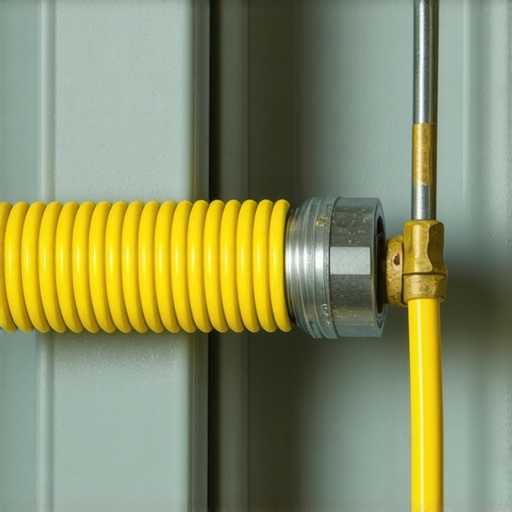
My old mentor used to scream, ‘You can’t cool what you can’t touch!’ and while he was talking about airflow over an evaporator coil, the same fundamental logic applies to your heating system: you can’t have safety if you don’t have stability. When I walk into a mechanical room and see a corrugated flexible gas line—the kind you use for a laundry dryer—snaked into a high-efficiency furnace, I know I’m following a ‘trunk-slammer.’ These guys aren’t technicians; they are part-changers who think a furnace repair is just about swapping parts until the light turns green. But that flex line is a ticking clock. Unlike a stove that you might pull out to clean behind, a furnace is a static, vibrating piece of heavy machinery. When that inducer motor kicks on and that blower starts moving 1,200 CFM of air, the whole chassis micro-vibrates. Over a decade, that vibration creates work-hardening in the thin walls of a flex line, leading to microscopic fractures. It’s not a matter of if it will leak, but when the smell of mercaptan—that rotten egg odor—becomes your new reality.
“The piping for gas appliances shall be supported at intervals to prevent strain on the connections and shall be of a material that withstands the mechanical stresses of the environment.” – International Fuel Gas Code (IFGC) Section 404
In the cold climates of the North, where the polar vortex turns our heating systems into marathon runners, the demand on your gas manifold is immense. If your system wasn’t sized using manual J calculations, you’re already behind the eight ball. A furnace that is oversized for the ductwork will short-cycle, causing rapid thermal expansion and contraction in the heat exchanger. Now, add a flimsy flexible gas connector to that equation. Every time the gas valve snaps open, there’s a pressure surge. If you don’t have a solid ‘black iron’ pipe manifold with a proper drip leg (sediment trap), those tiny flakes of pipe dope and mill scale go straight into the sensitive solenoid of your gas valve. This leads to a ‘no heat’ call in the middle of a blizzard because your contactor repair or valve replacement wasn’t done right the first time. We see it constantly during an annual heating inspection: homeowners wondering why their 10-year-old unit is failing when the root cause is a $15 ‘easy-install’ gas hose that restricted the BTUs the furnace needed to breathe.
The Thermodynamic Reality of Airflow and Infrastructure
If you’ve ever felt that one room is a meat locker while the other is a sauna, you’re dealing with the ‘Airflow Manifesto.’ Most people think they need a bigger unit, but as any seasoned tech will tell you, a bigger unit on small ducts just leads to high static pressure and a premature death for your blower motor. We spend half our lives doing air handler repair because a ‘Tin Knocker’ didn’t size the return air drop correctly. It’s the same with gas lines. A flexible connector has a much lower BTU rating than a 1/2-inch or 3/4-inch hard pipe. You might be starving your furnace of the ‘juice’ it needs to reach its AFUE rating. This inefficiency is often masked until the temperature drops below zero and the furnace can’t keep up with the heat loss of the structure. For more on how these myths affect your wallet, check out furnace repair myths debunked.
“Gas piping shall be of such size and so installed as to provide a supply of gas sufficient to meet the maximum demand of the appliance.” – NFPA 54: National Fuel Gas Code
As we move into the 2025 regulatory cliff, the industry is shifting toward R-454B refrigerant transition services. While this mostly affects your AC side, the integration of smart sensors and predictive maintenance alerts means your furnace control board is getting more sensitive. A slight drop in gas pressure caused by a kinked flex line or a loose wiring repair for heating systems will now trigger a hard lockout. The ‘Sparky’ down the street might tell you it’s a bad board, but a real tech looks at the manifold pressure first. We aren’t just looking for a fix; we’re looking for the ‘why.’ Whether it’s capacitor replacement services to get your blower back up or programmable thermostat programming to ensure your staging is correct, the foundation must be solid. If you smell gas or notice your furnace making a high-pitched whistle, don’t wait. You can find our experts at the contact us page to get a real pro out there who knows the difference between ‘done’ and ‘done right.’
Hard Pipe vs. Flex: Why Black Iron is King
The ‘Pookie’ (mastic) we use to seal ducts is a sign of a tech who cares about static pressure, and the black iron pipe is the sign of a tech who cares about your life. Hard piping a furnace involves cutting and threading steel pipe to fit the exact dimensions of your unit. It requires a pipe vice, a threader, and most importantly, a soul. A hard-piped connection acts as a heat sink and a structural stabilizer. It doesn’t sag, it doesn’t kink, and it doesn’t corrode from the outside in like those cheap ‘yellow jacket’ flex lines often do when they come into contact with concrete or moisture. If you want to dive deeper into how to keep your whole system running at peak performance, read our hvac repair secrets. Remember, your furnace is a combustion engine inside your home. You wouldn’t use a plastic straw to fuel a dragster; don’t use a flexible hose to fuel your family’s safety. Comfort isn’t magic; it’s physics, and physics doesn’t take shortcuts. If your ‘tech’ pulls a flex line out of his truck for a permanent furnace install, show him the door before he costs you a heat exchanger or worse. Stay warm, stay safe, and keep your static pressure low.”,”image”:{“imagePrompt”:”A high-detail, technical photograph showing a professional HVAC installation of a furnace. Focus on the black iron gas piping with a clear sediment trap (drip leg) and a brass shut-off valve, transitioning into the furnace cabinet with clean, threaded connections. No flexible yellow hoses visible.”,”imageTitle”:”Proper Black Iron Gas Manifold Installation”,”imageAlt”:”A professional furnace gas line installation using black iron pipe and a sediment trap for safety and code compliance.”},”categoryId”:0,”postTime”:””} Ready.