The Sound of the Spinning Meter: Why Your Heat Pump is Bleeding You Dry
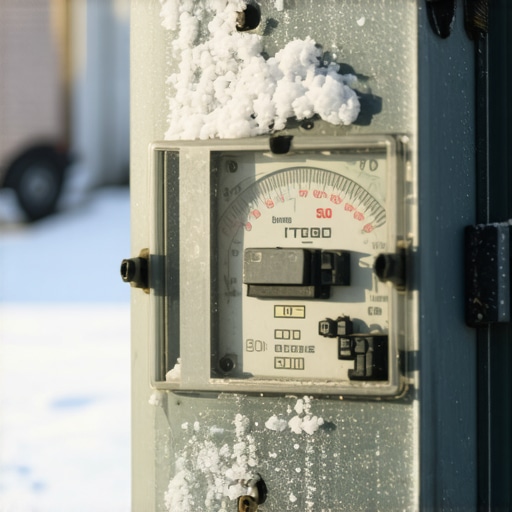
You’re sitting on your couch, the wind is howling outside at a crisp 25°F, and suddenly you see it—that tiny, glowing orange light on your thermostat that says ‘AUX HEAT’ or ‘EM HEAT.’ Most homeowners ignore it until the utility bill arrives. When it does, they nearly fall out of their chairs. If your electric bill just jumped from $150 to $450 in a single month, you aren’t imagining things; you’ve entered the realm of electric resistance heating, the most expensive way to keep a human being warm. As a tech who’s spent thirty winters crawling through crawlspaces and dragging manifolds across frozen gravel, I can tell you that aux heat is often a symptom of a system that’s lost its fight with physics.
The Sales Tech Scam: A $12,000 Ghost Story
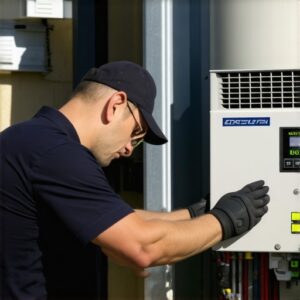
Let me tell you about a call I took last February in the middle of a sleet storm. I followed a ‘Sales Tech’—you know the type, clean fingernails, starched shirt, carries a tablet but doesn’t own a set of nut drivers—who had just told an elderly couple their five-year-old heat pump was ‘mechanically totaled.’ He quoted them $12,000 for a full replacement because the unit was ‘stuck in emergency mode’ and the compressor was supposedly dead. I walked out there, bypassed the contactor, and heard that compressor hum like a sewing machine. The problem? A $30 outdoor ambient temperature sensor had failed, telling the system it was -40°F when it was actually 35°F. The system was relying entirely on the heat strips because it thought the compressor would freeze. One sensor and a quick capacitor replacement services check later, and they were back in business. That Sales Tech wasn’t looking for a fix; he was looking for a commission. This is why you need to understand the ‘why’ behind your equipment before you sign a check.
“The most expensive equipment in the world cannot overcome a bad duct system.” – Industry Axiom
Thermodynamic Zooming: The Physics of the ‘Heat Strip’
To understand why your bill spikes, we have to talk about how a heat pump actually works. It doesn’t ‘create’ heat; it moves it. Even in 30°F air, there is latent heat available. The refrigerant (the ‘juice’ or ‘gas’) evaporates in the outdoor coil, absorbing thermal energy, and then the compressor squeezes it to a high pressure, raising its temperature significantly before sending it to the indoor coil. But here is the catch: as the outdoor temperature drops, the density of the refrigerant vapor decreases. The system has to work harder to extract less heat. This is the ‘Balance Point’—the temperature where the home’s heat loss exceeds the heat pump’s capacity. When you hit that point, the ‘Sparky’ (electrician) gets his revenge. The system engages electric resistance coils—essentially giant toaster wires in your air handler. While a heat pump might have a COP (Coefficient of Performance) of 3.0 (meaning you get 3 units of heat for every 1 unit of electricity), those heat strips have a COP of 1.0. You are paying triple the price for the same amount of comfort.
The Forensic Diagnosis: Why is Your Aux Heat Always On?
If your aux heat is kicking in when it’s 45°F outside, something is wrong. First, we look at airflow. A ‘Tin Knocker’ might have undersized your return ducts twenty years ago, and now that you have a modern high-efficiency unit, it’s choking. Low airflow over the indoor coil prevents the system from dumping heat into the house, causing the head pressure to skyrocket and the system to cycle off on high-limit. When it can’t keep up, the aux heat takes over. This is where duct cleaning services and a proper furnace tune-up services become more than just ‘suggested maintenance’—they are financial survival. If your coils are matted with dust, the refrigerant can’t exchange heat. It’s like trying to run a marathon while breathing through a cocktail straw.
Cold Climate Heat Pumps and the Low-GWP Future
We are currently in a massive transition period in the industry. With low-GWP refrigerant retrofits and the shift toward A2L refrigerants like R-454B coming in 2025, the old ways of ‘just topping off the Freon’ are dead. Modern cold climate heat pumps are designed with vapor injection and variable-speed compressors that can maintain 100% capacity down to 5°F. If you are still running a 14-SEER ‘dry ship’ unit from the early 2000s, you are fighting a losing battle. You might even consider gas line installation for furnaces to convert to a dual-fuel system, where a gas furnace takes over the heavy lifting when the mercury drops, saving you from those $500 electric bills. For those in high-stakes environments, such as hospital HVAC zoning, we use predictive maintenance alerts and remote thermostat access to catch these issues before the aux heat even thinks about turning on.
“Design conditions for heating shall be based on the 99% or 97.5% column for the city nearest to the project location.” – ACCA Manual J
The Solution: Fixing the Leak, Not the Symptom
Before you blame the machine, check the ‘Pookie’ (mastic). If your ductwork is leaking in the attic, you are literally heating the neighborhood. Your heat pump is trying to warm a house that is hemorrhaging BTU/h through unsealed boots and disconnected flex ducts. Integrating air purification integration can also help by ensuring your filters aren’t so restrictive that they kill your static pressure. If you’re struggling with a system that won’t stop clicking into emergency mode, check out this mini-split troubleshooting guide or read up on the ultimate guide to heat pump maintenance to see if your ‘Beer can cold’ suction line is actually a sign of a deeper refrigerant leak. Don’t let a sales-focused tech talk you into a new unit when a simple HVAC repair secret like cleaning the evaporator could save your winter. If you’re tired of the ‘orange light of doom’ and want a real tech to look at your static pressure and subcooling, contact us today before the next polar vortex hits.