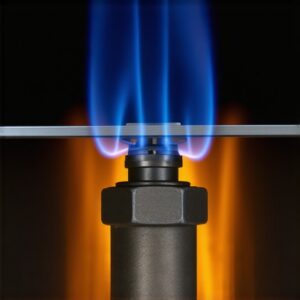
Listen to that sound. That rhythmic, metallic tink-tink-tink of a draft inducer motor spinning up, followed by the heavy thump of the gas valve snapping open. To most homeowners, it is just background noise. To me, after thirty years of crawling through spider-infested crawlspaces and baking on asphalt roofs, it’s the heartbeat of a home. But there is a silent killer lurking in your gas lines, and it isn’t carbon monoxide—though that comes later if you aren’t careful. It is mill scale and pipe dope. My old mentor used to scream at me until he was purple in the face: ‘You can’t cool what you can’t touch, and you can’t burn what you can’t flow! This is why airflow matters more than horsepower!’ He was right, but he was also obsessed with the fuel that feeds the fire. He taught me that gravity is the only filter you can truly trust, and that is exactly why your high-efficiency furnace installation is a ticking time bomb without a sediment trap.
“Sediment traps shall be installed as close to the inlet of the equipment as practical, and ahead of all other controls.” – International Fuel Gas Code (IFGC)
A sediment trap, often called a ‘dirt leg’ by the old-timers, is a simple tee-fitting installed where the gas line enters your furnace. The gas makes a 90-degree turn to go into the valve, while any solid debris—metal shavings from the Sparky or the Tin Knocker who threaded the pipe, or moisture from the gas itself—falls straight down into a capped nipple. Most ‘Sales Techs’ skip this. They want to get in, get the commission, and get out. They’ll tell you the internal screen on the gas valve is enough. It isn’t. When that microscopic debris hits the solenoid seat in your gas valve, the valve won’t seal. Now you’ve got a furnace that won’t light, leading to a pilot light relighting service call that ends with me telling you that your $500 gas valve is toast because of a $5 missing pipe fitting.
The Forensic Diagnosis: Anatomy of a Gas Train Failure
Let’s perform a mechanical autopsy on a typical failure. When I arrive for a furnace repair, I’m looking for signs of struggle. If you’ve got a high-efficiency furnace installation that is short-cycling, the first thing I check isn’t the smart thermostat setup; it’s the gas pressure and the limit switch replacement history. If the gas valve is sticky due to debris, it can cause erratic flame patterns that overheat the heat exchanger, tripping the limit switch. This isn’t just a nuisance; it’s a safety hazard. I’ve seen cracked heat exchangers in units less than five years old because the ‘gas’—the juice—wasn’t clean. Modern furnaces are sensitive. The old cast-iron beasts of the 1970s could swallow a pebble and keep firing. These new 96% AFUE units have orifices so small you could barely fit a human hair through them.
If you are in a cold climate like Chicago or the Northeast, the ‘monsoon effect’ isn’t your problem—flame rollout is. During a polar vortex, your furnace is running 20 hours a day. The draft inducer motor repair you just paid for might have been caused by the system struggling to vent because of internal soot buildup, often traced back to poor combustion from contaminated gas. This is why we insist on proper sediment traps and regular HEPA filter systems to keep the air side as clean as the fuel side. If the airflow is restricted by a MERV filter upgrade that your ductwork can’t handle, the internal temperatures skyrocket, and that’s when you start smelling the metallic tang of a stressed heat exchanger—a scent every veteran tech knows too well.
“The most expensive equipment in the world cannot overcome a bad duct system or a poorly executed fuel delivery.” – Industry Axiom
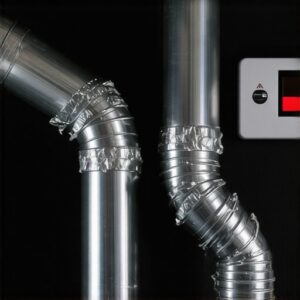
The math is simple. A proper installation includes a sediment trap, a dedicated smart thermostat setup for efficiency, and a dehumidification services plan if you’re dealing with the ‘cold swamp’ effect of an oversized unit. If your tech didn’t install a dirt leg, they cut a corner. And if they cut that corner, what did they do with the venting? Did they use Pookie (mastic) on the seams, or just cheap silver tape that will fail in three seasons? I’ve seen enough furnace repair myths debunked to know that the ‘cheap’ install always costs the most in the long run. Check out this guide on furnace myths to see what else might be missing from your system.
The 2025 Regulatory Cliff and High-Efficiency Realities
We are entering a new era of HVAC. With the death of R-410A and the shift to A2L refrigerants like R-454B, everything is getting more expensive and more sensitive. This applies to gas furnaces too. A ventless gas heater services call used to be simple, but now, with tighter building envelopes, we are seeing massive humidity issues. If you don’t have proper dehumidification services, your ‘high efficiency’ home will feel like a terrarium. Every component is linked. A clogged gas valve from a missing sediment trap leads to poor combustion, which leads to soot, which kills your secondary heat exchanger. Then you’re looking at a $4,000 repair on an $8,000 unit. At that point, you’re better off pulling the plug. For more on when to repair versus replace, look at our HVAC repair secrets.
Don’t let a ‘Sales Tech’ talk you into a mini-split troubleshooting session when the real issue is the infrastructure of your gas lines. Whether you are looking for evaporative cooler services in the desert or trying to survive a Nor’easter, the physics of thermodynamics don’t change. You need clean fuel, clean air, and a clear path for both. If you are hearing strange noises or your pilot light keeps going out, don’t wait for the system to die on a Sunday night when the emergency rates kick in. You can contact us for a real forensic inspection, not a sales pitch. We’ll check your limit switch replacement needs, your draft inducer motor health, and yes, we will make sure you have that $5 sediment trap that keeps the ‘gas’ clean and your family warm.