I can tell you exactly what death smells like in a cold attic. It is not the smell of a dead squirrel or rotting insulation. It is a faint, metallic, almost sweet scent of moisture mixed with the acidic tang of combustion byproducts that should have been outside ten minutes ago. I have spent thirty years crawling through blown-in cellulose and dodging nails on roof decks, and I can tell you that 90% of the furnaces I see are fighting a losing battle against their own venting. When people talk about ‘furnace repair,’ they usually mean they want the heat back on. When I talk about it, I am making sure you wake up tomorrow morning.
The Sales Tech Scam: A Case of Criminal Negligence
Last February, I followed one of those ‘Sales Techs’ from a big-box franchise into a split-level home in the suburbs. This kid—fresh out of a two-week ‘academy’ and wearing a shirt so white it blinded you—had quoted this elderly couple $16,500 for a new two-stage furnace installation. His reason? A ‘cracked heat exchanger.’ He showed them a blurry cell phone picture of a rust spot. I walked up into that attic and didn’t even look at the heat exchanger first. I looked at the B-vent. Some ‘Sparky’ (electrician) had been up there three months prior running Romex and had kicked the flue pipe clean off the draft hood. The furnace was dumping 100% of its CO directly into the attic, which was then being sucked back down through the return air leaks. The ‘Sales Tech’ didn’t even notice. He was too busy looking at his commission check. I reconnected the pipe, applied some Pookie (mastic) where it was needed, and charged them for a standard service call. That is the difference between a technician and a salesman.
“The most expensive equipment in the world cannot overcome a bad duct system—or a failing vent.” – Industry Axiom
The Thermodynamics of a Silent Killer
In a cold climate like ours, the physics of venting is a high-stakes game. When your furnace fires, it creates sensible heat. That heat makes the flue gases buoyant. In an atmospheric furnace, those gases rise naturally through the flue because they are lighter than the surrounding air. However, if your blower motor replacement was done poorly, or if the motor is dragging, the heat exchanger doesn’t get cooled down enough. This causes the limit switch replacement cycle to begin—where the unit shuts off because it is literally melting from the inside out. When a furnace short-cycles like this, the flue never gets hot enough to establish a proper draft. Instead of exiting the roof, the moisture in the flue gas hits the cold metal of the pipe in the attic and reaches its dew point. It condenses. That water is acidic. It eats through the galvanized coating, creates holes, and starts leaking CO. If you are worried about common misconceptions, you should check out these furnace repair myths debunked.
[IMAGE_PLACEHOLDER]
Forensic Evidence: What to Look for in Your Attic
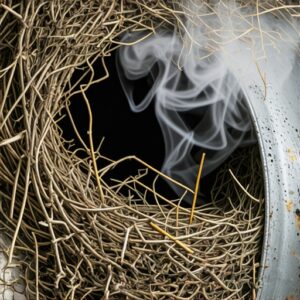
If you have the guts to climb up there, look for ‘the ghosting effect.’ This is a soot-like staining around the joints of your flue pipe. If you see white, powdery residue—that’s aluminum oxide—it means your flue is backdrafting. The combustion gases are cooling down before they exit, and the acid is eating the pipe. This is common in older wall furnace installation setups where the venting was never upgraded to modern standards. Also, check the limit switch replacement history. If you’ve had to replace that switch more than once, your furnace is overheating, likely due to restricted airflow or a failing inducer. For more on how to maintain these systems, see our hvac repair secrets.
“All products of combustion shall be vented to the outdoors in accordance with the manufacturer’s instructions and the International Fuel Gas Code.” – IFGC Section 501
The Danger of the ‘Tight’ House
Modern homes are built like Ziploc bags. When you run a kitchen exhaust fan or a powerful dryer, you create a negative pressure. If your furnace is located in a basement or a tight utility closet, that negative pressure can literally pull the CO out of the ventless gas heater services or the furnace draft hood and into your living space. This is why preventative maintenance contracts are not just a luxury; they are a necessity to test for ‘draft interference.’ I’ve seen school boiler maintenance crews ignore this for years until a whole wing of a building gets sick. Whether it is shop heater services or solar thermal heating integration that complicates your HVAC footprint, the physics of the flue remain the same: you need more air going out than the house is trying to pull back in.
Warranty and Long-Term Safety
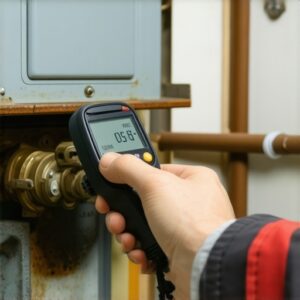
Many homeowners think their warranty service plans cover everything. They don’t. Most warranties won’t cover a heat exchanger that failed because the flue was sized incorrectly by a tin knocker thirty years ago. If you are suspecting a leak, do not wait. This isn’t a ‘topping off the gas’ situation; this is a life-safety emergency. If you need a professional to run a combustion analysis—which is the only real way to know if your CO levels are safe—you should contact us immediately. We don’t send sales techs; we send mechanics who know how to read a manometer and a CO meter.