The Frustrating Physics of Large Volume Spaces
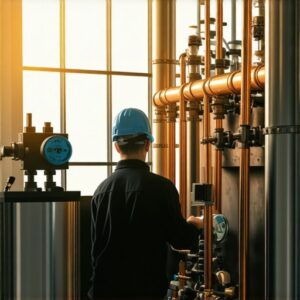
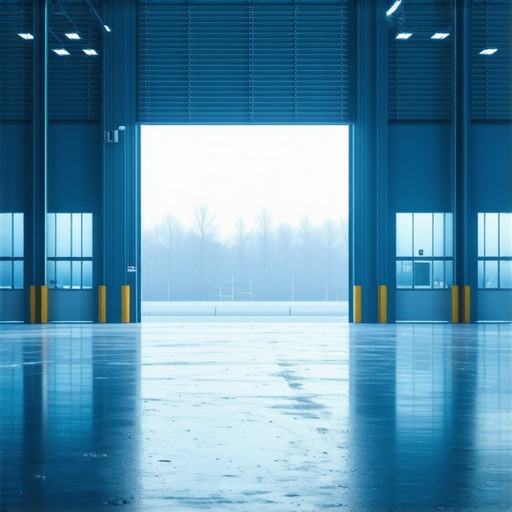
You walk into your warehouse on a Tuesday morning, the outdoor ambient temperature is hovering at a miserable 15°F, and you see the thermostat on the wall proudly claiming it is 72°F. Yet, your breath is visible, and the guys on the floor are wearing three layers of Carhartt. This isn’t a glitch in the matrix; it is a failure of physics, likely exacerbated by a ‘Sales Tech’ who didn’t understand the difference between sensible heat and stratification. I once followed a ‘Sales Tech’ who quoted a warehouse operations manager $85,000 for a total system replacement because he claimed the heat exchangers were ‘thermally fatigued’ beyond repair. I walked in, pulled the panels, and found that the inducer motors were fine, but the duct-mounted bypass dampers were stuck wide open, dumping all the supply air directly back into the return. A $150 motor replacement saved that company a fortune. If you are dealing with a cold warehouse, you need a technician, not a salesman. You need to understand that in a high-bay environment, the most expensive equipment in the world cannot overcome a bad duct system.
“The most expensive equipment in the world cannot overcome a bad duct system.” – Industry Axiom
The Airflow Manifesto: Why Your Heat Is Trapped at the Ceiling
Airflow is the undisputed king of the mechanical room. In a warehouse, you are dealing with massive vertical volumes. Heat naturally rises due to buoyancy—hot air is less dense than cold air. In a 30-foot ceiling environment, you can have a 20-degree temperature difference between the floor and the roof deck. If your ‘Tin Knockers’ didn’t install proper drop-downs or high-velocity nozzles, that expensive heat you are paying for is just ‘pancaking’ against the roof steel. This is where we look at Static Pressure. If your blowers aren’t moving air against the resistance of the ductwork (the static load), the air simply won’t reach the floor. We often find that warehouses are suffering from undersized return air drops. If the furnace can’t breathe, it can’t blow. This leads to the heat exchanger overheating and the unit ‘short cycling’ on the high-limit switch before the warehouse floor ever gets warm. Regular heat exchanger cleaning is vital here because even a thin layer of soot or dust acts as an insulator, preventing the thermal energy from transferring from the combustion chamber to the air stream.
The 2025 Regulatory Cliff and SEER2 Upgrades
We are currently in a massive transition period for the industry. The move to SEER2 compliant upgrades means that the way we measure efficiency has changed to reflect real-world static pressure. If you are still running an old R-22 ‘Juice’ guzzler or an early R-410A system, you are likely bleeding money. Modern hyper-heat heat pumps are now capable of maintaining 100% heating capacity down to 5°F, making them a viable alternative to traditional gas systems in many commercial applications. For those in colder climates, we are seeing a shift toward hybrid systems—using hyper-heat heat pumps for the shoulder seasons and a gas furnace repair or replacement strategy for the deep freeze. If you’re worried about the upfront cost, many contractors now offer financing for heat pump installs, which can be offset by the massive reduction in utility bills. But remember, the ‘Sparky’ needs to ensure your electrical panel can handle the load of a large-scale heat pump before you pull the trigger.
“Design heating loads shall be determined in accordance with the procedures described in the ASHRAE Handbook—Fundamentals.” – ASHRAE Standard 90.1
The Anatomy of Warehouse Failure: Beyond the Thermostat
When I’m on a roof in the middle of a polar vortex, smelling that tell-tale sour scent of a failing compressor or the sharp metallic odor of a cracked heat exchanger, I’m looking for the ‘Why.’ Often, the ‘Why’ is a lack of predictive maintenance alerts. Modern smart systems can tell you when a filter is loaded or a bearing is starting to screech before the system actually fails. If you are stuck with old-school tech, you might be dealing with radiator replacement issues or a wall furnace installation that was never sized correctly for the square footage. Large warehouses often have ‘thermal bridges’—uninsulated steel beams that suck the heat right out of the building. This is why priority service memberships are critical for commercial entities. You don’t want to be calling for a gas furnace repair when the temperature is -10°F and every other business in the city is in the same boat. You need to be at the front of the line. For more on the technical side of these systems, check out the ultimate guide to heat pump maintenance and repairs.
Troubleshooting Common Warehouse Cold Spots
If your warehouse is cold, check these three things before calling the pros. First, look at your ‘Pookie’—that’s the mastic sealant on the duct joints. If the ‘Tin Knockers’ didn’t seal the high-pressure side of the duct, you are losing 20% of your heated air into the ceiling plenum. Second, check your thermostats. Are they located near a bay door that opens every ten minutes? If so, the sensor is getting ‘slugged’ with cold air and trying to ramp up a system that is already struggling. Third, consider your hot water heater repair status if you have a hydronic system. Air-bound lines in a warehouse radiant system will leave entire sections of the floor like an ice rink. If you are using ductless systems for office pods within the warehouse, make sure you know when to call a pro by reviewing mini-split troubleshooting. And for the love of all things mechanical, stop believing the furnace repair myths that tell you to close vents in unused rooms; it only increases static pressure and kills your blower motor. Comfort in a warehouse isn’t about the number on the thermostat; it’s about the physics of airflow, the integrity of the heat exchanger, and the refusal to let a ‘Sales Tech’ sell you a solution for a problem that can be fixed with a wrench and some common sense. “