Preventing Campus Freezes with Summer School Boiler Maintenance
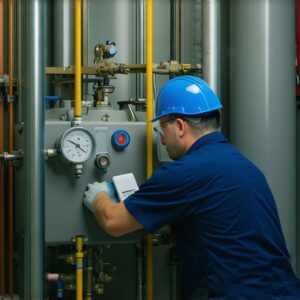
My old mentor used to scream at me until his neck veins turned purple, ‘You can’t heat what you can’t touch, kid! This is why physics doesn’t care about your feelings, it cares about surface area!’ We were standing in a flooded basement of a junior high in late October, ankle-deep in rusty water because some ‘facilities manager’ thought they could save a few bucks by skipping the summer boiler maintenance services. That mentor, a man who smelled perpetually of pipe dope and burnt cigarettes, taught me that a boiler is a living, breathing beast that hibernates in the summer and wakes up angry in the winter. If you don’t soothe that beast while the sun is out, it’ll bite you when the thermometer hits zero. This is the reality of commercial furnace repair and boiler logic: the work you do in July prevents the catastrophe in January.
“The primary goal of any HVAC maintenance program is to maintain the original design efficiency of the equipment while ensuring safety for the building occupants.” – ASHRAE Standard 180
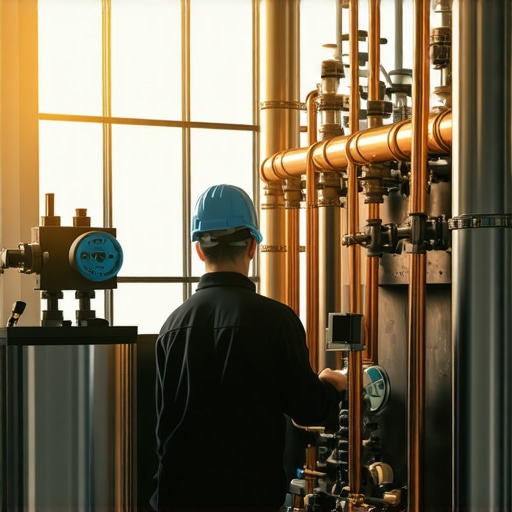
When we talk about maintaining a campus-wide heating system, we aren’t just ‘checking the filters.’ We are performing a forensic diagnosis of a complex thermodynamic loop. In the North, where the polar vortex is a recurring nightmare, a cracked heat exchanger or a failing low-water cutoff isn’t just a repair ticket; it’s a structural threat to the entire building. If those pipes freeze, they burst, and suddenly you’re looking at a multi-million dollar renovation instead of a standard HVAC repair. You need to understand the sensory cues. A healthy boiler has a steady, rhythmic hum, but a failing bearing in a circulator pump? That’s a high-pitched metallic screech that sounds like a banshee in the mechanical room. And the smell—if you walk into a boiler room and it smells like a sour, acidic rot, you’ve got a burner issue or, worse, a venting problem that’s dumping CO into the building.
The shift towards high-efficiency systems has brought us into the age of the modulating furnace repair. Old-school ‘on/off’ boilers were like driving a car with only two speeds: stop and 100 MPH. Modern modulating systems are different. They use variable speed furnace services to adjust the flame and the blower to match the exact load of the building. It’s elegant physics, but it’s fragile. These systems rely on a suite of sensors that are prone to fouling. If your flame sensor has even a microscopic layer of carbon buildup, the system will ‘hunt’ for a signal, short-cycling until the igniter burns out. We see this all the time when schools transition to app-controlled heating systems. The software is telling the boiler to fire, but the mechanical reality in the basement says ‘no.’ Bridging that gap between digital controls and mechanical hardware is where the 30-year veterans like me come in. We don’t just trust the app; we check the gas pressure with a manometer and the combustion with an analyzer.
“Failure to maintain proper water chemistry in a hydronic system will result in scale formation and oxygen corrosion, leading to premature failure of the heat exchanger.” – ACCA Manual B
Let’s talk about the ‘Sales Tech’ scam. I’ve followed behind guys who look like they’ve never seen a day of ‘Pookie’ (mastic) in their life, telling school boards they need to scrap a 10-year-old system because of a bad control board. They’ll quote you $50,000 for a new unit when all the system needs is a proper zoning system installation and some recalibration. Commercial systems are robust. They are designed to be rebuilt, not replaced every time a ‘Sparky’ (electrician) trips a breaker. However, there is a time to pull the plug. If your boiler has significant scale buildup—that white, crusty calcium deposit—it acts as an insulator. You’re burning gas to heat the scale, which then (slowly) heats the water. Your efficiency drops through the floor, and eventually, the heat exchanger will crack from thermal stress. That’s when we talk about SEER2 compliant upgrades and dual fuel heat pump systems for better efficiency.
[image_placeholder_1]
Airflow is the king of the mountain, even in a boiler-heavy campus. Many schools use a hybrid approach where the boiler feeds coils in an air handler. If your ductwork is restricted, you’re dead in the water. I’ve seen ‘Tin Knockers’ (duct installers) who didn’t seal the joints properly, leading to massive static pressure drops. This is why duct cleaning services and duct sealing are not ‘optional extras.’ If the air can’t move, the heat can’t get to the classrooms. It doesn’t matter if you have the most expensive boiler in the world; if the static pressure is too high, your variable speed motors will ramp up until they cook themselves. I always tell my apprentices: ‘Check the return air first.’ It’s the most ignored part of the system, but it’s where 90% of your problems live.
For those managing large facilities, the transition to the 2025 mandates is going to be a shock. We are moving away from R-410A to A2L refrigerants like R-454B. While boilers are gas-fired, many of these systems are now tied into heat pump arrays for shoulder-season heating. If you aren’t planning for these SEER2 compliant upgrades now, you’re going to be paying double in two years. You can’t just ‘top off the gas’ (refrigerant) anymore; these are sealed systems, and the new refrigerants are mildly flammable, requiring new sensors and safety protocols. This is why I stress hvac repair secrets that actually focus on maintenance rather than just reacting to failures. If you want to avoid the ‘July 4th Panic’—which for a school is the ‘First Frost Panic’—you have to be proactive. Check out our furnace repair myths debunked to see what you’re likely being lied to about by those big-box HVAC companies.
Ultimately, a campus is a thermodynamic puzzle. You have different zones with different needs—a gym needs high volume/low temp, while a chemistry lab needs high ventilation and precise control. This is where zoning system installation becomes the hero of the story. By using dampers and smart valves, we can direct the ‘juice’ exactly where it needs to go without wasting energy heating an empty cafeteria at 3 AM. It’s not magic; it’s just good engineering and a lot of ‘Pookie’ to seal the leaks. If you’re smelling something sour in the mechanical room or hearing the screech of a bearing that’s about to seize, don’t wait for the app to send you an alert. Call a pro who knows the difference between a real repair and a sales pitch. You can contact us here to get a real technician on-site, not a salesman in a clean uniform.