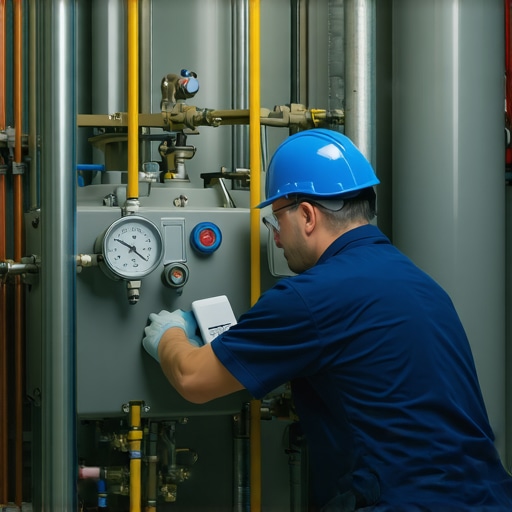
The sound of a silent school building on a Tuesday morning in mid-January is enough to make any facility manager’s blood run cold. It is not just the quiet; it is the lack of that low-frequency rumble in the floorboards—the heartbeat of the boiler room. My old mentor, a man who had more soot in his lungs than a Victorian chimney sweep, used to scream at me, ‘You can’t heat what you can’t touch!’ He was talking about surface area and heat transfer. In a school setting, if the hydronic loop is not stripping heat from the exchanger because of scale or poor flow, the kids are going to be wearing parkas in math class. This is not just about comfort; it is about the physics of thermodynamics and the reality that heat is a moving target that requires constant vigilance.
“The most expensive equipment in the world cannot overcome a bad duct system.” – Industry Axiom
While that axiom usually applies to air-side systems, the logic holds for boilers: the most high-tech modulating furnace repair or AI-driven HVAC optimization cannot fix a system where the pipes are choked with scale. In the North, where the polar vortex is a recurring villain, school heating systems are the front line. We are dealing with sensible heat—the kind you can feel—and if your heat exchanger cleaning has been neglected for five years, that sensible heat is going right out the flue instead of into the classrooms. I have walked into mechanical rooms where the ‘Sales Techs’ were already writing up a $200,000 replacement quote, only to find that the system was tripping on a simple limit switch because the airflow across a supplemental ductless mini-split installation was restricted. They do not want to fix it; they want to sell it. I am here to tell you how to keep the old iron breathing.
The Forensic Diagnosis: Anatomy of a School Heating Crisis
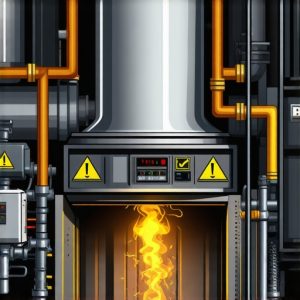
When a boiler fails, it is rarely a surprise to someone who knows how to listen. It starts with a metallic pinging—thermal expansion fighting against a restricted pipe—or the sour, acidic smell of a burner that is running rich. The heart of the system is the control board. Modern school systems often rely on complex control board diagnostics to tell them what is wrong, but a computer is only as good as its sensors. If the wiring repair for heating systems was handled by a ‘Sparky’ who did not understand low-voltage nuances, you might be getting ghost signals that shut the whole plant down for no reason. I have spent hours tracing 24-volt lines only to find a loose wire nut that was causing a furnace ignition repair to fail intermittently. It is tedious, but it is the difference between a warm gym and a burst pipe disaster.
You have to understand the heat exchanger. This is where the magic (or the misery) happens. Whether you are dealing with a fire-tube or water-tube design, the goal is maximizing the Delta T. If you have soot buildup on the fire side or mineral scale on the water side, you are essentially insulating the very thing you want to conduct heat. This is where hvac-repair-secrets-boost-efficiency-with-expert-tips come into play. A proactive cleaning regimen can improve efficiency by 15% overnight. You do not need a new unit; you need a wire brush and some industrial vacuuming. I once saw a heat exchanger so choked with carbon that it looked like a coal mine. The ‘Sales Tech’ told the principal the metal was compromised. I spent six hours cleaning it, and that boiler is still running today, fifteen years later. That is the difference between an honest tech and a guy with a commission to hit.
The Math of Prevention: Repair vs. Replacement
Schools operate on razor-thin budgets, which is why AI-driven HVAC optimization is becoming so popular. By using algorithms to predict load based on outdoor ambient temperatures, these systems can stage boilers more effectively. However, AI cannot fix a cracked heat exchanger. You have to know when to pull the plug. If you are facing a $10,000 modulating furnace repair on a unit that is twenty-five years old, the math starts to lean toward replacement. But most school failures are not catastrophic; they are cumulative. It is a bad capacitor here, a failing inducer motor there, and a burner that hasn’t been tuned since the Bush administration. If you want to avoid myths about what really breaks, take a look at furnace-repair-myths-debunked-what-homeowners-need-to-know to see how common misconceptions lead to wasted money.
“Standard 62.1-2019: Ventilation and acceptable indoor air quality are non-negotiable for educational facilities, requiring consistent thermal management.” – ASHRAE Standards
We also need to talk about the ‘Monsoon Effect’ for those schools that utilize evaporative cooler services during the shoulder seasons. While not a heating component, the integration of these systems into the overall building envelope is critical. If your dampers are stuck open from the summer, your boiler is fighting the entire North American continent to keep that hallway warm. This is why a full system audit is necessary. We also see more schools looking at solar thermal heating integration to offset gas costs. It sounds fancy, but it is just another loop of ‘juice’ (refrigerant or glycol) that needs to be maintained. If the solar pump fails, the boiler has to work double time, leading to premature wear. Even pool heater repair for the school’s natatorium follows the same thermodynamic laws: keep the water moving, keep the surfaces clean, and keep the gas-to-air ratio tight.
The Airflow Manifesto: Beyond the Boiler Room
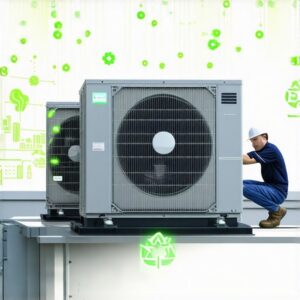
Even the best boiler is useless if the heat cannot get to the students. This is where the ‘Tin Knockers’ come in. In many older schools, the ductwork is a mess of ‘Pookie’ (mastic) and tape that has dried out and cracked. You are losing 30% of your BTU capacity in the ceiling plenum before it even reaches the vent. This creates cold spots, which leads to teachers bringing in space heaters—a massive fire risk and a nightmare for the electrical load. If you are struggling with specific rooms being cold, a ductless mini-split installation can be a surgical strike solution rather than trying to re-engineer an entire wing’s ductwork. If those smaller units start acting up, you can find help at mini-split-troubleshooting-when-and-how-to-call-a-pro. Proactive care means checking the suction line is ‘beer can cold’ in the summer and that the heat pump cycles are not being killed by ice in the winter. For more on that, read the ultimate-guide-to-heat-pump-maintenance-and-repairs. Ultimately, comfort is not magic; it is physics. If you maintain the equipment, respect the airflow, and don’t fall for the ‘Sales Tech’ pitch, you can keep your school warm without breaking the district’s bank. If things go south, you can always contact-us for a real diagnosis. “