The Great Refrigerant Reckoning: Why Your Old Commercial AC is Living on Borrowed Time
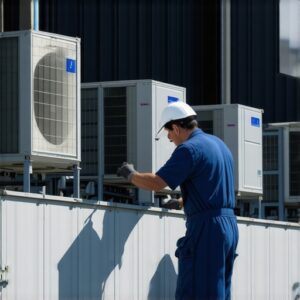
The sounds of a busy commercial rooftop are familiar to anyone who makes their living in the trades: the steady, low-frequency hum of scroll compressors, the rhythmic whir of axial condenser fans, and occasionally, the agonizing, metallic shriek of a dry bearing on its last legs. But lately, there is a new sound echoing across commercial rooftops—the sound of panic. The phase-out of R-410A and older high-GWP (Global Warming Potential) hydrofluorocarbons is no longer a distant regulatory threat. It is here, and it is driving up the cost of maintaining older commercial equipment to eye-watering heights.
As a veteran tech who has spent over three decades dragging heavy recovery cylinders up extension ladders, I have watched the industry transition from R-12 to R-22, then to R-410A, and now to low-GWP alternatives like R-454B and R-32. If you are operating a commercial facility with an aging system, you cannot afford to ignore this transition. Your budget is about to hit a wall, and simply “gassing up” a leaky system with increasingly scarce, expensive refrigerant is a recipe for financial ruin.
The Rooftop Confrontation: A Hard Lesson in Sales Tactics
I still remember a hot Tuesday morning last August. I was called out to perform a second opinion on a 15-ton rooftop unit cooling a local medical clinic. The facility manager was in tears; a previous “Sales Tech” from a major franchise had just quoted them $22,000 for a complete equipment swap, claiming the compressor was completely shot because of an internal electrical failure and that R-410A was now “illegal to service.” It was a classic scam. I hauled my fluke meter and gauges up to the roof, popped the service panel, and smelled the electrical cabinet. No sour, acidic stench of a true compressor burnout. I tested the compressor windings—perfect. I then checked the contactor. The points were pitted, black, and completely welded shut, refusing to drop out. A simple, mechanical failure. For the cost of a basic contactor repair and some minor electrical cleanup, I had that 15-ton beast purring like a kitten again. But the experience highlighted two truths: some companies will use regulatory changes to scare you into buying equipment you do not need, but conversely, keeping that old system running without a strategic plan for its refrigerant will eventually cost you just as much.
“The phase-down of high-GWP HFCs under the AIM Act requires a 40% reduction in production below baseline levels, fundamentally altering the availability and cost structure of traditional refrigerants.” – EPA Section 608 Regulatory Guidance
The Physics of the A2L Transition: Low-GWP and Mild Flammability
To understand why a low-GWP retrofit or replacement is inevitable, we have to look at the thermodynamic properties of these new fluids. The industry is moving toward A2L class refrigerants. The “A” stands for non-toxic, “2” means flammable, and “L” means low burning velocity. These are “mildly flammable” gases. You cannot simply dump an A2L refrigerant like R-454B into an old system designed for R-410A. The electrical components, spark-producing relays, and even the compressor oil are specified differently to mitigate any microscopic risk of ignition. Furthermore, modern low-GWP systems utilize sophisticated leak-detection sensors within the evaporator coils to shut down ignition sources if a leak is detected.
If you keep running an older high-GWP commercial AC, you will face skyrocketing maintenance costs. A simple leak in your condenser coil will no longer be a routine fix. The cost of reclaiming, repairing, and recharging hundreds of pounds of high-GWP “juice” will quickly eclipse the cost of upgrading. By planning a proactive retrofit or system swap, you can take advantage of modern commercial rebates, local utility incentives, and tax deductions designed to ease this transition.
The Climate Context: Navigating High Head Pressure and Sensible Heat
In our dry, high-heat climate zones where ambient rooftop temperatures can easily exceed 115°F, commercial systems run under extreme high head pressures. The sensible heat load is immense. When you are pushing a system that hard, components like capacitors, fan motors, and contactors degrade at double the normal rate. A system running high-GWP refrigerant under these harsh conditions is a ticking financial time bomb. High operating pressures accelerate minor mechanical vibrations into full-blown refrigerant leaks. If you do not have a robust preventative maintenance plan that includes hvac repair secrets like regular coil washing and vibration dampening, you are accelerating your march toward a forced retrofit.
“Designers must balance the sensible heat ratio of the space with the latent capacity of the cooling equipment, ensuring that compressor cycle times are sufficient to manage indoor air quality under peak load conditions.” – ASHRAE Standard 55
The Math: Retrofit vs. Total System Replacement
When does it make financial sense to retrofit an existing commercial air conditioner to a lower-GWP refrigerant rather than replacing the entire package unit? Let’s break down the mechanical realities. Retrofitting is not just a vacuum-and-charge job. It requires replacing critical gaskets, elastomeric seals, filter driers, and often the thermal expansion valves (TXV) to ensure material compatibility with the new chemical compounds and synthetic POE oils.
- The Age Threshold: If your commercial rooftop unit is under 10 years old, has a structurally sound cabinet, and clean heat exchanger surfaces, a professional chemical retrofit to a compatible lower-GWP refrigerant can extend its operational life by several years for a fraction of the cost of a new machine.
- The Airflow Factor: No matter what gas runs through your coils, it cannot perform miracles if your ductwork is restricted. Many commercial cooling issues attributed to “bad refrigerant” are actually caused by poor static pressure. Ensure your return air drops are sized correctly before spending money on a retrofit.
- Energy Efficiency Gains: Modern low-GWP systems are engineered with variable speed scroll compressors and high-efficiency electronically commutated motors (ECM). If your energy bills are crushing your operational budget, a full replacement with flexible payment options or financing for heat pump installs can yield immediate, monthly return on investment.
Avoiding the “Sales Tech” Pitfalls and Ensuring Long-Term Reliability
When contractors start quoting you for commercial retrofits or replacements, you must protect your business from predatory sales tactics. Ensure that any technician working on your commercial equipment is EPA Section 608 certified and performs a thorough diagnostic. If they recommend a full system replacement, demand to see the pressure test results and electronic leak detector logs. Make sure they do not overlook simple issues like a failed contactor, a blown dual-run capacitor, or a faulty blower motor before declaring the system dead.
For businesses utilizing multi-zone commercial setups, integrating heat recovery ventilators can drastically improve indoor air quality and offset the load on your primary cooling systems. Additionally, ensure your preventative maintenance plan includes checking combustion analysis and draft pressures if you run hybrid gas/electric package units. By treating your building’s HVAC system as an interconnected thermodynamic ecosystem rather than a collection of independent metal boxes, you can make smart, cost-effective decisions that keep your occupants comfortable and your business profitable for decades to come.