The Sound of a Dying Heat Cycle
You hear it at 3:00 AM when the house is silent. That rhythmic, mechanical heartbeat that isn’t quite right. The inducer motor shrieks into life, the igniter glows a dull orange, the ‘whoosh’ of the burner ignites, and then… nothing. Total silence. Ten minutes later, the cycle repeats. This isn’t just a nuisance; it is a thermodynamic failure. My old mentor, a grizzled tin knocker who spent more time in crawlspaces than in his own living room, used to scream at me, ‘You can’t heat what you can’t touch!’ He was talking about airflow, the absolute king of the HVAC world. If the air isn’t touching the heat exchanger correctly, or if the gas isn’t burning at the exact rate the control board demands, the system protects itself by shutting down. That is short cycling. In a modulating furnace, which is designed to run almost continuously at lower speeds for efficiency, short cycling is the ultimate red flag that your high-tech investment is being strangled by physics.
“Equipment shall be sized to meet the calculated loads. Oversizing of heating equipment can lead to excessive cycling, reduced efficiency, and premature component failure.” – ACCA Manual S
The Anatomy of a Modulating Failure
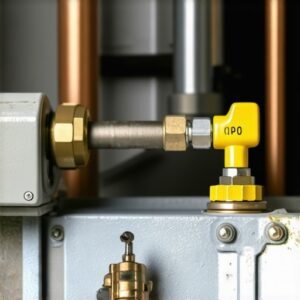
A modulating furnace is a different beast than the single-stage ‘on-off’ boxes your grandfather had. It uses a variable-capacity gas valve and a variable-speed blower (VFD) to match the heat loss of your home with surgical precision. When it works, it provides a steady stream of warmth. When it short cycles, it’s usually because the ‘brain’ of the unit—the integrated furnace control (IFC)—has detected a parameter that doesn’t compute. Maybe the flame sensor isn’t seeing the microamp signal it needs, or the pressure switch is ‘fluttering’ because your flue pipe installation was botched by a cut-rate installer. I’ve seen 24/7 heating emergency response calls where the homeowner was ready to rip out a two-year-old unit, only to find that a bird had built a nest in the PVC exhaust. The furnace wasn’t broken; it was just refusing to commit suicide by carbon monoxide.
The Forensic Diagnosis: Why the Flame Dies
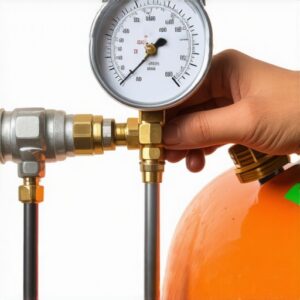
We start with the most common culprit: Flame Rectification. Your furnace uses the flame itself as a conductor for a tiny electrical current. If that rod is coated in carbon or silica, the current can’t pass. The board thinks there’s no fire, shuts the gas valve for safety, and tries again. It’s a $10 fix that looks like a $1,000 disaster. Next, we look at Static Pressure. If your ductwork is too small, the blower motor has to work harder to push air. In a modulating system, if the air can’t carry the heat away from the heat exchanger fast enough, the high-limit switch trips. The unit gets too hot, kills the fire, runs the fan to cool down, and then resets. This is why many furnace repair myths debunked involve simply changing a dirty filter or opening a few closed vents. You can’t cheat the CFM (Cubic Feet per Minute) requirements.
Combustion Analysis and the Flue Pipe Factor
In the cold North, where we deal with polar vortexes and sub-zero ‘real feel’ temps, your flue pipe is your furnace’s snorkel. If the intake or exhaust is restricted, the pressure switches won’t close. Modulating furnaces are incredibly sensitive to ‘hunting.’ This happens when the gas valve tries to find the right firing rate but the combustion air isn’t steady. I always pull out my digital manometer and perform a full combustion analysis. I’m looking at the CO (carbon monoxide) levels and the O2 percentages. If the fuel-to-air ratio is off, you’re not just wasting ‘juice’ (gas); you’re eating through your heat exchanger. If you’re seeing moisture dripping from the pipes, you might have an issue with the secondary heat exchanger—the part that pulls latent heat out of the exhaust. If that gets clogged with ‘pookie’ or debris, the unit will short cycle every single time.
“The ventilation system shall be designed to provide the required air flow rates under all operating conditions.” – ASHRAE Standard 62.2
Thermostat Wiring Upgrades and Communication Errors
Sometimes the problem isn’t mechanical; it’s electrical. A modulating furnace often requires a communicating thermostat to truly shine. If a ‘Sparky’ or a DIYer tried to hook up a high-end modulating unit to a cheap 4-wire ‘dumb’ thermostat, the furnace might be forced into a ‘legacy’ mode where it just guesses what to do. This leads to ‘overshooting’ and frequent cycling. Thermostat wiring upgrades are often necessary to allow the 0-10V signal to reach the gas valve properly. We also check for refrigerant leak detection if the unit is part of a hybrid heat pump system, as a failing coil can mess with the logic of the entire HVAC stack. If you have a heat recovery ventilator (HRV) tied into the return, it can also play havoc with the return air temperature if it isn’t balanced correctly.
Repair ($500) vs. Replace ($8,000): The Hard Math
When I’m standing in a basement, looking at a short-cycling furnace, I’m running the numbers. If the unit is under 10 years old, it’s almost always a sensor, a dirty component, or a ductwork issue. These are repairs. But if I find a cracked heat exchanger during my inspection—which I can spot by the way the flame ‘dances’ when the blower kicks on—then we are talking about a total system failure. No amount of ‘gas’ or ‘pookie’ can fix a hole in the firebox. In those cases, you have to look at the AFUE (Annual Fuel Utilization Efficiency). Moving from an old 80% unit to a 97% modulating furnace can save a homeowner hundreds a year in the North, but only if the airflow is sized right. You can find more hvac repair secrets that explain why the cheapest quote is usually the most expensive mistake you’ll ever make. Usually, that cheap guy didn’t do a Manual J load calculation, and now you have a 100,000 BTU furnace on a 40,000 BTU duct system.
Preventive Maintenance vs. The ‘Scam’ Tune-Up
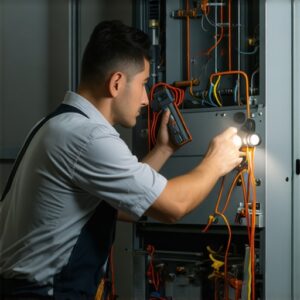
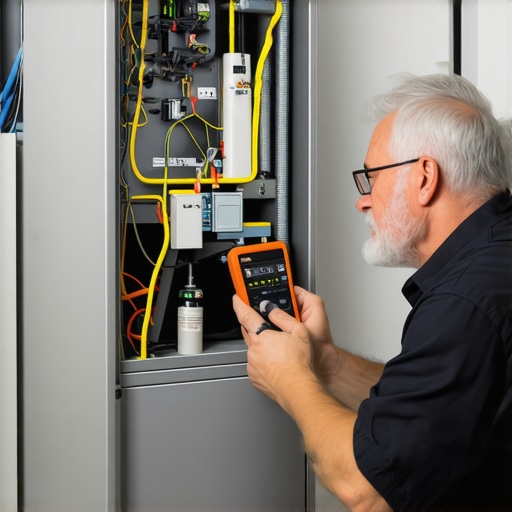
I hate ‘Sales Techs’ who walk into a house with a clipboard and a quota. A real technician doesn’t just ‘top off’ things. They check the manifold pressure, they clean the condensate trap (which, if clogged, will cause a short cycle via the pressure switch), and they check the wiring for heating systems for any signs of arcing or ‘crispy’ insulation. If you have an industrial heater or a boiler, the stakes are even higher. Boiler maintenance services and evaporative cooler services in the dry Southwest require different physics, but in the frozen North, it’s all about the flame and the flue. Don’t fall for the $29 ‘special’ that results in a $15,000 sales pitch. Use a pro who knows how to use a multimeter and a combustion analyzer. If they don’t know what ‘latent heat’ means, kick them out of your mechanical room.
Final Thoughts from the Attic
Short cycling is a cry for help from your furnace. Whether it’s a failed capacitor on the inducer or a complex logic error in the modulating board, ignoring it will eventually kill the compressor of your wallet. Comfort is physics, not magic. If your system is cycling more than three times an hour, it’s time to stop ‘googling’ and start measuring static pressure. If you’re dealing with a heat pump, check out our ultimate guide to heat pump maintenance and repairs to see how those systems differ. For anything else, you can check our privacy policy or contact us for a real diagnosis. Stay warm, keep your filters clean, and for heaven’s sake, stop closing your supply registers.