The Silence of the Arctic: Why Your High-Tech Furnace Just Quit
There is a specific kind of silence that happens at 3 AM when the outdoor temperature is hovering near -10°F and your modulating furnace decides to enter a hard lockout. It’s not just the absence of sound; it’s the weight of the cold air creeping through the rim joists. As an HVAC veteran with three decades of frostbitten knuckles, I can tell you that the homeowners who find themselves in this spot usually made one of two mistakes: they hired a ‘Sales Tech’ who didn’t understand static pressure, or they thought a standard toolkit could fix a machine governed by complex psychrometrics. My old mentor used to scream at me in the back of a freezing box truck, ‘You can’t heat what you can’t touch!’ He was talking about the boundary layer of air on the heat exchanger. If your airflow is garbage, your $12,000 modulating furnace is just an oversized paperweight. This isn’t your grandpa’s ‘on-or-off’ furnace. We are dealing with modulating gas valves that adjust in 1% increments and ECM motors that think for themselves. To fix these, you need more than a pipe wrench and a prayer; you need a forensic approach to thermodynamics.
“The most expensive equipment in the world cannot overcome a bad duct system.” – Industry Axiom
The Physics of Modulation: Why ‘Standard’ Tools Fail
When we talk about modulating furnace repair, we are discussing the pinnacle of residential combustion. A standard furnace is a blunt instrument—it’s either 100% fire or 0%. A modulating unit, however, is a scalpel. It uses a variable-speed inducer motor to pull a precise vacuum through the heat exchanger, matching the fuel flow from a modulating gas valve. This is where ‘Thermodynamic Zooming’ comes into play. You aren’t just looking for a spark; you are looking for the exact millivolt signal sent to the gas valve and the precise inches of water column (in. WC) of the pressure switch. If you’re a ‘Sparky’ trying to dabble in gas, or a homeowner looking for a quick fix, you’re likely to miss the latent heat transition in the secondary heat exchanger. In cold climates like Chicago or the Northeast, these systems are under immense stress. If the manifold pressure is off by even 0.2 inches, you risk soot buildup in the primary heat exchanger, leading to a cracked cell and a potential carbon monoxide nightmare. This is why system performance testing is the first step in any real diagnosis, not just ‘swapping parts’ like some commission-hungry kid from a big-box franchise.
The Forensic Toolkit: Beyond the Screwdriver
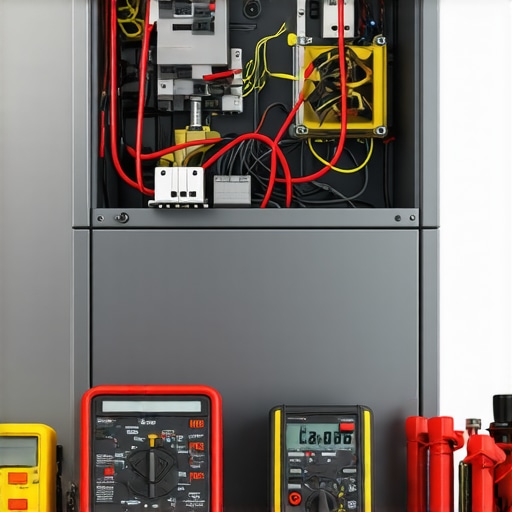
To properly diagnose a modulating unit or handle propane conversion services, a technician needs a specialized arsenal. First on the list is the Dual-Port Digital Manometer. We use this to measure total external static pressure (TESP). If your ‘Tin Knocker’ didn’t size the return air drops correctly, the ECM motor will ramp up its RPMs to compensate, eventually burning out a $1,200 controller. You also need a TrueRMS Multimeter. Modulating boards use pulse-width modulation (PWM) to control motor speeds; a cheap meter won’t read those signals accurately, leading you to replace a perfectly good motor when the problem was actually a loose contactor repair issue or a faulty ground. Then there is the Combustion Analyzer—the holy grail of the trade. This tool tells us the CO2, O2, and CO levels in the flue gas. Without it, you are literally flying blind. It’s the difference between a furnace that runs at 98% AFUE and one that slowly kills the occupants. For those moving away from fossil fuels, the same level of precision is required for cold climate heat pumps and hyper-heat heat pumps, where we monitor the refrigerant ‘juice’ to ensure the compressor can still extract heat when it’s -15°F outside. You can learn more about these complexities in our ultimate guide to heat pump maintenance and repairs.
Hydronic Integration and the Oil to Gas Transition
In many older Northern homes, we see a hybrid of technologies. Often, a homeowner is looking for an oil to gas conversion because they’re tired of the ‘sour’ smell of a failing oil pump and the astronomical fuel bills. But you can’t just slap a gas burner on an old system. We have to look at the hydronic heating systems if they are present. Are we integrating a modulating furnace with a hot water coil? This requires a deep understanding of hot water heater repair and how to prioritize domestic hot water without starving the house of heat. If the plumbing isn’t ‘beer can cold’ on the return or ‘scalding’ on the supply in the right places, your delta-T is wrong. This is where many rookies fail; they don’t realize that the furnace and the water heater are part of a single thermal envelope. If you suspect your current setup is lying to you, check out these furnace repair myths debunked to see if you’ve been fed a line by a sales tech.
“Design of the duct system shall be in accordance with ACCA Manual D.” – ASHRAE Standard 62.2
The Anatomy of a Repair: A Case Study in Modulation
Last winter, during a polar vortex that had the ‘pookie’ (mastic) on my gloves turning into hard plastic, I walked into a house where the furnace was ‘hunting’—constantly ramping up and down but never reaching temperature. The previous tech had already replaced the control board and the gas valve (about $2,500 in parts). I pulled out my manometer and checked the pressure across the secondary heat exchanger. It was plugged with biological growth because the condensate drain wasn’t pitched correctly. The ‘physics’ was simple: the furnace couldn’t breathe, so it modulated down to prevent overheating. A $50 cleaning and a re-pitched drain line fixed what $2,500 in parts couldn’t. This is why hvac repair secrets always come back to the basics of airflow and pressure. If you are struggling with a similar issue, especially with a ductless setup, our guide on mini-split troubleshooting might save you a service call. Whether it is a heat pump or a furnace, the machine doesn’t care about your feelings; it only cares about the laws of thermodynamics. If you need a pro who values physics over commissions, contact us today. We don’t just ‘top off the gas’; we solve the architectural airflow problems that are actually killing your comfort.