The Sound of a Silent Furnace and the Eight-Legged Saboteur
It’s 3 AM in the middle of a January cold snap. You hear the thermostat click. You hear the draft inducer motor spin up, a whirring sound that usually signals impending warmth. But then… nothing. Just the metallic tick-tick-click of the igniter trying desperately to find fuel that isn’t there. As a tech who has spent three decades dragging my manifold gauges through crawlspaces, I can tell you that the culprit isn’t always a failed motherboard or a blown contactor repair scenario. Sometimes, it’s a tiny yellow sac spider that decided your gas orifice was the perfect place to build a nursery. These spiders are attracted to the smell of mercaptan—the sulfur-like odorant added to natural gas. To them, it smells like home; to you, it smells like a $300 emergency call-out.
“The most expensive equipment in the world cannot overcome a bad duct system or a compromised combustion circuit.” – Industry Axiom
The Physics of the Orifice: Why Precision Matters
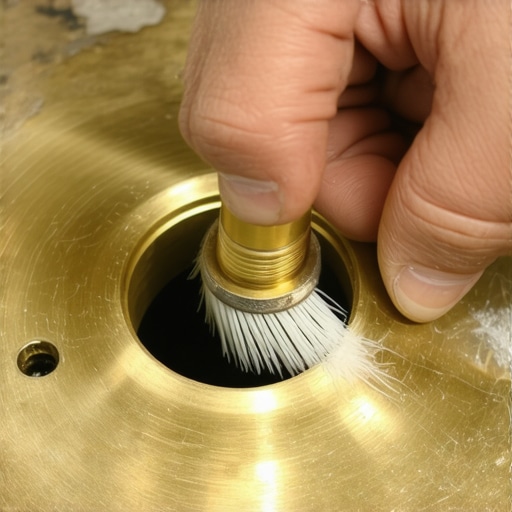
My old mentor, a grizzled tin knocker who could smell a cracked heat exchanger from the driveway, used to scream at me, ‘You can’t burn what you can’t mix!’ This is the fundamental law of HVAC. A gas orifice is a precision-drilled brass fitting designed to meter the exact amount of fuel into the burner tube. The gas shoots through that tiny hole, creating a Venturi effect that pulls in atmospheric oxygen. When a spider spins a web inside that orifice, it doesn’t just block the gas; it creates turbulence. Instead of a high-velocity stream, you get a sluggish, disorganized flow. The result? A ‘lazy’ yellow flame that produces carbon monoxide and soot, or worse, a total ignition failure that leaves you shivering.
In the North, where we deal with sub-zero temperatures, the integrity of this combustion process is life or death. Whether it’s school boiler maintenance in a massive institutional building or a simple pellet stove repair in a cabin, the fuel-to-air ratio is king. If that orifice is even 10% restricted, you’re looking at incomplete combustion. This is why boiler maintenance services always include an inspection of the burner assembly. You can have the most advanced inverter-driven compressors for your cooling side, but if your heating side is choked by a web, the system is a paperweight.
The Forensic Diagnosis: Anatomy of a Clog
When I arrive at a ‘no heat’ call, I look for the sequence of operation. If the draft inducer motor repair was done recently and the motor is pulling a vacuum, but the flame sensor isn’t seeing fire, I pull the burners. Heat exchanger cleaning isn’t just about brushing off soot; it’s about ensuring the path of the flame is clear. A spider web is particularly nasty because it’s sticky. Dust and HEPA filter systems bypass debris can get caught in that silk, creating a literal plug. If you’re seeing predictive maintenance alerts on your smart thermostat about ignition failure, don’t just keep hitting the reset button. That’s how you dump raw ‘juice’ into the chamber and create a small explosion when it finally does catch.
“Combustion air must be free of contaminants that could lead to corrosive byproducts or physical blockages of the burner ports.” – ASHRAE Standard 15
For those in cold climates, leak detector integration is a vital part of a modern setup, but it won’t tell you if a spider has moved in. You need a physical inspection. This is the difference between a ‘sales tech’ who wants to sell you a $15,000 unit because ‘it’s old’ and a real technician who knows how to use a needle tool to clear an orifice. If you want to dive deeper into why your system might be acting up, check out these HVAC repair secrets to boost your efficiency.
How to Prevent the Eight-Legged Shutdown
Prevention is about making the environment inhospitable. First, seal the cabinet. If a sparky left a huge unsealed hole where the electrical whip enters the furnace, that’s a highway for pests. Use pookie (mastic) or high-temp silicone to seal every gap. Second, don’t skip your annual boiler maintenance services. A tech should be blowing out those orifices with compressed air or nitrogen every single fall. If you’re curious about what else people get wrong, read about furnace repair myths before you start poking around with a screwdriver.
If you’re running a heat pump alongside your gas furnace in a dual-fuel setup, you might think you’re safe. But even then, the furnace acts as your ’emergency heat.’ If the heat pump fails during a polar vortex, and the furnace is clogged, you’re in trouble. For those relying on electric heat, the ultimate guide to heat pump maintenance covers the bases, but for gas-burners, the orifice is the heart of the machine. If you find yourself staring at a blank thermostat, you might need to contact us for a professional diagnostic before the pipes freeze.
The Technical Wrap-Up: Beyond the Web
Modern HVAC is moving toward complexity—inverter-driven compressors and leak detector integration are great—but the basics of fire and air haven’t changed since the 1950s. Whether you are troubleshooting a mini-split system or a 400,000 BTU school boiler, the principle remains: keep the fuel path clear. If you live in a high-humidity area, spiders are even more active, and the silk holds more moisture, leading to faster corrosion of the brass. Clean it, seal it, and stop letting a half-inch bug dictate your home’s temperature.