The Anatomy of Silence: Why You Should Fear a Quiet Furnace
In thirty years of crawling through spider-infested crawlspaces and dragging my tool bag across frozen joists in the dead of a Chicago winter, I’ve learned one thing: silence in an HVAC system isn’t always golden. Sometimes, it’s the precursor to a catastrophe. When a furnace fails to ignite, most homeowners think of a dead thermostat or a tripped breaker. But as a veteran technician, my mind goes straight to the gas train. If you smell that tell-tale rotten egg odor—mercaptan, the additive used to make natural gas detectable—your home isn’t just cold; it’s a potential bomb. Finding gas leaks in furnace lines before they become dangerous isn’t just about a ‘quick check’; it’s about understanding the forensic anatomy of combustion. I’ve followed behind too many ‘Sales Techs’ who try to upsell a $12,000 unit when the issue is a simple vibration-induced fracture in a manifold. We’re going to dive deep into the thermodynamics of gas delivery and why your wiring repair for heating systems and furnace flame sensor cleaning are your first lines of defense against a hazardous leak.
“The most expensive equipment in the world cannot overcome a bad duct system, and a poorly vented gas line is a liability that no warranty can cover.” – Industry Axiom
The Physics Lesson: Why Airflow Dictates Gas Safety
My old mentor, a man who had more soot in his lungs than a Victorian chimney sweep, used to scream at me, ‘You can’t burn what you can’t vent, and you can’t cool what you can’t touch!’ This is the fundamental truth of the Airflow Manifesto. In the Northern climate zones where we battle polar vortexes, the furnace isn’t just a box; it’s a high-pressure chemical reactor. When we talk about finding gas leaks, we aren’t just looking for holes. We are looking at the static pressure of the entire system. If your ductwork is restricted—perhaps because you need duct cleaning services or because a ‘tin knocker’ sized your return air drop too small—the heat exchanger overheats. This thermal stress causes the metal to expand and contract violently. Over time, this stress transfers to the gas valve and the black iron pipe fittings. A hairline crack in a heat exchanger doesn’t just leak gas; it leaks Carbon Monoxide. That’s why predictive maintenance alerts are vital. They catch the temperature spikes before the metal fatigues.
The Forensic Diagnosis: Tracking the Molecule
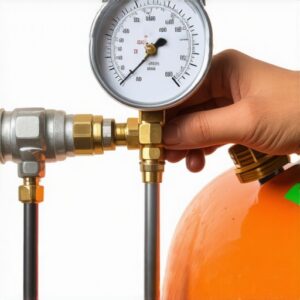
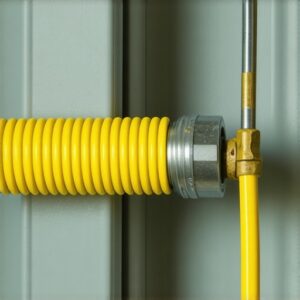
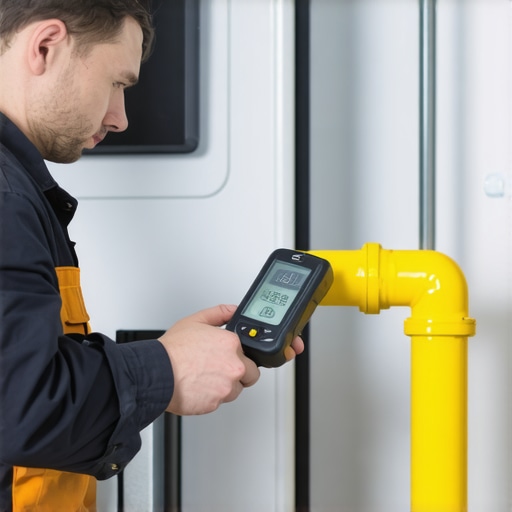
When I walk up to a furnace, I don’t just pull out a soapy bubble bottle. I use my nose, my ears, and then my electronic sniffer. We start at the shut-off valve. Most leaks occur at the ‘drip leg’ or the union where the gas line enters the cabinet. Vibrations from a failing blower motor—the kind of screeching bearing that sounds like a banshee—can actually loosen threaded joints over a decade of operation. I’ve seen warehouse heating solutions where the sheer scale of the equipment caused enough harmonic resonance to back out a flare nut. We also look at the wiring repair for heating systems. If a wire rubs against a gas line and shorts out, it can arc and burn a hole right through the flex connector. This is why proper demand-controlled ventilation and wiring management are safety protocols, not just suggestions.
The Science of the Flame: Sensors and Combustion
A major part of gas safety is the ‘Flame Rectification’ process. This is where furnace flame sensor cleaning comes in. The sensor is a simple rod that uses the flame itself to complete an electrical circuit back to the control board. If that sensor is covered in carbon or oxidation, the board thinks there is no flame. It shuts the gas off. However, if the gas valve is ‘sticking’ or has internal debris, it might not close fully. This leads to ‘gas ghosting,’ where a tiny amount of gas continues to seep into the combustion chamber. When the HSI (Hot Surface Igniter) finally glows for the next cycle, you get a ‘delayed ignition’—which sounds like a literal shotgun blast in your basement. If you’ve heard that boom, stop reading and contact us immediately. It’s a sign that your gas-to-air ratio is dangerously out of balance.
“Gas piping must be tested for leaks using a non-corrosive leak detection fluid or an electronic combustible gas detector.” – NFPA 54 / International Fuel Gas Code
Dehumidification and the Corrosion Factor
In high-efficiency 90%+ furnaces, we deal with condensate. This is acidic water that is a byproduct of squeezing every bit of heat out of the flue gases. If your dehumidification services aren’t integrated correctly or if your secondary heat exchanger is leaking, that acidic water can drip onto the gas manifold. I’ve found manifold pipes rusted through from the outside in because of a clogged condensate drain. This is why we check the pH levels of the runoff and ensure your remote thermostat access isn’t masking a short-cycling issue. Short cycling—where the furnace turns on and off every five minutes—is the fastest way to corrode a system. The unit never stays hot enough to evaporate the moisture, and that moisture eats the gas lines.
The Reality of Portable Heaters and Safety
I often see homeowners using space heaters because one room is cold. Before you do portable heater safety checks, ask yourself why that room is cold. It’s usually an airflow issue, not a furnace capacity issue. Using a portable heater near a furnace is a recipe for disaster. If there is a slow gas leak, the heating element of a space heater can be the ignition source. Instead of a Band-Aid, look into rebate application assistance for a high-efficiency system or a heat pump. If you’re curious about the myths of furnace repair, check out this guide on furnace repair myths. Don’t let a ‘Sales Tech’ convince you that a slightly dirty burner requires a whole new installation. Sometimes, it’s just about the basics of hvac repair secrets that focus on efficiency and safety rather than commissions.
Advanced Detection: Beyond the Bubble
We now use ultrasonic leak detectors. These devices ‘listen’ for the high-frequency hiss of gas molecules escaping a pressurized line—sounds that the human ear can’t pick up over the hum of a blower. This is especially useful in warehouse heating solutions where the ambient noise is 90 decibels. We combine this with predictive maintenance alerts that monitor gas pressure drops in real-time. If the manifold pressure drops by even 0.2 inches of water column when the valve is supposed to be closed, the system sends an alert. This is the future of HVAC: systems that tell you they are leaking before you ever smell the mercaptan. While you’re at it, ensuring your remote thermostat access is calibrated can help prevent the thermal stresses that lead to these leaks in the first place.
Conclusion: Don’t Negotiate with Gas
At the end of the day, your furnace is a controlled fire inside your home. Finding gas leaks in furnace lines is about respect for the physics of combustion. Whether it’s through duct cleaning services to reduce backpressure or meticulous furnace flame sensor cleaning to ensure proper ignition cycles, every part of the system plays a role in safety. If you’re dealing with a complex setup, like a multi-zone system or a heat pump hybrid, you might want to read about heat pump maintenance or troubleshooting mini-splits to see how different systems handle fuel and air. Stay safe, keep your ‘juice’ in the pipes, and never trust a technician who doesn’t carry a calibrated sniffer. Efficiency is great, but breathing is better.