The Phantom in the Ductwork: Why Your High-End Furnace is Shuddering
My old mentor, a guy who had been a tin knocker since the Eisenhower administration, used to scream at me until he was purple in the face: ‘You can’t cool—or heat—what you can’t touch!’ He’d be holding a manometer in one hand and a pack of luckies in the other. What he meant was simple: airflow is the absolute monarch of thermodynamics. You can have a $12,000 modulating furnace with all the bells and whistles, but if the static pressure is off, that unit is just an expensive, over-engineered space heater. I’ve seen guys spend three days chasing a furnace ignition repair on a modulating board when the real culprit was a return air drop so undersized it was trying to suck the paint off the walls.
When we talk about modulating furnaces, we aren’t talking about your grandpa’s old ‘on-or-off’ cast iron beast. We are talking about precision instruments. A modulating gas valve and a variable speed ECM motor work in a delicate dance to maintain a constant temperature within half a degree. But when that dance stops, usually signaled by a cryptic blinking LED on the control board, most homeowners—and honestly, half the ‘sales techs’ out there—panic. They see a variable speed failure and immediately start quoting a full replacement. That’s the industry’s dirty little secret: complexity is often used as a smokescreen for laziness. Most of these errors are predictable, diagnostic, and avoidable if you understand the physics of the ‘gas’ and the air.
“The most expensive equipment in the world cannot overcome a bad duct system.” – Industry Axiom
The Forensic Diagnosis: Anatomy of a Variable Speed Meltdown
Let’s perform a mechanical autopsy on a failing modulating system. In a standard furnace, the blower is either moving air or it isn’t. In a variable speed system, the motor (ECM) is constantly communicating with the board. It’s checking the load. If your filters are clogged or your ductwork is restricted, that motor has to ramp up its RPMs to overcome the resistance. This is where static pressure testing becomes the most important tool in my bag. High static pressure is like trying to breathe through a cocktail straw while running a marathon. Eventually, the motor’s control module fries. You’ll hear it before it dies—a high-pitched whine, like a jet engine on a tarmac. That’s the sound of your wallet bleeding.
When the variable speed fails, the first thing I check isn’t the motor itself; it’s the environment. I’ve walked into church heating systems where they’ve closed off half the vents to ‘save money.’ In a modulating system, that is a death sentence. It creates a massive pressure imbalance that sends the logic board into a tailspin. We call it ‘hunting.’ The furnace tries to find a firing rate that matches the airflow, can’t find it, and eventually locks out. If you’re seeing an ‘Ignition Failure’ or ‘Limit Switch Open’ code, don’t just reset it. That limit switch is a safety device, not a suggestion. It means the heat exchanger is getting too hot because there isn’t enough air to strip the heat away. In the frozen North, where these units run 20 hours a day, a cracked heat exchanger isn’t just a repair—it’s a carbon monoxide risk. That’s why carbon monoxide detector installation is the very first thing I insist on before I even touch the gas valve.
The Thermodynamic Zoom: Why Sensible Heat Isn’t Everything
To understand why these errors happen, you have to understand the latent vs. sensible heat equation. A modulating furnace is designed to stay in a long, low-fire cycle. This is better for the equipment and your comfort. It prevents the ‘thermal shock’ of a heat exchanger expanding and contracting rapidly. However, if the variable speed motor is sluggish, the air spends too much time over the heat exchanger. It gets too hot (sensible heat spike), and the furnace’s internal sensors—the ‘brain’—detect that the temperature rise is out of spec. It shuts down for safety. This is often confused with a bad igniter. I’ve seen ‘parts changers’ swap out three igniters before they realized the blower wasn’t hitting the right CFM. It’s frustrating to watch, especially when homeowners are already stressed about furnace repair myths they read online.
Multi-Family and Commercial Complexity
In multi-family heating upgrades, the problem is magnified. You’ve got shared venting, complex duct runs, and often, neglected maintenance. When I’m called for pellet stove repair or even spa heater services in these complexes, I often find that the main HVAC systems are suffering because a ‘Sparky’ (electrician) or a ‘Tin Knocker’ (duct guy) didn’t coordinate on the original install. If you’re managing a large building, static pressure testing isn’t an ‘extra’—it’s the baseline. Without it, you’re just guessing. The same applies to specialized environments like swamp cooler maintenance in the summer; if the airflow isn’t balanced, the humidity (latent heat) will rot your structure from the inside out.
“Designers shall use the procedures outlined in ACCA Manual J to ensure that heating and cooling loads are accurately calculated based on local climate data.” – ANSI/ACCA Quality Installation Standard
The Physics of the Ignition Cycle
If you are facing a furnace ignition repair on a modulating unit, the variable speed fan might actually be the culprit even if it seems to be spinning. These units use a ‘combustion air inducer’ which is also variable speed. If this little motor doesn’t hit the exact RPM required to vent the exhaust, the pressure switch won’t close. No pressure switch, no ‘gas’ (fuel). No gas, no fire. I’ve spent hours cleaning ‘pookie’ (mastic) out of pressure switch hoses because some over-eager installer got sloppy. It’s the little things that kill the high-efficiency machines. It’s also why portable heater safety checks are so vital in the winter; when the main unit fails due to a complex sensor error, people turn to space heaters, which are the leading cause of house fires. Don’t be that guy. If the furnace is blinking, call someone who knows how to use a multimeter, not just a wrench.
When to Pull the Plug: Repair vs. Replace
Is a $900 ECM motor worth it on an 8-year-old furnace? It depends. If your ductwork is the problem, a new furnace will die just as fast as the old one. This is the ‘Regulatory Cliff’ we’re facing. With new refrigerants and higher efficiency standards coming in 2025, the cost of parts is only going one way: up. If your heat exchanger is intact and your static pressure is within the manufacturer’s ‘sweet spot’ (usually under 0.5 inches of water column), then fix the motor. If your system was installed by a ‘Sales Tech’ who didn’t know a return air drop from a hole in the ground, you’re better off starting over with a team that respects the physics of airflow. For more on complex systems, check out our mini-split troubleshooting guide, because those variable speed systems are even more finicky than your furnace.
Ultimately, comfort isn’t about the brand of the box in your basement. It’s about how that box interacts with the air in your home. Whether it’s church heating systems or a simple residential split, the rules of thermodynamics don’t change for anyone. Keep your coils clean, your filters fresh, and for heaven’s sake, stop closing your registers. You’re killing your blower motor, and I’m tired of replacing them in 140-degree attics.
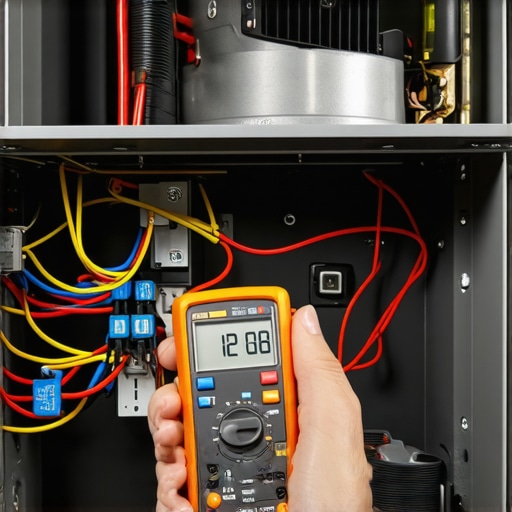
“, “image”: {“imagePrompt”: “A professional HVAC technician in a dark basement using a digital manometer to perform a static pressure test on a modern modulating furnace with a variable speed blower, technical focus on the tool’s screen showing pressure readings.”, “imageTitle”: “Technician performing static pressure test on modulating furnace”, “imageAlt”: “HVAC technician diagnosing variable speed furnace motor using a manometer for static pressure testing.”}, “categoryId”: 0, “postTime”: “”}