The Sound of a Dying Flame and the Smell of Neglect
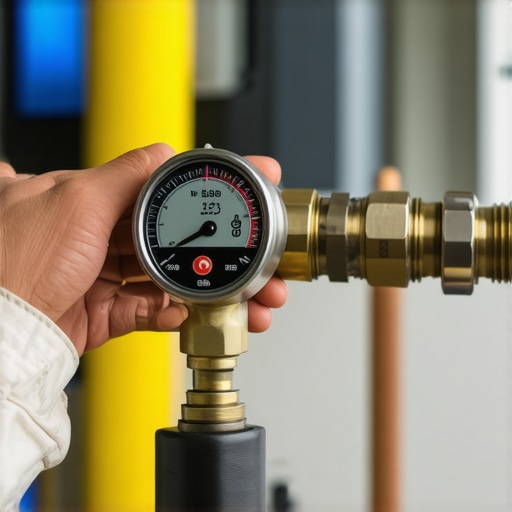
Most homeowners think a furnace repair involves a guy in a clean uniform swapping a transformer replacement and calling it a day. But if you see a tech walk into your mechanical room without a digital manometer, you aren’t looking at a technician; you’re looking at a parts-changer. I’ve spent thirty years crawling through spider-infested crawlspaces and baking on black-shingle rooftops, and if there is one thing I’ve learned, it’s that the gas valve is the heart of the beast, and most of them are beating wrong. When a furnace starts ‘chugging’ or you hear that terrifying boom of delayed ignition, that’s not just a quirk of an old unit. That’s physics trying to tell you that your manifold pressure is out of whack. I remember following one of those ‘Sales Techs’ from a big-box franchise last February. He had quoted a retired schoolteacher $14,500 for a total system replacement because the unit was ‘cycling on high-limit.’ He told her the heat exchanger was shot. I hooked up my manometer and found the gas pressure was clocked at 4.2 inches of water column (wc) instead of the factory-rated 3.5. The unit was over-firing, getting too hot, and shutting down for safety. A ten-minute adjustment saved her $14,000. That’s why we test the gas—because the truth is in the pressure, not the sales brochure.
Thermodynamic Zooming: The Physics of the Flame
To understand why gas pressure matters, you have to understand the stoichiometry of combustion. We aren’t just burning ‘juice’ (gas); we are mixing fuel and oxygen in a specific ratio to achieve a clean chemical reaction. If the pressure is too high, you’re ‘over-firing.’ This puts massive thermal stress on the heat exchanger. Think of it like red-lining a car engine for eight hours straight. Eventually, the metal fatigues, and that’s how you get the cracks that leak carbon monoxide into your duct cleaning services airflow. On the flip side, ‘under-firing’ is just as bad. If the gas pressure is too low, the flame doesn’t get hot enough to create a proper draft in the flue. The moisture in the exhaust gases (a byproduct of combustion) condenses inside the heat exchanger. Since that condensate is acidic, it eats the metal from the inside out. This is why we don’t just ‘eyeball’ the flame. You can’t see a 0.5-inch wc difference with your eyes, but the metal in your furnace can feel it.
“Proper gas manifold pressure is essential for the safe and efficient operation of any gas-fired appliance. Deviations from manufacturer specifications can lead to premature heat exchanger failure and hazardous levels of carbon monoxide.” – ACCA Standard 5: HVAC Quality Installation
The Climate Factor: Dealing with the Polar Vortex
In our region, where the winter wind feels like it’s trying to strip the paint off your house, we rely heavily on high-efficiency furnaces and, increasingly, hyper-heat heat pumps for those shoulder seasons. But when it’s 10°F outside, that gas furnace is your lifeline. One of the biggest mistakes I see during a gas line installation for furnaces is improper pipe sizing. If the pipe is too small, when the furnace kicks on at the same time as your water heater, the pressure drops. The furnace starves, the flame flickers, and the transformer replacement might even struggle with the erratic signals from the flame sensor. We also see issues with whole-home humidifiers. If your furnace isn’t burning hot enough because of low gas pressure, it can’t evaporate the water in the humidifier pad effectively, leading to mold in your plenum. It’s all connected. Airflow, gas, and moisture are a delicate dance. If you’re curious about how to keep your system running without these headaches, check out these hvac repair secrets to boost efficiency.
Manual J and the Myth of ‘Horsepower’
My old mentor used to scream, ‘You can’t cool what you can’t touch, and you can’t heat what you don’t measure!’ This is why we insist on manual J calculations before any install. Most ‘Tin Knockers’ (duct installers) just slap in whatever size unit was there before. But if your ductwork is too small for the blower’s CFM, the static pressure skyrockets. High static pressure is the silent killer of WiFi thermostat integration and modern variable-speed motors. It makes the motor work harder, draw more amps, and burn out its control board. I’ve seen homeowners spend a fortune on UV light installation for HVAC to keep their coils clean, which is great, but if their gas pressure is sending soot into the system, the UV light is just shining on a mess. You have to fix the source. For those using older tech, even evaporative cooler services in the summer can’t compensate for a poorly tuned winter furnace that’s ruined the indoor air quality with incomplete combustion.
“National fuel gas codes require that gas supply systems be tested to ensure they can handle the maximum demand of all connected appliances without significant pressure drops.” – NFPA 54 / ANSI Z223.1
The Blueprint of a Proper Diagnosis
When I arrive at a ‘no heat’ call, I don’t start by looking at the thermostat. I start by checking the 24V power. Is the transformer replacement actually needed, or did a shorted wire to the ‘Sparky’s’ (electrician) outdoor disconnect blow the fuse? Once I have power, I watch the ignition sequence. If the burner lights but goes out, I’m checking the flame sensor and, you guessed it, the manifold pressure. If you are having issues with your secondary heating sources, you might find my guide on mini-split troubleshooting helpful. We also look at demand-controlled ventilation. Modern homes are built so tight that they don’t ‘breathe.’ If your furnace isn’t venting correctly due to pressure issues, those combustion byproducts have nowhere to go. This is especially true with 80% AFUE furnaces versus 96% condensing models. One uses a metal flue, the other uses PVC. If you mix up the physics of those two, you’re asking for a ‘red tag’ from the gas company. If you’ve heard some wild stories about what’s wrong with your heater, read up on these furnace repair myths debunked to stay informed.
Why the ‘Sales Tech’ Hates the Manometer
The ‘Sales Tech’ hates it when I find a gas pressure issue because a $150 adjustment doesn’t buy him a new bass boat. He wants to see ‘pookie’ (mastic) leaking out of a cracked heat exchanger so he can condemn the whole unit. But a real technician treats a furnace like a patient. We check the vitals. We check the gas pressure, the static pressure, the temperature rise, and the amp draw of the inducer motor. Only then do we make a recommendation. If your system is truly on its last legs, we might discuss a heat pump maintenance and repair plan to transition you to a more efficient future. But we won’t lie to you. We test because the physics of thermodynamics don’t have an agenda. They just have a set of rules. And in this house, we follow the rules of 3.5 inches of water column. [{“@context”:”https://schema.org”,”@type”:”HowTo”,”name”:”How to Perform a Furnace Gas Pressure Test”,”step”:[{“@type”:”HowToStep”,”text”:”Shut off the gas supply and install a manometer to the outlet pressure tap on the gas valve.”},{“@type”:”HowToStep”,”text”:”Turn the gas back on and cycle the furnace to high fire.”},{“@type”:”HowToStep”,”text”:”Adjust the regulator screw on the gas valve until the manifold pressure matches the manufacturer’s nameplate (typically 3.5\” wc for natural gas).”},{“@type”:”HowToStep”,”text”:”Clock the gas meter to ensure the BTU input matches the furnace rating.”}]}]