The Sound of a Sleeping Giant and the Smell of February
I followed a ‘Sales Tech’ last Tuesday who quoted a young family $14,000 for a new high-efficiency furnace installation because he saw ‘rust’ on the cabinet. He didn’t even pull the blower motor. He was too busy trying to upsell them on a fancy thermostat installation and a UV light package to notice that the furnace wasn’t dying—it was suffocating. I spent thirty minutes performing a static pressure testing procedure and found the return air was undersized by 40%. The unit wasn’t ‘cracked’; it was just running hot because some tin knocker thirty years ago thought a 10-inch return was enough for a 3-ton blower. This is the reality of the trade today: too many guys want to sell you ‘the box’ rather than fix the physics.
Thermodynamic Zooming: The Anatomy of the Heat Exchanger
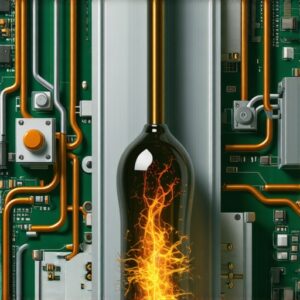
To understand the difference between a death-trap crack and a harmless layer of dust, you have to understand the thermodynamics of the combustion cycle. Your heat exchanger is the ‘lungs’ of your home. Inside those metal tubes, the burners ignite, creating a controlled explosion of gas line installation for furnaces. This process generates sensible heat. In a variable speed furnace, the blower ramps up to move air across the exterior of these tubes. The metal absorbs the heat from the combustion gases and transfers it to the air in your ducts. This is where the magic happens—or where it fails. If the heat exchanger is dusty, that dust acts as an insulator, preventing the heat from transferring efficiently. This increases the internal temperature of the metal beyond its design limits. If it’s cracked, the barrier is gone. Now, the combustion products—carbon monoxide, nitrogen dioxide, and soot—are getting pushed directly into your living room by the blower fan. If you want to avoid this, understanding furnace repair myths is your first line of defense.
“The most expensive equipment in the world cannot overcome a bad duct system. Static pressure is the silent killer of heat exchangers.” – Industry Axiom
The Dusty Heat Exchanger: A Cry for Maintenance
When I walk into a mechanical room and smell that ‘burning’ scent on the first cold day of the year, that’s usually just ‘the juice’—the dust and dander that settled on the metal during the summer. A dusty heat exchanger is a maintenance issue, not a replacement issue. A thorough heat exchanger cleaning and a furnace flame sensor cleaning can usually restore the unit to peak performance. Dust becomes a problem when it coats the evaporator coil (if you have AC) or the secondary heat exchanger in a high-efficiency unit. These secondary coils are designed to capture latent heat—the energy released when water vapor condenses into liquid. If they are clogged with ‘gunk,’ the furnace will ‘limit out,’ shutting down because it’s getting too hot. This is often misdiagnosed as a failing part when it’s really just a lack of soap and water. You can find more on this in our hvac repair secrets guide.
The Cracked Heat Exchanger: The Forensic Diagnosis
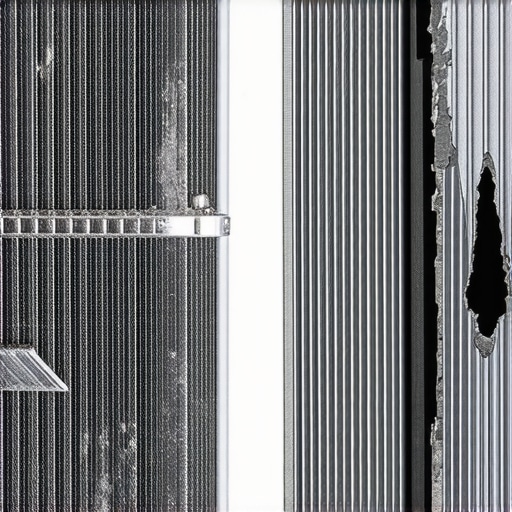
A crack is a different animal. Metal expands when it gets hot and contracts when it cools. Over twenty years, that’s thousands of cycles of stress. If the static pressure testing reveals that the furnace is ‘choking’ for air, that metal gets even hotter, accelerating the fatigue. I look for ‘flame rollout’ or a ‘lazy yellow flame.’ A healthy flame is a crisp, roaring blue. If the flame dances or wavers when the blower turns on, you have a breach. The blower is pushing air into the combustion chamber through a crack. That’s an immediate ‘red tag’ situation. Unlike a wood burning stove installation, which is designed for open-air combustion, a furnace must remain a sealed system. This is why hotel boiler services and residential inspections are so strict. No amount of ‘Pookie’ or high-temp silicone can fix a cracked heat exchanger. It’s a molecular failure of the steel.
“Any breach in the heat exchanger is a violation of safety standards and requires immediate decommissioning of the appliance to prevent carbon monoxide poisoning.” – ANSI/ASHRAE Standard 103
Climate Logic: The Cold Front Reality
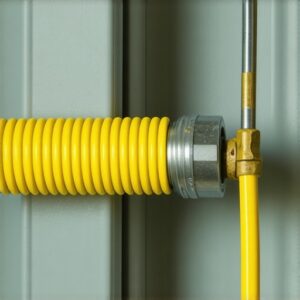
In our northern climate, we don’t play games with gas line installation for furnaces. The temperature delta—the difference between the freezing air coming in and the 140-degree air coming out—is brutal. In these zones, variable speed furnace services are a godsend because they don’t just blast the metal with high heat and then let it freeze. They ramp up slowly, reducing the thermal shock on the metal. We also see a lot of solar thermal heating integration being used to pre-heat the return air, which further protects the heat exchanger from extreme expansion cycles. If you are dealing with a heat pump hybrid system, make sure to check out the guide to heat pump maintenance to see how the two systems interact during a polar vortex.
The Math: Repair vs. Replace
So, do you spend $1,500 on a new heat exchanger for a 15-year-old unit, or $8,000 on a new high-efficiency furnace installation? If the unit is under 10 years old, the part might be under warranty, but the ‘Sparky’ (electrician) and the tin knocker labor will still cost you. If the unit is over 15 years old, the secondary components like the inducer motor and the control board are likely next on the chopping block. Replacing a heat exchanger is like putting a new heart in a body with failing kidneys. Sometimes it’s better to upgrade to a system that offers better AFUE ratings. For those in smaller spaces or apartments, mini-split troubleshooting might even be a better path than traditional ducted furnaces. If you need a professional second opinion, you can always contact us before signing that $15,000 contract with a ‘Sales Tech.’ All our work is backed by our privacy policy and a commitment to actual physics, not commissions.